It took three staff to get her in the wheelchair but one to get her out
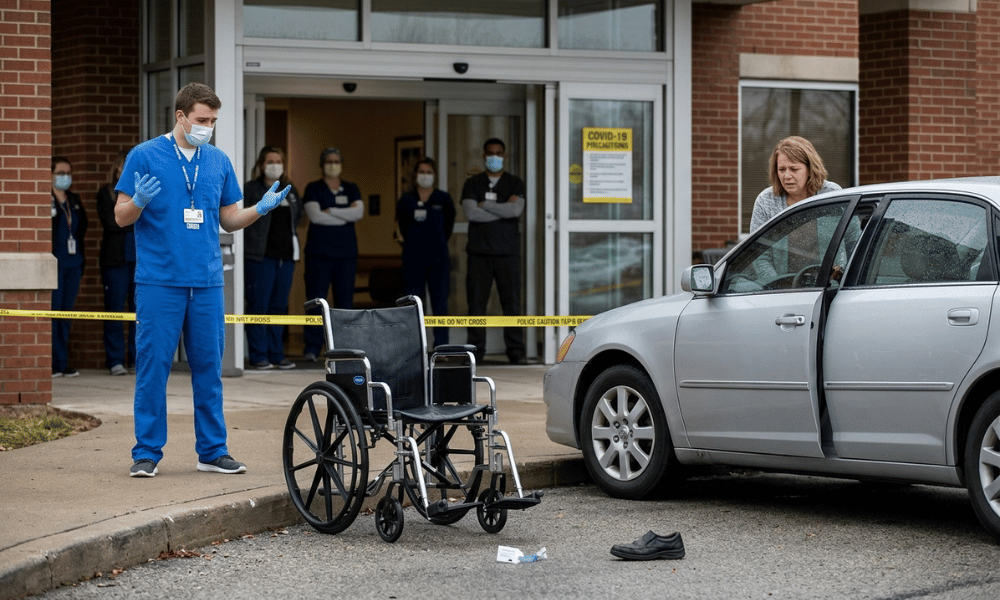
A hospital's COVID-era "clean person, dirty person" transport policy left one employee to move an 83-year-old patient into car alone. She could not hold her.
On September 17, 2026, Ohio's Eighth District Court of Appeals reversed summary judgment for University Hospitals in the wrongful-death case that followed, finding the hospital had no pandemic immunity and that key facts remained in dispute.
The patient was admitted to University Hospitals Geauga Medical Center in February 2021 with back pain and diagnosed with COVID-19 pneumonia during her nine-day stay. Her physician cleared her for discharge.
What happened next was not medical care. It was logistics.
Under the hospital's infection-control protocol, two transporters moved COVID-positive patients. The "dirty person" wore full PPE and was the only one allowed to touch the patient. The "clean person" opened doors and kept bystanders back. No contact.
At the car, the transporter tried to lift the patient from the wheelchair alone. She guided her up. The patient started to buckle. The transporter grabbed tighter but could not hold her. Both went to the pavement - snow on the ground, cold out.
The second transporter offered to help. The first refused. He was the clean person.
The daughter ran inside begging for a gurney. It took four or five staff to get the patient back into the wheelchair. According to the daughter's testimony, the transporter told her: "I don't know why they thought I could do this. It took three of us to get her in a wheelchair." The transporter denied it.
The patient died a week later. Her death certificate listed "failure to thrive with recent extremity blunt impact injuries" - from a fall "while being handled."
The hospital argued immunity under Ohio's H.B. 606, a pandemic-era law shielding providers for services delivered in response to the COVID-19 emergency. The trial court agreed without explanation.
The appeals court reversed. The wheelchair-to-car transfer was too removed from medical treatment to count as a "health care service." The patient was discharged. Her physician testified discharge logistics were "out of his hands." The transporter had three weeks of training.
Conflicting testimony sealed it: the parties disagreed on how many staff the initial wheelchair transfer required, and whether the hospital had offered ambulance transport the day before.
For healthcare HR and safety teams, the signal is plain: when an infection-control protocol strips a physical task to one person, the staffing gap becomes the liability question.