The firing came down to 30 minutes — and key accommodation records allegedly went missing
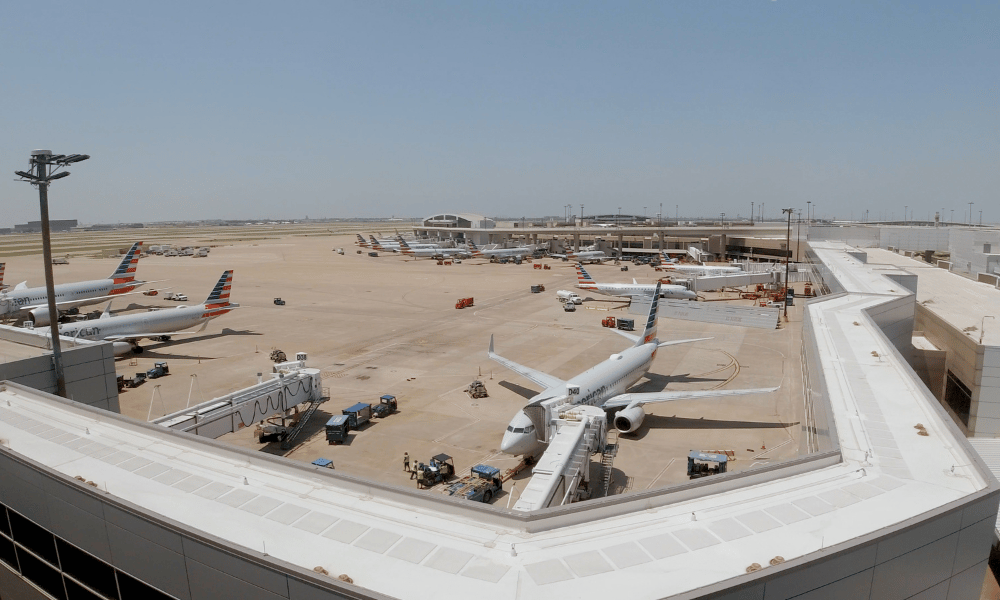
A former American Airlines employee is suing the carrier, alleging it labeled her approved FMLA leave as "timecard fraud" and fired her.
Mayra Bonilla, who worked as a Customer Service Agent at Dallas/Fort Worth International Airport, filed the lawsuit on February 9 in the US District Court for the Northern District of Texas. She has named both American Airlines, Inc. and the Communications Workers of America union as defendants.
According to the filing, Bonilla suffered from severe anxiety and panic-related medical episodes that included shortness of breath, chest tightness, and dizziness. She notified her employer, requested accommodations under the Americans with Disabilities Act, and was approved for intermittent leave under the Family and Medical Leave Act — up to three hours per episode, for as many as twenty episodes a month.
She says she worked directly with the airline's ADA coordinator to discuss a clear procedure for handling acute episodes: when one struck, she would stabilize first, then coordinate with Scheduling and Timekeeping to ensure her protected time was properly coded. The responsibility for logging that time, she contends, fell on the company's timekeeping team — not on her.
Then came January 28, 2025. Bonilla alleges she had a severe episode while driving to work that morning. She used her approved FMLA time to recover, parked at the nearest terminal to stabilize, clocked in, and headed to her assigned post. The total time difference management later flagged was roughly thirty minutes — a gap she says could have been covered by the airline's own internal flexibility policy and the accommodation-related time discussed with the ADA coordinator.
Instead, the lawsuit alleges, American Airlines accused her of "timecard fraud," suspended her, and terminated her on February 14, 2025.
Bonilla denies any fraud. She alleges the real reasons behind her firing were her disability, her use of ADA accommodations, her exercise of FMLA rights, and her reporting of a workplace safety incident dating back to July 2021.
The lawsuit also flags a detail likely to catch the attention of HR professionals: Bonilla alleges that key records documenting her accommodation process went missing from her employee file and were unavailable when needed. She believes those records were removed or destroyed to support a termination narrative.
Adding another layer, the filing points to publicly available EEOC materials showing that American Airlines was previously required to adopt ADA accommodation policies and training under a consent decree from earlier EEOC litigation. Bonilla alleges that despite such notice, the airline still failed to follow proper accommodation procedures in her case.
The union did not escape scrutiny either. The lawsuit accuses the CWA/CWA-IBT of breaching its duty of fair representation — failing to competently investigate, failing to advocate for Bonilla's ADA and FMLA protections, and handling her grievance in what she describes as an arbitrary, perfunctory, and bad-faith manner.
The case is in its early stages and no determination has been made on the merits. The lawsuit asserts claims of ADA discrimination, ADA retaliation, FMLA interference, FMLA retaliation, and breach of the duty of fair representation. Bonilla is seeking back pay, reinstatement or front pay, compensatory damages, and a jury trial.
The case is Bonilla v. American Airlines, Inc. et al., No. 3:26-cv-00321-D-BT (N.D. Tex.).