The regional manager allegedly arranged an off-site Panera Bread meeting — it wasn't about work
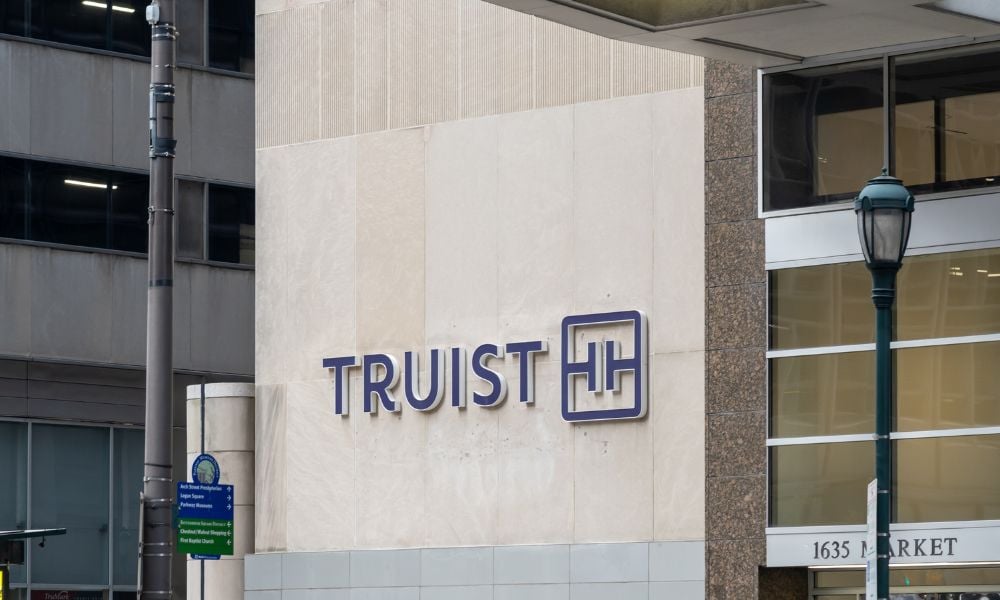
A former Truist banker says he was fired by the same regional manager who allegedly harassed him — after he turned down the manager's advances.
Kenneth Ehiogie, who worked as a relationship banker at Truist Bank's Conshohocken, Pennsylvania branch, filed a lawsuit on March 26 in the U.S. District Court for the Eastern District of Pennsylvania (Ehiogie v. Truist Financial Corp. et al., Case No. 2:26-cv-01997). The suit names Truist Financial Corp., Truist Bank, and Jared Alvis, a regional manager titled Retail Area Leader I, as defendants. It raises claims of sex discrimination, sexual harassment, hostile work environment, retaliation, and unlawful termination.
Ehiogie says he was hired in or around February 2022. According to the filing, Alvis oversaw multiple Truist branches, including his. Starting in late 2023 and into early 2024, Ehiogie alleges Alvis made repeated unwanted physical contact during branch visits, going to his desk and brushing his hands against Ehiogie's hands and arms.
Then, in the spring of 2024, things allegedly escalated. Alvis called the branch and, through one of Ehiogie's supervisors, asked him to meet at a nearby Panera Bread restaurant. Ehiogie says he went, believing he would be fired if he refused. When he arrived, Alvis was sitting alone in a booth.
What followed, according to the lawsuit, was not a work conversation. Ehiogie says Alvis praised his work ethic, told him he could facilitate a promotion to branch manager, then began rubbing Ehiogie's hands and wrists, which were resting on the table. When Ehiogie pulled away, Alvis allegedly began stroking his legs and ankles with his feet under the table. Alvis then reportedly told him, "I like you a lot. I think you're so attractive. I'd like to get together."
Ehiogie says he declined, telling Alvis, "I cannot be with you in the way you want," and left the restaurant.
Shortly after, on or about June 4, 2024, Alvis personally terminated Ehiogie's employment, telling him only that he had committed an unspecified policy violation. The lawsuit contends the firing was retaliatory — that no misconduct had ever been raised with Ehiogie beforehand, no investigation had been conducted with his involvement, and the justification was put together after the fact. Ehiogie says he had never received any discipline, written warnings, or negative performance evaluations during his time at Truist.
For HR leaders, the case puts a spotlight on a structural risk that employment experts have long warned about: when the person accused of harassment is also the one making the termination decision. It also raises pointed questions about the adequacy of documentation and investigation processes before adverse action is taken against an employee.
Ehiogie is seeking compensatory and punitive damages, lost wages and benefits, and attorneys' fees. The case is in its early stages, with no determination yet made on the merits. Truist has not yet responded.