A lawsuit that includes people who were filmed without knowing it shows how easily a pair of glasses can pull a workplace into a privacy dispute
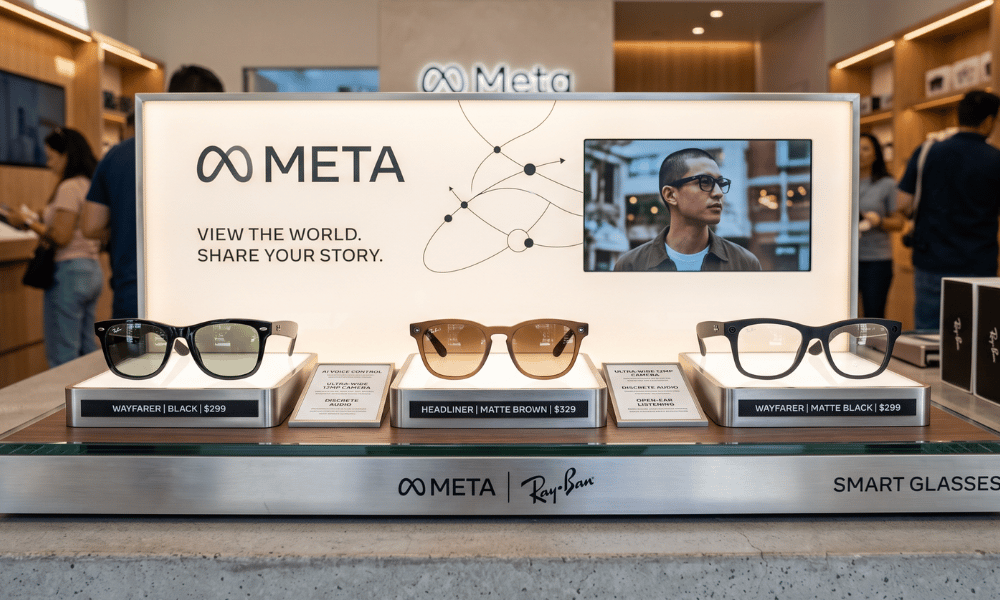
Most HR teams already have a policy on phones in meetings. Far fewer have one on eyewear. A lawsuit filed in San Francisco last month suggests that gap is becoming harder to justify.
More than 70 named plaintiffs have filed a consolidated class action complaint against Meta Platforms and Luxottica of America, the U.S. arm of Meta's eyewear partner EssilorLuxottica. The case, In re Meta AI Glasses Litigation, is before U.S. District Judge Edward M. Chen.
It alleges that Meta's AI-enabled Ray-Ban and Oakley glasses recorded users and people nearby, sometimes after switching on by accident. The footage allegedly went to Meta's servers and then to overseas contractors, who reviewed and labeled it to train the company's AI.
The allegations have not been tested in court, and Meta disputes them. The company has said that reviewing data from its AI assistant is common in the industry, that it filters out identifying details, and that the glasses show a light when recording and blur faces.
For employers, the most relevant part of the complaint is its third proposed class. Alongside buyers and users of the glasses, the plaintiffs want to represent bystanders: people who were recorded by someone else's device and never agreed to anything. The complaint says such recordings were made in bathrooms, bedrooms, doctors' offices, private homes and workplaces. According to the filing, contractors reviewing the footage heard people discussing medical and financial information.
The glasses are already being used at work
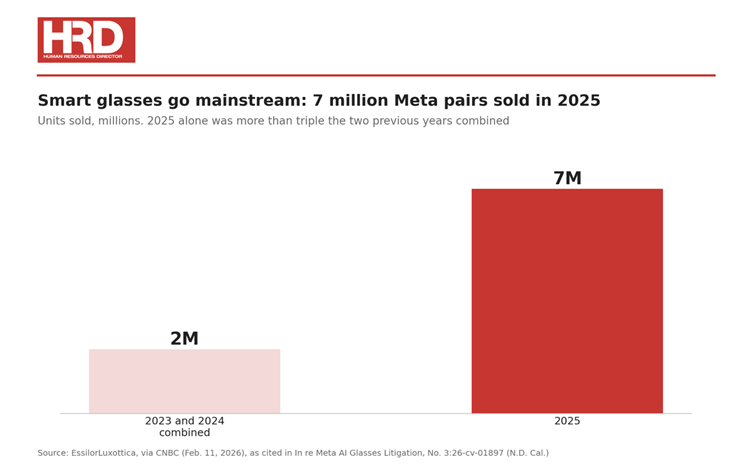
The case lands as smart glasses move out of the gadget aisle and into ordinary workplaces. Meta and EssilorLuxottica sold about 2 million pairs in 2023 and 2024 combined, and about 7 million in 2025. At its Connect event on Sept. 23, Meta introduced a third generation of Ray-Ban Meta glasses. It also unveiled its first pair without a camera, which could give employers a middle option if they want to allow the audio features but not recording.
Some employers have already acted. In August, Immigration and Customs Enforcement barred its employees from wearing Meta's glasses in federal workspaces, according to The New York Times. ICE said in a memo that it treats the devices as body-worn cameras that could unintentionally capture or transmit sensitive information. The New York State Unified Court System has banned the devices from court facilities.
Front-line staff have their own concerns. The Verge has reported on retail and service workers who were filmed and harassed by customers wearing the glasses, then found the clips posted online.
Read next: Hidden in plain sight: Smart glasses sharpen misconduct exposures
Why a smartphone policy isn't enough for the workplace
The problem is not that the glasses can record, since phones can too. What sets them apart is that it can be harder to tell when they are recording.
"Smart glasses make it less obvious when images, video or audio are being captured," said Paul Nash, EPL and Safeguard Focus Group Leader for US and UK Executive Risk at Beazley.
Schools, healthcare providers and other employers that work with vulnerable people face a particular sexual misconduct exposure.
The Meta complaint adds a second problem that many HR teams may not have considered: what happens to the footage afterward. If the plaintiffs are right, a recording made by an employee's glasses during a disciplinary meeting, a patient consultation or a confidential negotiation does not necessarily stay on the device.
It may be sent to a technology company and viewed by people the employer has never vetted. The plaintiffs argue this can happen even when nobody meant to record anything. One California plaintiff says his glasses switch on by mistake about twice a day.
Employment lawyers say that is why existing policies often fall short. Hall & Wilcox partners Suzie Leask and Madeline Tait have said that current compliance frameworks were not built for a device that records discreetly and captures high-quality data.
Read next: The privacy problem the wearable tech boom could create at work
A ban isn't a simple answer
Banning the glasses outright may seem like the easy solution, but lawyers warn it carries its own risks.
The first is consent. About a dozen states require everyone in a conversation to consent before it is recorded, and when an employee records without that consent, both the employee and the employer could be sued or even charged.
The second is disability law. An employee may need prescription smart glasses to do the job, or may use them as an assistive device for a visual or hearing impairment, and a blanket ban could create problems under the Americans with Disabilities Act. At least one employee has already sued after her employer refused to let her wear smart glasses her doctor had prescribed for light sensitivity and astigmatism.
The third is labor law. The National Labor Relations Board has long taken the view that broad no-recording rules can unlawfully restrict employees' right to act together on workplace issues. Policies that name specific business reasons, such as protecting health information, trade secrets and the privacy of co-workers and customers, and that apply only to work time and work areas, are easier to defend. In a unionized workplace, bringing in AI glasses could also trigger a duty to bargain.
The fourth is biometric data. The Meta complaint alleges that the company has placed dormant facial recognition components in the app that glasses owners must install. Meta says it has not released such a feature. Illinois employers already know how costly face and fingerprint data can be. The state's Biometric Information Privacy Act carries statutory damages of $1,000 per negligent violation and $5,000 per intentional or reckless one. Illinois courts continue to test how far those obligations reach.
Read next: Illinois court limits BIPA exemption for government contractors using fingerprint clocks
What HR can do now
Lawyers who advise employers on wearables recommend that policies address several questions:
- Where and when glasses may be worn, and which areas are off-limits, such as restrooms, locker rooms, exam rooms, HR interview rooms and anywhere confidential screens or documents are visible.
- Which meetings are recording-free, and how that is announced at the start.
- How accommodation requests for prescription or assistive smart glasses are handled through the usual interactive process.
- What employees must tell customers, patients and colleagues before recording.
- How staff can report being filmed by customers or visitors, and how the employer will respond.
Because the Meta plaintiffs focus on footage being routed to a vendor, policies should also cover what happens to recordings once they are made. That includes cloud storage settings, AI features and whether any recording of work matters can be sent to a third party at all.
Read next: Staffing agencies dodge BIPA liability by never accessing biometric data
The lawsuit is at an early stage, and the court has not ruled on the merits. For HR, though, the practical point doesn't depend on the outcome. The people most likely to be recorded by an employee's glasses are the employer's own staff, customers and patients. That makes the policy HR's responsibility, whether or not the device belongs to the company.