A coworker said 'go back to your country' - the supervisor's alleged response made it worse
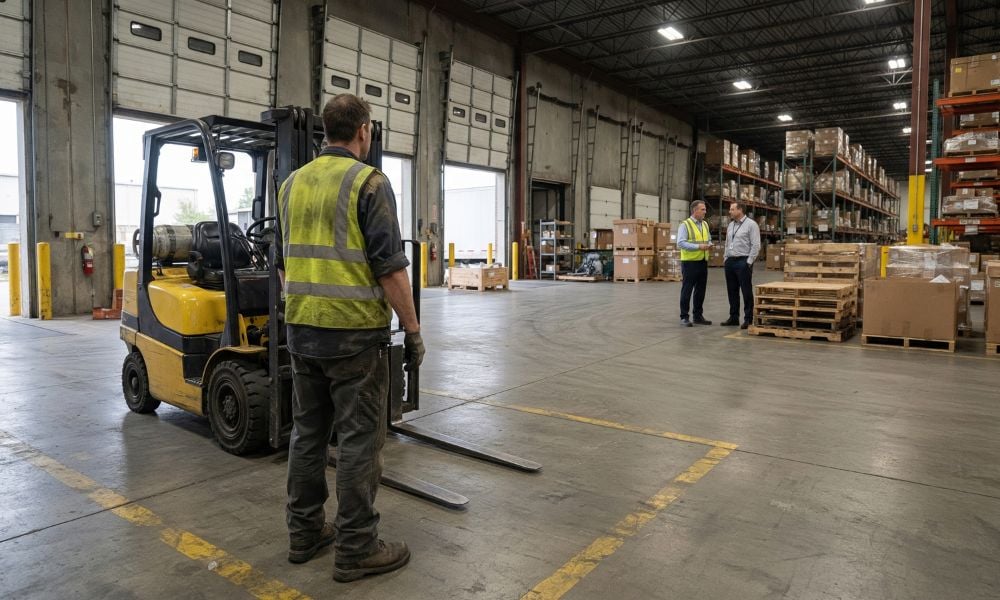
A GM factory worker alleges coworkers told him to "go back to your country" - and management punished him for raising it.
An hourly employee at General Motors' Pontiac Customer Care Aftercare and Sales facility has sued the automaker, claiming years of racial and national origin harassment, a physical assault on the job, and a pattern of disability accommodation failures.
The complaint, filed November 24, 2026 in the US District Court for the Eastern District of Michigan, brings eight counts against GM under federal and Michigan state civil rights and disability laws - specifically Title VII of the Civil Rights Act of 1964, the Americans with Disabilities Act, the Michigan Elliott-Larsen Civil Rights Act, and the Michigan Persons With Disabilities Civil Rights Act.
The worker describes himself as Arab-American and a US Marine Corps veteran. He has worked at the Pontiac facility since May 2021, following an initial period from August 2020 that ended in a January 2021 layoff. He drives a hi-lo in the shipping and receiving area and has held a team leader role since September 2022.
"Go back to your country"
The complaint describes a pattern of hostility that built over months. In December 2024, the filing alleges, a coworker called the worker "a spy" during a team huddle meeting. Five other employees laughed. The supervisor running the meeting, the complaint states, said and did nothing.
Separately, the complaint alleges a coworker told the worker to "go back to your country" while the worker was helping transfer a parts box between docks. According to the filing, the worker reported the remark to his operations supervisor and two general supervisors. Their response, the complaint alleges, was to blame him. The filing states GM did not discipline the coworker who made the statement.
That was not the only time reporting a problem allegedly backfired. In 2024, the complaint states, a coworker was operating a hi-lo while allegedly under the influence of drugs, driving recklessly and putting other employees at risk. The worker reported it to his supervisor. According to the filing, the supervisor told the worker to watch his own backing up, said nothing about the other employee's conduct, and sent the worker for hi-lo driving retraining. GM allegedly took no action against the other employee.
The filing alleges the worker did not report some incidents because his supervisors had a history of bullying and ignoring him based on his race and national origin.
Assault and an arrest warrant
Things escalated on June 2, 2026, the complaint alleges, when a coworker physically assaulted the worker at his normal workstation. The worker reported the assault to a general supervisor that day, wrote a statement for management, and reported the incident to his union, UAW Local 653.
According to the filing, GM investigated and suspended the coworker for one week. The worker states he does not know whether the suspension was with or without pay. The complaint alleges GM imposed no further discipline. The filing also states, on information and belief, that the Oakland County Sheriff Department has an outstanding arrest warrant for the coworker in connection with the incident.
Passed over
The discrimination allegations extend to career advancement. The complaint states that in 2023 and 2024, the worker applied for four technician positions at GM's Pontiac Engineering Center and was rejected for all four. According to the filing, GM said he had not discussed his qualifications often enough - despite having provided his resume.
In 2024, the filing alleges, the worker applied for a group leader position and was not interviewed. GM chose another employee with less seniority, the complaint states.
The filing also alleges the worker was treated differently in the facility's substitute group leader system. While others received a day's notice and appeared on the group leaders list, the complaint states the worker was notified only at the last minute and left off the list entirely.
The six-week ultimatum
The disability claims form their own thread. The complaint alleges the worker reported flat feet to GM in March 2025 - a condition that appeared in 2022 or 2023 and affected his ability to bend, kneel, lift, and stand. For about one year, the filing states, GM did not accommodate the condition. Eventually the company hired him as a hi-lo driver, which the complaint acknowledges accommodated that disability.
In 2024, the worker developed a disabling left shoulder condition and had surgery in 2024 and 2025. His doctor advised he would need several weeks to recover, the filing states.
According to the complaint, a general supervisor communicated through the worker's UAW union representative that he had to return to work within six weeks or lose his position and his employment. The worker alleges he came back within that timeframe despite his condition.
The complaint draws a pointed comparison. Another employee, the filing states, had a disability, had surgery, and was out for two years. According to the complaint, GM never threatened that employee with the loss of her position or job.
The worker filed a charge with the EEOC on May 16, 2025, alleging racial and national origin discrimination, disability discrimination, and failure to accommodate. The EEOC issued a right-to-sue notice on August 24, 2026.
The complaint seeks compensatory damages including lost earnings and benefits, lost career opportunities, emotional damages, exemplary damages, and attorney fees. The worker has demanded a jury trial.
For HR teams managing large unionized workforces, the complaint maps a risk pattern worth studying: alleged harassment that goes unreported because the worker fears supervisor retaliation, complaints that result in the complainant being blamed rather than the offender, and disability accommodation timelines that allegedly differ from one employee to the next.
The allegations in this complaint have not been tested, and no court has made any findings on the merits.