The company lowered its own standard, then tested her on the old one
A Colorado Caterpillar equipment dealer tested a long-serving painter on a fitness standard it had already downgraded - then fired her when she could not meet it, according to a federal complaint.
The Equal Employment Opportunity Commission filed the lawsuit on September 28 in the US District Court for the District of Colorado, alleging Wagner Equipment Co. violated the Americans with Disabilities Act on multiple fronts.
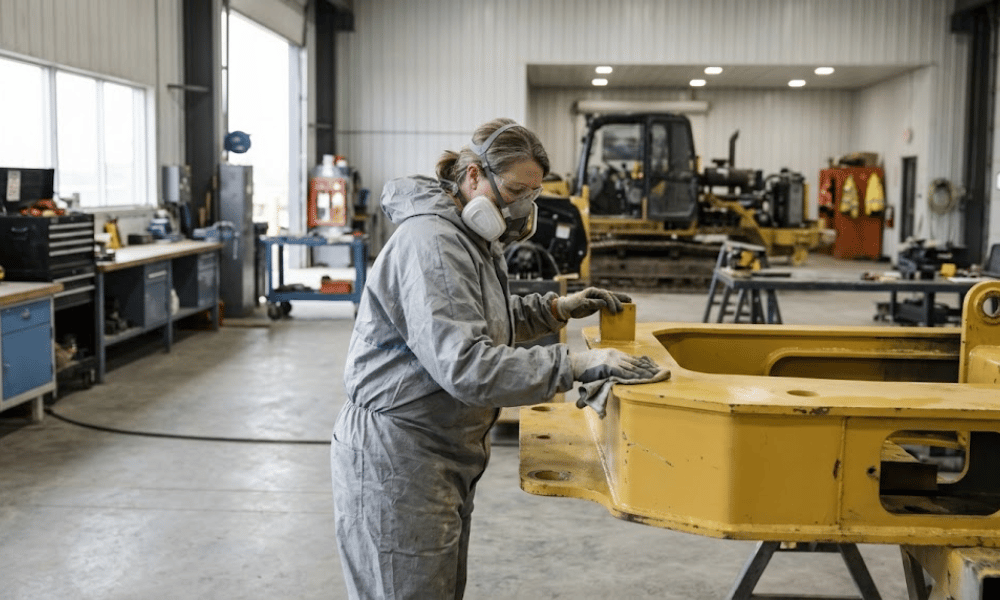
The worker had been a painter at Wagner Equipment for more than a decade, the complaint states. Her job involved sandblasting, prepping, painting, and placing decals on heavy machinery. The position came with its own dedicated forklift, plus access to a dolly, wagon, and crane for any heavy lifting. Co-workers were available for two-person lifts when needed.
In May 2021, she fell and injured her knee, according to the filing. The injury left her unable to walk. She applied for short-term disability benefits and FMLA leave, and in August 2021 underwent full knee replacement surgery.
Throughout her medical leave, she stayed in contact with her supervisor, the company's benefits coordinator, and the third-party leave administrator about her recovery, the complaint alleges.
In October 2021, she called the company and asked for a desk job or light duty so she could return to work before November, the filing states. Wagner Equipment denied the request.
By November, she had a doctor's note clearing her to return without restrictions. But the company required her to pass a fitness-for-duty test first, according to the complaint.
Here is where it gets complicated.
Wagner Equipment had adopted a fitness-for-duty policy in January 2015 that classified the painter role as "Heavy," the complaint states. The test under that classification included tasks like lifting 100 pounds from the floor, descending ladder rungs while holding a 74-pound box, and carrying a 100-pound sack of sand 10 feet to a 50-inch-high surface and back - three times.
But in August 2021 - while the worker was still on medical leave - the company updated its policy, the complaint alleges. It reclassified the painter position from "Heavy" to "Medium" and lowered the maximum lifting requirement to 50 pounds.
The worker was never tested on the updated standard. On November 5, 2021, she took the old 2014 "Heavy" version instead, according to the filing.
She completed most of the tasks, the complaint states. She managed a 100-pound lift from the floor to her knuckles and descended four ladder rungs while holding a 74-pound box. The only task she could not finish was the repeated 100-pound sand-sack carry. After one attempt, she told the tester she felt unsafe continuing out of concern for her knee.
The tester's own notes tell their own story, according to the complaint. The tester recorded that the worker stated she did not have to do any heavy lifting in her role, and that attempting to lift 100 pounds at work would get her written up for a safety violation. Separately, the complaint alleges the worker had never had to lift 100-pound sandbags in her years as a painter at Wagner Equipment.
The tester recommended she return to work with a 50-pound lifting cap - the same limit the company had already set for the position under its revised policy, the complaint alleges. The tester also recommended she could retake the test in 30 days.
Wagner Equipment did not follow either recommendation, according to the filing. Instead, the company told her she could not return as a painter because she had not passed the test.
The EEOC alleges the company never sat down with the worker to discuss whether she could do her job with reasonable adjustments - what the ADA calls the "interactive process." In a November 9, 2021 letter, the company's benefits coordinator gave the worker two options, the complaint states: apply for long-term disability benefits and potentially retake the test later, or apply for a different position at the company. If she had not secured either by December 6, the letter stated, her employment "may end."
The company offered her a warehouse role at $17 an hour - down from her $28-an-hour painter rate, according to the complaint. That position also required a fitness-for-duty test, this time involving a 94-pound box carried to a 48-inch-high platform. She attempted it but stopped over the same knee concerns, the filing alleges. The company told her the warehouse job was off the table.
Wagner Equipment terminated her in December 2021, according to the complaint.
One more detail from the filing: two other employees who did not complete the "Heavy" painter fitness-for-duty test - one in 2017, another in 2021 - were allowed to keep working as painters at Wagner Equipment.
The complaint also points to the company's own manual lifting policy, which required employees to use assistive devices like forklifts, dollies, and hoists "whenever possible," and called for two-person lifts when equipment was not practical.
The EEOC brings four claims under the ADA: that the company's fitness-for-duty testing screened out a worker with a disability, that it fired her because of her disability, that it refused to make reasonable adjustments, and that it retaliated against her for requesting those adjustments and challenging the testing standards. The agency is seeking back pay, reinstatement or equivalent compensation, damages for emotional distress, and punitive damages. It has also asked the court to order Wagner Equipment to overhaul its fitness-for-duty policy. A jury trial has been requested.
For HR teams reviewing their own return-to-work testing, the case puts a fine point on something easy to overlook: the standard on paper needs to match the standard in practice - and both need to reflect the actual demands of the role.
None of the allegations have been tested, and no court has made any findings on the claims.