Workers say they held their urine and skipped drinks to get through shifts, the EEOC claims
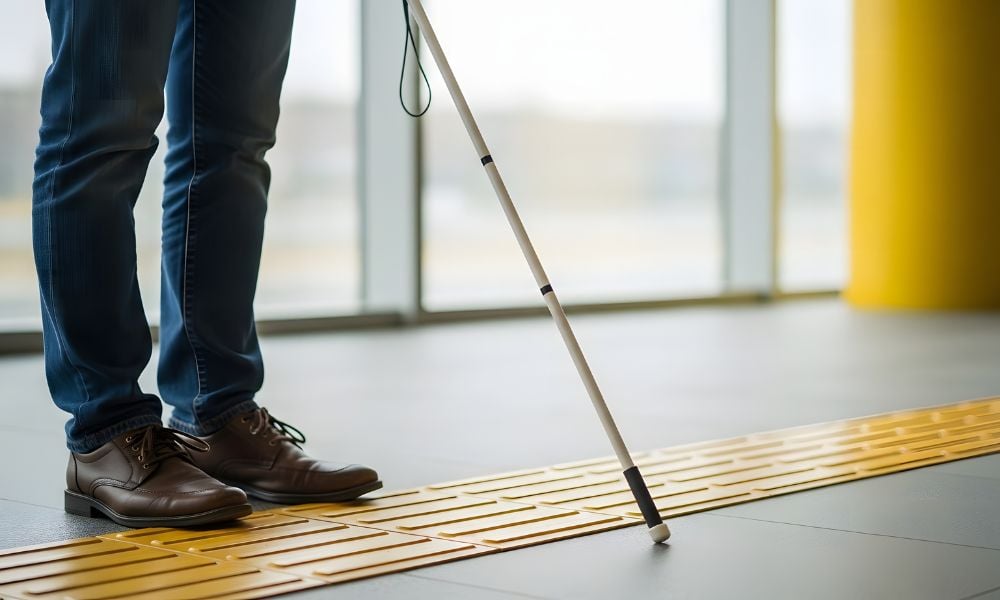
The EEOC is suing FedEx, saying it left blind package handlers without workable accommodations and brushed off their repeated requests for help.
The complaint, filed June 30, 2026 in the US District Court for the Middle District of North Carolina, focuses on the company's Kernersville, North Carolina facility. The agency alleges that from at least November 2021, FedEx employed several blind package handlers who could do the work but needed help getting around the building safely.
Their ask was modest, according to the filing: tactile tape on the floor to guide them to their workstations, the restroom and other areas. The EEOC says those requests were ignored or refused, and that the company never really engaged in the interactive process — the give-and-take an employer is supposed to have with a worker to find an accommodation that fits.
What the company offered instead, the complaint says, was a system in which blind employees asked coworkers or managers for directions. In practice, the EEOC alleges, that fell apart. Workers often waited a long stretch just to use the restroom, because security had to call a manager and the employee then had to wait for that manager to show up. Sometimes no one was free, the filing says, and the worker could not go at all. The complaint alleges the unreliability drove employees to hold their urine and avoid drinking liquids during shifts.
FedEx did put down a tactile product after the EEOC visited the site in January 2024, the complaint acknowledges. But the agency alleges the company chose it without input from the workers who needed it, laid it in only one area, and left out the paths to several employees' stations. According to the filing, an HR representative told one worker the company was "working on it," yet the tape was not fixed before that worker's employment ended in January 2025. The complaint says it has been peeling off the floor since at least August 2025 and sits under equipment in spots where it is useless.
Other requests were turned down too, the EEOC alleges — large-print orientation materials, help from mobility instructors, better lighting, screen-reader software and a usable way to clock in. A new time clock that beeped did not solve the problem, the filing says, because the beep was drowned out by noise or switched off.
The agency brings two ADA counts: failing to provide reasonable accommodations, and failing to keep required accommodation records. It alleges the conduct was intentional and done "with malice or with reckless indifference" to the workers' rights, and it is asking for an injunction, back pay, and compensatory and punitive damages.
For HR teams, the takeaway is about follow-through. Under the ADA, handing over an accommodation is only the start — the employer is expected to work with the employee, settle on something that actually works, and keep it working. The complaint highlights a situation where, as the EEOC tells it, a fix was installed but never made reliable, and a worker's warning that it was not effective did not lead to a repair. It also points to a duty that is easy to forget: holding on to the records that document accommodation requests.
The allegations have not been tested, and no court has ruled on the claims.