What one CHRO thinks the next year will actually demand of HR teams
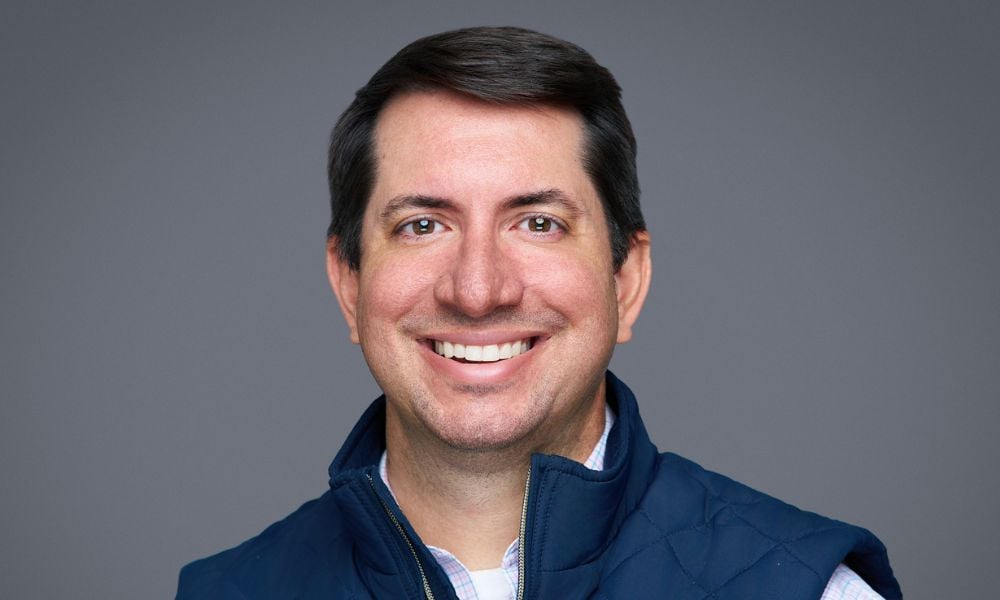
When Jason LaRue looks ahead to his first year in his new role, he doesn't sound daunted. He sounds energized. He talks more about opportunity than pressure.
"It's just a super dynamic time to be involved in the people profession," LaRue said.
LaRue was named Vice Chair of Talent & Culture at KPMG US in August, succeeding Sandy Torchia, who is retiring from the firm at the end of September. It's a broad mandate. He describes the role as the firm's chief people officer, responsible for everything from HR business partnering to compensation and benefits, and for making sure the firm's talent strategy moves in lockstep with its business strategy.
Much of that strategy is being shaped by AI, and LaRue doesn't see this wave of disruption ending anytime soon.
"I think the reality is that this is something that our teams are going to need to be prepared for to be continuous. And that's the conversation that we've been having with our HR team is, this is not a sort of a Y2K kind of moment, where it's going to sort of come and go," he said.
When there's no finish line
What he's describing changes what leadership is actually being asked to do. A one-time disruption calls for a project plan with an end date, but a permanent condition calls for something closer to an operating philosophy. LaRue put it this way when describing the pace of change at KPMG right now.
"I've said that this is probably the fastest and most change that we've ever gone through, and it'll probably be the slowest and least amount of change we'll ever go through going forward," he said.
In other words, whatever pace of disruption feels overwhelming today is about as slow as things are going to get from here on out.
He frames his mandate around three priorities: helping the business navigate workforce transformation, modernizing the HR function itself, and being a strategic advisor to the business. Taken together, they suggest the work ahead won't settle into a steady state anytime soon.
That expectation lines up with what other HR leaders are telling researchers right now. Deloitte's 2026 Global Human Capital Trends report found that a third of workers experienced up to fifteen major changes at work over the past year, a pace the report's authors describe as producing widespread "change exhaustion."
Redesigning work, workforce, and workplace together
LaRue describes the transformation as a "work trifecta," touching what the firm does for clients, who it hires and how it develops them, and where and how people actually work. On the technology side, KPMG is rolling out a new human capital management system built to take advantage of AI, with a vision of employees interacting with agents for routine requests instead of waiting on a person. The firm has also built AI directly into its audit platform, Clara, which LaRue says lets KPMG deliver audits more efficiently and at greater scale.
That kind of investment tracks with where HR leaders say their money is going industry-wide. SHRM's 2026 CHRO Priorities and Perspectives report found that 92 percent of CHROs expect greater AI integration into workforce operations this year.
The workforce piece touches who KPMG hires and how it trains them. LaRue said the firm has built AI-powered simulations that let early-career staff work through client scenarios that used to take years of on-the-job experience to encounter, compressing what might have taken two or three years into weeks or months. At the same time, he said the firm is placing more emphasis on judgment, critical thinking, and decision-making, skills that used to come later in a career, and repositioning goals and incentives more broadly to align with the firm's strategy.
Hybrid work is where the workplace side of that trifecta shows up most clearly. The firm still operates on a hybrid model, and LaRue pointed to its Lakehouse training facility in Orlando as central to onboarding and culture building. He was careful to note that the same apprenticeship model happens digitally too, just through different tools. The broader industry is leaning in a similar direction, where consulting firms are asking junior staff to spend more time in the office so they can build the interpersonal skills AI can't replace.
Investing in people through open-ended change
The heart of LaRue's approach shows up in how he talks about supporting employees through a shift with no clear end. For example, KPMG launched a summer program called You Can with AI, built around an initial skills assessment, personalized training, and a follow-up assessment to track progress. LaRue frames it as part of a broader commitment the firm has made to its people.
"It's really important for us to be clear about what the ongoing value proposition is for everybody," he said.
LaRue says talent work also has to show up in numbers, things like hiring speed, turnover costs, and benefits spend, alongside softer signals like whether employees trust their leadership. It's the kind of measurement that matters more when change doesn't let up. More broadly, HR leaders have flagged change fatigue as a growing barrier to organizational success during long stretches of transformation.
His advice for other HR leaders
LaRue's advice for other HR leaders navigating the same kind of shift is simple. Stay close to the business and let the strategy follow from there. Use the disruption caused by AI as an opening to rethink things that never quite got fixed. And don't lose sight of the people living through the change.
"I just think we have to continue to take care of each other. It's not just human resources that is a uniquely positioned profession, but professional services in general has these uniquely human expectations associated with it," he said.
"Everybody who comes to work here has a story. They have a personal and a professional life. And so if we remember that, then I think we'll build the right types of strategies and programs that will help us to balance what's good for the business, but also what's good for the individual," he added.
For LaRue, that means not just managing a wave of change with no end date, but making sure the people riding it out still feel looked after.