EY's Chris Morbelli on shifting from product-based benefits to experiences that matter
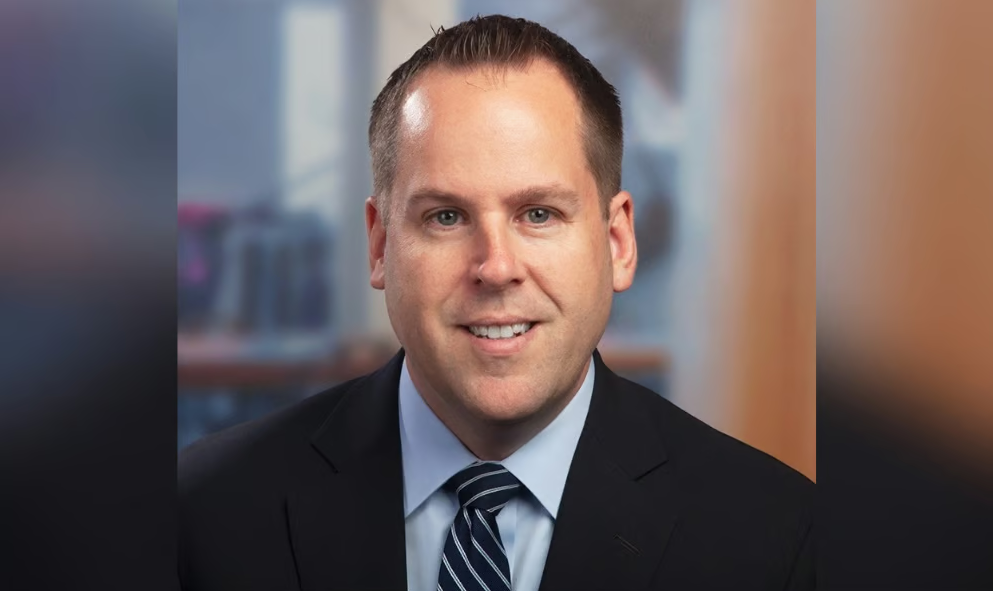
Most HR leaders know their benefits package has gaps. What is harder to articulate is why those gaps are appearing now, when most organizations are offering more benefits than ever before. Chris Morbelli, partner and Americas life and group benefits transformation leader at EY, says the problem is not the list, it is the experience.
"It's not just about lowest cost or most products," Morbelli told HRD America in an exclusive interview. "It's about how do we create this integrated experience for our employees and ultimately increase the value proposition and the ROI of the benefits package they offer. Because at the end of the day, employers want to attract and retain talent in a multigenerational workforce."
Morbelli co-authors EY's Harnessing Growth in Workforce Benefits research series, conducted in strategic partnership with LIMRA and tracking employer and employee sentiment since 2021. His view of the market is shaped by years of research interviews with HR leaders, benefits brokers, and carriers, and by the work he does daily advising major insurers and, increasingly, brokerages on where the benefits industry is heading.
The workforce your benefits program wasn't designed for
Morbelli's starting point is a demographic reality that most HR leaders have registered but not fully reckoned with strategically. For the first time, Gen Z and millennials outnumber Gen X and baby boomers in the workforce. Gen Z alone now outnumbers boomers. Five generations are present in the workplace simultaneously, each at a different life stage, with different financial pressures, different health concerns, and fundamentally different expectations of what an employer owes them.
"We're currently in what we call a generational tipping point," Morbelli said. "The most diverse multigenerational workforce is demanding a much more personalized, life-stage, event-based approach than what's traditionally always been a one-size-fits-all."
The phrase he returns to – event-based – is key. The inherited architecture of most corporate benefits programs is built around annual enrollment cycles and product categories: medical, dental, vision, life, disability. That architecture was designed for a more homogeneous workforce with more predictable life patterns.
It was not designed for a workforce that spans employees managing student debt alongside colleagues navigating eldercare, or where a Gen Z employee and a boomer sitting in neighboring desks have almost nothing in common when it comes to what they need from their benefits.
What Morbelli describes as the solution is a reorientation from product to outcome – from "here is our disability plan" to "here is how we protect your income if something goes wrong." The difference sounds semantic but it is not, particularly as Zurich research points to large numbers of workers underinsured on income protection and life cover. "It's not about caregiving services – I need, as a sandwich generation, to care for my ailing father," he said. "How do we put this into more of an outcome-based approach? It makes it more personalized, gives it more context, it makes it more relevant."
Integration is where trust is earned or lost
The practical test Morbelli applies to any benefits program is simple: what does it actually feel like for an employee to use it? Not at open enrollment but at the moment when they need it most.
"It's not I have to file a claim, it's I had a baby and now I'm going to get short-term disability, paid family leave, maternity leave, perhaps a paternity leave," he said. "That event-based experience helps guide employees through these life stages."
An employee navigating parental leave who must contact three separate vendors, re-explain their situation each time, and manually coordinate between HR, payroll, and a disability carrier is not experiencing an integrated benefit, regardless of what the benefits guide says. That gap between what an employer believes they are offering and what an employee actually experiences is, in Morbelli's view, the central challenge facing HR leaders today. Separate PNC data captures a similar disconnect: benefits ROI is rising, yet employees still can't use benefits they already have.
He says closing that gap requires investment in connectivity between carriers, benefits administrators, HR information systems, and enrollment platforms. It is not glamorous work, but it is the work that determines whether a benefits program earns employee trust at moments of real vulnerability.
Absence: the front door HR is leaving unattended
The topic Morbelli flags as most urgent heading into EY and LIMRA's next research cycle is one that many HR teams still treat primarily as a compliance matter: absence and leave management.
His argument is that this is a strategic mistake and that it is about to become a more costly one. As the Department of Labor and an expanding number of state governments mandate new leave programs, the complexity of managing absence is growing rapidly. Leave types are multiplying beyond maternity and paternity to include caregiving leave, sabbaticals, and military leave. Each carries its own eligibility rules, documentation requirements, and employee guidance needs.
"The next horizon of absence and leave management is emerging," Morbelli said. "We don't want to see absence mismanagement."
His forward-looking thesis (one he intends to test formally in the 2027 research) is that absence management, handled well, could become the entry point for the entire non-medical benefits relationship. "How maybe absence is actually the front door for the entire non-medical benefits experience in the future," he said. "With all the state rules coming in, with this virtualized workforce, it's going to continue to get more and more complex and it has such a huge value proposition to employees because it's such a relevant offering to them."
If absence is the front door, then the quality of the leave experience is the first impression an employer makes at the moment an employee is most in need of support. Getting it wrong is a cultural and retention failure.
What HR leaders should prioritize now
Morbelli resists the idea that the answer to all of this is simply more technology or more benefits products. The more he studies the market, the more he returns to three things: connectivity, personalization, and human judgment in the right places.
On connectivity: the value of any individual benefit is limited if it cannot communicate with the systems around it. An absence management platform that does not connect to payroll and HR information systems creates work – for HR teams and for employees – at the worst possible moment.
On personalization: the multigenerational workforce will not respond to one-size-fits-all communication or one-size-fits-all plan design. HR leaders who are not yet segmenting their benefits communication by life stage and employee cohort are leaving engagement on the table. Principal research points the same way, finding that inclusive benefits design drives loyalty only when it is backed by year-round communication.
On human judgment: Morbelli is specifically critical of the instinct to automate everything. When a broker in EY's research described where AI belongs in the benefits experience, they drew a clear line at moments requiring empathy. "Human in the loop and empathy is going to be critical in situations like a death claim," Morbelli said. The same principle applies to how HR teams respond to employees navigating serious illness, bereavement, or family crisis – technology should remove friction, not replace presence.
"It's never a more exciting time to be in the benefits market," he said. "But we need to all be very disciplined in how we do that to keep the relevancy, the personalization, the context, to make it as easy to navigate for the employee as we can."