The $50,000 enrollment error every HR director should know about before their next open enrollment
It started with a paperwork mistake. A director of human resources at a mid-market employer failed to correctly process an employee's life insurance enrollment. The employee was subsequently involved in a fatal accident. The carrier had no record of the enrollment. A $50,000 life insurance claim, owed to a bereaved family, appeared unrecoverable.
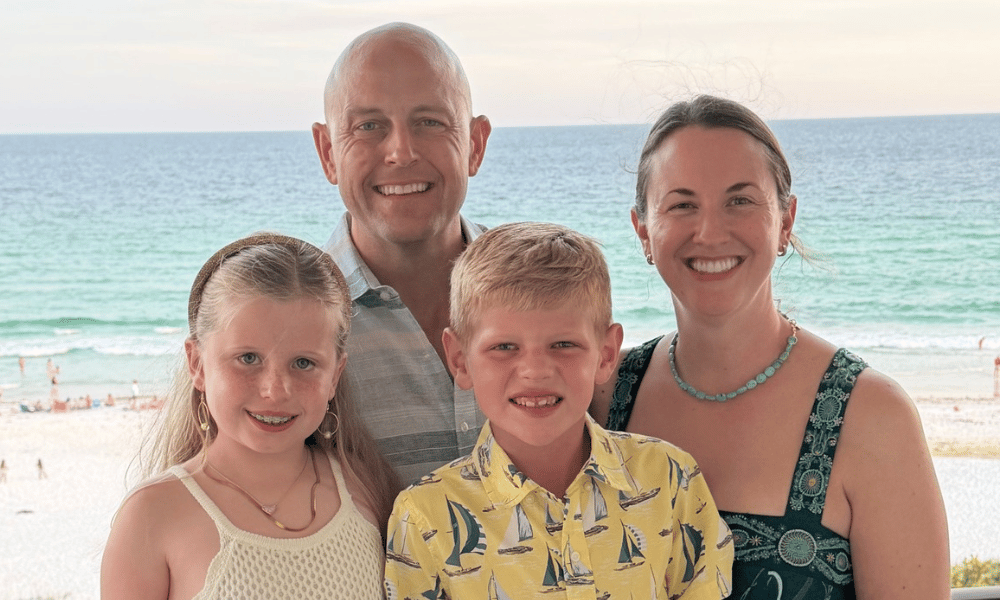
It was TJ Hutchings (pictured), Managing Partner of Employee Benefits at Higginbotham in Fort Worth, Texas, who found the way through. Working with his property and casualty (P&C) colleagues, he identified that the employer held employee benefits liability insurance (EBLI) coverage on the account. The EBLI carrier paid the claim in full within 48 hours.
"These situations are game changers," Hutchings said.
The story is not simply a cautionary tale about one HR director's administrative error. It is a question every HR leader should be putting to their broker before the next renewal cycle: what happens when something goes wrong in our enrollment process, and who is making sure the right coverage is in place before it does?
What HR directors are still not asking their brokers
Hutchings has spent 14 years at Higginbotham, which crossed $1 billion in US brokerage revenue in 2025, placing it 16th in Business Insurance's 2026 ranking of the 100 Largest Brokers of US Business. During that time, he has watched the broker's role expand significantly while the questions HR directors ask at renewal have often stayed the same.
"The idea that you can just show up for a renewal and provide a client with one or two options and be okay with it — I think that is a thing of the past." HR directors who are still receiving that kind of service are, he argues, leaving substantial value on the table.
The benefits broker an HR director should be working with in 2026/27 is doing far more than shopping markets once a year. They are tracking compliance obligations at federal and state level, designing employee communication strategies, managing high-cost claimants in real time, and reviewing every vendor contract for provisions their employer client may not even know to look for.
Does your enrollment process have a financial backstop?
The EBLI case Hutchings described is a reminder that enrollment administration carries financial risk that most HR teams do not price in. When a human error in benefits administration creates a gap in coverage, the liability falls somewhere. A broker who holds both P&C and benefits for the same employer is positioned to make sure it does not fall on the employee's family.
Higginbotham now places an EBLI rider or standalone policy whenever it serves an employer on both sides. Most HR directors have never encountered EBLI. That gap in awareness is precisely the kind of thing a good broker should be closing proactively, not waiting for a claim to surface it. HR leaders reviewing their broker relationships should ask directly whether EBLI coverage is in place and, if not, why not.
How your broker should be containing costs right now
On cost containment, Hutchings runs a nurse navigation model that HR directors can ask their own brokers to implement or match. When an employee needs a pre-scheduled elective service such as an MRI or knee surgery, a navigator sources three provider options within the employee's geographic area through a platform built on direct contracts with those providers. If the employee selects one of those options, both their deductible and out-of-pocket costs are waived entirely, written into the plan document.
The reimbursement target on those direct agreements is 150 percent of Medicare or lower. "That will always be less than what that contractual agreement is through a normal network," Hutchings said. The result is a genuine three-way win: the employee pays nothing at the point of care, the employer pays lower pre-negotiated rates, and the focus on high-quality providers reduces the risk of costly readmissions. For HR directors managing self-funded or partially self-funded plans, this is an immediately applicable benchmark. For those still on fully insured plans, it is a framework for the conversation to be having with their broker right now.
Are you paying your broker the right way?
Higginbotham operates on a transparent fee model, either per employee per month (PEPM) or a percentage of premium, with Hutchings personally preferring PEPM. His reasoning should inform how every HR director reviews broker compensation. "If the best we can do for a client is a 15 percent increase on their medical plan, should I be getting paid 15 percent more in my fee? That just ethically doesn't feel great."
The value argument he makes to plan sponsors is framed around a comparison that resonates immediately with CFOs and HR directors alike. "My goal is for you to feel that you could go out and hire somebody. I want to be an extension of your team. Hopefully you're getting more out of our partnership than you would going out and having to hire, train, and put somebody on your staff to do what we're doing for you."
HR directors who cannot answer that comparison confidently may be overdue for an honest assessment of what their current broker relationship is actually delivering.
What carrier consolidation means for employer clients
Hutchings has a pointed view on what private equity consolidation in the brokerage and carrier markets means for the employers those firms serve. "Private equity is so involved in this, and it's just like a KPI-driven world it feels like we live in. But when people's healthcare is our main interface, you can't KPI someone's healthcare."
For HR directors, the practical implication is this: as brokers are acquired and folded into larger platforms, the personalized service that characterizes the best broker engagements is at risk of being standardized away. HR leaders should be asking not only who their broker is today but who will be servicing their account after the next acquisition, and whether the firm's ownership structure aligns with the continuity their employees need.
Higginbotham's majority employee-owned structure, Hutchings argues, creates a fundamentally different dynamic. "When my team is helping members and helping employer groups, they have a shared ownership in making sure we're doing a good job. You can feel a sense that this means a lot more to the folks at Higginbotham than just, I'm just another account."
The broker who knows why this matters
Hutchings' perspective on all of it is shaped by something no amount of market experience can replicate. At 17, growing up in a single-parent home in Oklahoma, he was diagnosed with Ewing sarcoma, a rare form of bone cancer, after two years of misdiagnosis. Forty weeks of chemotherapy. Twelve weeks of radiation. Five months in a hospital, during which he fell from 205 pounds to 135 and needed a wheelchair and months of physical therapy to walk again.
His family's insurance covered the overwhelming majority of what would otherwise have been a catastrophic financial burden. A benefits agent who intervened to secure approval for a repeatedly denied research drug showed him what the role could mean at its very best.
Twenty-one years cancer-free, turning 40, and training for the Chicago Marathon, Hutchings still measures every broker decision against that original experience. "You can't KPI someone's healthcare." For HR directors evaluating their broker relationships in 2026, finding someone who understands why is the place to start.