One benefits veteran on why self-funded health plans are no longer just for large employers
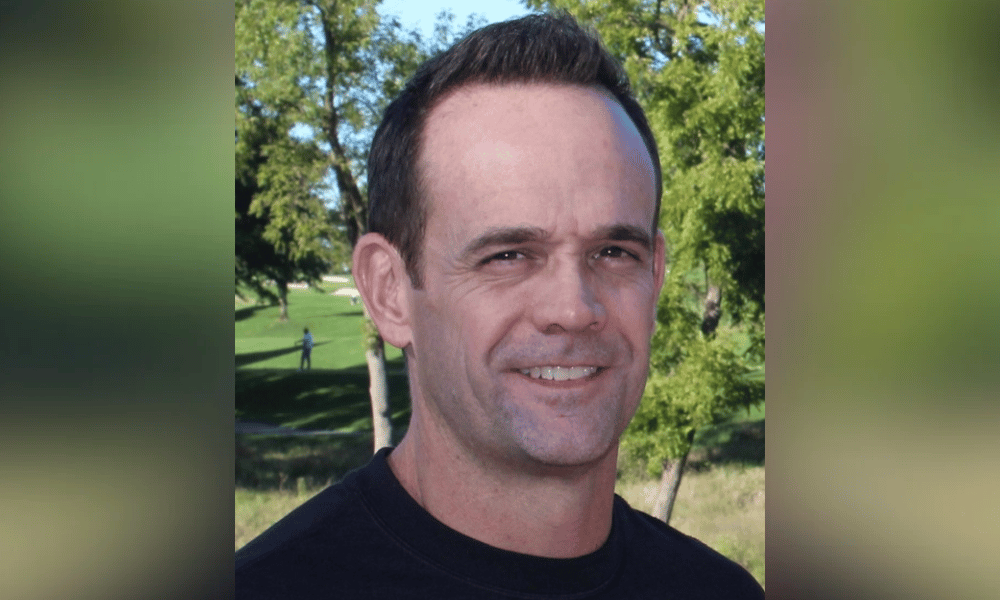
Justin Fallein (pictured) has a theory about why employer health plans rarely change, even when everyone in the room agrees they should. The conversation, he says, keeps starting in the wrong place.
"HR brings invaluable insight into employee needs, utilization and engagement," said Fallein. "At the same time, health plans represent one of an organization's largest expenses, so there needs to be close alignment between HR, finance and leadership on cost management and business objectives."
The observation stems from nearly 25 years of experience across the US group benefits market, spanning carriers, general agencies, TPAs and employer health plan design. Over that time, Fallein has participated in countless discussions involving HR, finance and executive leadership, giving him a unique view of what happens when decision-makers are aligned. In his experience, the most effective health plan strategies emerge when HR leaders, CFOs and CEOs all have a seat at the table, balancing employee needs, business objectives and long-term cost-containment goals.
The CFO gets it immediately
Fallein tells the story of a local university his team was working with. HR had already made the call, no plan changes for 2027, everything pushed to 2028. When the team found a route to the CFO directly, the conversation went rather differently.
"He's like, 'Well, absolutely. If there's something out there that's financially viable and makes sense for us to do it, then we're going to do it now.'" Fallein lets that land for a moment. "You kind of see that difference between how a CFO or CEO views it versus HR."
The reason, he argues, is simple. Health insurance is one of the largest line items on any employer's balance sheet, and the people best equipped to interrogate that spend are the ones who interrogate every other major cost. "When I'm talking to CEOs and CFOs, I'm not leading with Centrus Health Direct. I'm leading with take control of your health plan by building your own health plan."
Why the traditional model is not working
The case for change starts with an uncomfortable fact about who sits on the other side of most employer health plan contracts. Three of the largest health payers in the country are also among the biggest US corporations by revenue, generating billions in profit administering the very plans employers are paying for. "That's counterintuitive for employers that are trying to save money, trying to have an efficient healthcare plan if they're procuring it from entities that are revenue-driven," Fallein said.
The alternative is an unbundled, self-funded approach, selecting a TPA, a network, stop-loss coverage, and a pharmacy benefit manager (PBM) independently rather than bundling everything through a single carrier. The cost difference on pharmacy alone is striking. In an unbundled self-funded plan, Fallein says pharmacy spend typically runs approximately $65 to $75 per member per month (PMPM). Inside a carrier-owned PBM arrangement, he has seen figures of $125 to $150 PMPM, and in some cases over $200.
"When you touch on that, hey, do you want to potentially save 50% on your drug spend they're going to say yeah."
And before anyone concludes this is only a conversation for large employers: "We've got groups that came on last year with under 100 employees that did a full self-funded program."
The tipping point employers are already feeling
"I don't recall a time in my career where there's been more interest and more engagement from employers around doing something different. I just don't recall a time." Fallein says Healthcare Highways is hearing the same across every market it operates in. Employers are ready. The obstacle is not appetite it is familiarity.
Companies that have cycled between the same major carriers for years know that process by heart. They have no reference point for building something themselves. Fallein's advice is to start the conversation early, well before renewal, and give the idea time to settle. "We've got to get in front of them pretty early to start the dialogue and get the wheels turning."
Once employers cross over, he says, they do not go back.
Bringing your people with you
Here is where many employers get unstuck. The plan changes. The communication does not. Fallein has watched too many companies handle it badly, drip-feeding information because they are nervous about the reaction, and getting exactly the reaction they were afraid of.
"Employees do not like being treated like they're stupid." His formula is refreshingly direct: lead with the why, follow with the employee benefit, then talk through the changes. "Healthcare costs were going to go up 20% if we didn't make a change. We had to do something different. Here's what we're doing. Here's how you benefit, employee. We're going to have a lower deductible, lower copays, lower out-of-pocket. Your premium's staying static." He pauses. "Now, when you talk about the changes, they've already heard the good stuff."
Transparency, he says, is not a risk to manage. It is the whole strategy.
He offers two analogies that work well in a boardroom. A health plan, he says, should be optimized like a race car, not once a year at renewal, but continuously, fixing problems as they emerge rather than waiting for the annual tear-down, and staying with a big carrier? That is like eating at the finest steakhouse every night. "You're gonna get a good meal and it's gonna be predictable but it's a premium. It's the most expensive way to do that." Build your own plan with the right partners, and the quality does not have to drop. "We can do just as good as Capital Grille if we have the right partners, ingredients and eat at home, but it's always gonna be a much more efficient, cost-effective way to go down that path."
A final thought
When this conversation ends, Fallein goes home to his family, picks up a golf club when life allows, fits in a workout, and by his own account just tries to be grateful. For someone who spends his days making the case that one of America's most powerful and profitable industries needs a fundamental rethink, there is something worth pausing on there. The person most fired up about changing the system is also, apparently, the most at peace with his own corner of the world. Maybe that is not a coincidence. Maybe you have to know exactly what you are fighting for.
"I'm just trying to live grateful, be thankful for everything we have, because we're absolutely very blessed."
That kind of clarity, it turns out, applies whether you are redesigning a health plan or just deciding how to spend an evening.