How the retail giant framed the action tells HR leaders something important about the new vocabulary of corporate downsizing
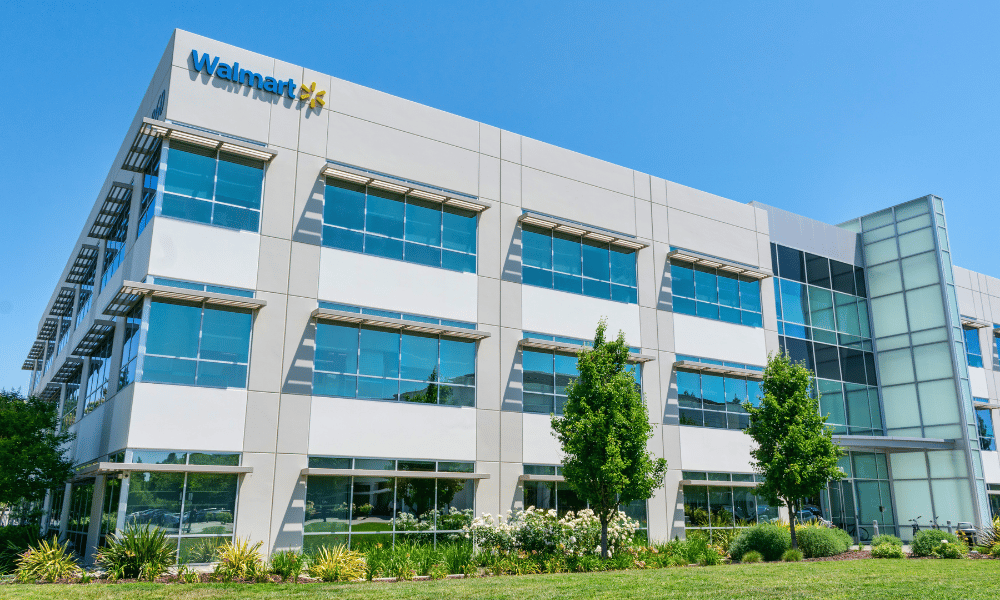
Walmart cut or relocated approximately 1,000 corporate workers on Tuesday as it merged its global technology and AI product teams, according to a Wall Street Journal report citing people familiar with the situation and an internal memo viewed by the newspaper.
The action was announced jointly by Suresh Kumar, Walmart's global chief technology officer, and Daniel Danker, the company's head of global AI acceleration — a role created last summer when Walmart hired Danker away from Instacart. In a memo to staff, the two leaders said they had reviewed Walmart's internal structures and determined that "in some cases, we've had different teams working on similar problems." The solution: consolidate. The result: roughly 1,000 people affected, either out of a role or asked to uproot their lives to Bentonville, Arkansas, or Northern California.
Walmart was quick to draw a distinction that HR professionals should note carefully. A company spokeswoman told the Wall Street Journal that these changes are "related to organisational structure and alignment, not handing over more tasks to artificial intelligence." In a week when Meta's employee protest over AI surveillance dominated technology coverage and Amazon's tokenmaxxing scandal revealed the perverse incentives of AI adoption targets, Walmart's communication team made a deliberate choice: this is not an AI story.
It may be true. But the framing matters — and so does what sits beneath it.
What actually happened
Walmart spent the past year converting three separate technology operations — its warehouse chain Sam's Club, its core retail business, and its international division — into one unified global platform. When you combine three teams into one, you end up with duplicate roles that need to go somewhere. Many affected staff have been told they can apply for open roles within the company. Others have been asked to relocate to Bentonville or Northern California. Those who decline, in practice, are leaving.
The world's largest retailer has been quietly reshaping its white-collar workforce for several years, nudging staff towards fewer corporate hubs and folding separate units into larger, centralised operations. This is not a new pattern. In February 2023, Walmart closed three U.S. technology hubs and asked hundreds of employees to relocate. Earlier this year, it filed layoff notices in New Jersey covering 100 roles at its Hoboken offices. The current action is the largest single event in that ongoing consolidation.
What is new is the AI leadership layer now overseeing the restructure. Danker's appointment as head of global AI acceleration — a role that did not exist before last summer — signals how Walmart is repositioning its technology narrative. Last year the company rolled out a suite of AI-powered "super agents" designed to improve customer experience and streamline operations. The company has invested heavily in AI to close gaps with its largest rival, Amazon, which had a head start with its generative AI-powered shopping assistant. CEO John Furner has said he believes the company's growth will continue "at a much lower marginal cost than what it has historically."
The "relocation or layoff" question HR cannot ignore
The framing of Tuesday's action as a combination of layoffs and relocations is not merely a communications choice — it has significant legal and human implications that people professionals need to understand.
When an employer asks an employee to relocate cross-country or lose their job, the legal question is whether that constitutes a genuine choice or a de facto termination. Employment law experts are clear that forcing relocation without a contractual mobility clause can constitute constructive dismissal — where an employee is effectively compelled to resign by conditions that would be considered intolerable by a reasonable person. The distance involved, the timeline offered, the adequacy of the relocation package, and whether some employees are given the option to stay while others are not all bear on that analysis.
Restructuring accounted for 133,611 cuts in the United States in 2025, and AI was cited in 71,825 job cut announcements last year. HRD has reported that AI and reorganisation are expected to fuel the majority of redundancies throughout 2026, with companies described as "rebalancing" their workforces — laying off in areas that no longer align with near-term priorities while hiring aggressively in functions tied to AI transformation and revenue.
The "rebalancing" language is worth scrutinising. When a company characterises a reduction as structural alignment rather than AI-driven displacement, it is making a legal and reputational argument as much as a factual one. As HRD has reported on the new layoff era, executives are increasingly using AI to justify deep restructuring while simultaneously distancing themselves from the implication that the cuts are about replacing people with technology. Walmart is doing something subtler: explicitly disclaiming the AI framing while implementing a restructure that was triggered by the arrival of an AI acceleration leader and the consolidation of AI product teams.
HR leaders at any organisation undertaking similar hub consolidations should be asking: what are we actually communicating to affected employees? And does the process — the timeline, the package, the genuine openness to internal mobility — match what we are saying?
The scale behind the story
It is worth placing this in context. Walmart is the country's largest private employer, with around 1.6 million U.S. employees. The 1,000 corporate workers affected represent a fraction of that total. The company has been on a sustained sales-growth streak, and its profits from non-goods businesses — advertising, technology services, financial services — are growing faster than its retail margins. This is not a company in distress. It is a company choosing to run leaner at the corporate level while investing heavily at the technology layer.
That investment is substantial. The decision to consolidate reflects Walmart's long-term strategy of building stronger in-office collaboration and reducing the dispersion of tech operations. The company has asked many of its affected corporate staff to move to centralised hubs rather than remain in distributed offices — a pattern that has been playing out across the industry since the post-pandemic return-to-office wave and is now accelerating under the cover of AI restructuring.
HRD has reported that many large companies, including Meta and Amazon, have announced significant layoffs in recent months, often framed around AI investment or workforce reshaping. But as HRD has also reported, Gartner forecasts that by 2027, 50 per cent of companies that attributed customer service headcount reductions to AI will rehire staff to perform similar functions, even if the roles return under different titles. Forrester reaches a similar conclusion, predicting that half of AI-attributed layoffs will be quietly reversed.
That boomerang risk is something Walmart's HR team will be tracking. The consolidation of three technology operations into one is operationally logical. Whether the talent lost in the process — people who declined to relocate to Bentonville, people who found other roles during the transition period — can be recovered when the consolidated platform needs to scale is a harder question to answer in a memo.
What the surviving workforce is experiencing
The 1,000 affected employees are only part of the HR challenge. For the tens of thousands of Walmart corporate workers not directly touched by Tuesday's announcement, the message received is not necessarily the one sent.
HRD has reported extensively on survivor syndrome following mass layoffs — the guilt, anxiety and reduced productivity experienced by employees who remain after their colleagues are cut. Research found that 74 per cent of employees who were kept on after mass layoffs experienced a decrease in productivity, with 64 per cent adding that the quality of the company's overall mission and service also diminished. HRD has also reported that AI-triggered restructurings carry a specific psychological weight: employees are already feeling anxiety from AI-triggered layoffs, with some suffering from survivor's guilt as their colleagues are retrenched amid AI adoption.
The framing Walmart chose — this is structural, not AI; affected employees can apply for internal roles — is designed in part to manage that survivor experience. Transparency about the rationale, genuine internal mobility, and active communication from leadership about what comes next are the levers HR has to contain the productivity loss that typically follows.
HRD has reported on how to manage the aftershocks of layoffs, with the consistent finding that the quality of communication — not the scale of the cuts — determines how much damage carries over to the remaining team. A memo that says "we had overlapping teams" is a start. What employees need to hear next is what the organisation looks like now, what the path forward is, and whether leadership has any conviction in the plan.
What this means for HR leaders
Walmart's Tuesday announcement lands on the same day as the Amazon tokenmaxxing story and a week after Meta's mouse-tracking protest — a cluster of corporate AI and workforce stories that, taken together, describe an industry moving fast and managing people slowly.
A few practical observations for people professionals:
"Relocate or leave" is a layoff that needs to be managed as one. The legal exposure around constructive dismissal claims, disparate impact (who is being asked to move versus who is not), and the adequacy of relocation packages is real and significant. HR should audit any hub-consolidation programme against those risks before the memo goes out, not after.
The distinction between AI-driven and structure-driven cuts is becoming harder to maintain. Walmart's spokeswoman drew it clearly. But when the restructure was triggered by a new head of AI acceleration, involves the consolidation of AI product teams, and is being implemented in the same week that the industry is convulsed by AI workforce stories, employees will draw their own conclusions. The communication strategy needs to be more than a disclaimer.
Internal mobility is only as good as the openness behind it. Telling affected employees they can apply for open roles is standard. But if the culture signal is that the company is contracting and the internal market for talent is competitive, that offer is less meaningful than it appears. HR needs to actively sponsor affected employees through that process — not just open the door.
Survivor syndrome is the hidden cost of every restructure. HRD has previously reported on AI fuelling layoff anxiety and how to stamp out survivor syndrome. The research is consistent: the employees who remain after a corporate reduction are watching closely, and their productivity, engagement and intent to stay are all at risk. The HR response to Tuesday's announcement is not complete when the 1,000 affected employees are notified. It is complete when the remaining workforce understands what kind of company it is still working for.
Walmart employs 1.6 million people. The 1,000 affected by Tuesday's announcement represent 0.06 per cent of that total. The way those 1,000 cases are handled will be visible to a far larger number.