Controversial software company that supports ICE back in the spotlight

When the Metropolitan Police quietly ran an artificial intelligence program across its internal systems last month, it expected to find problems. It did not expect to find quite so many.
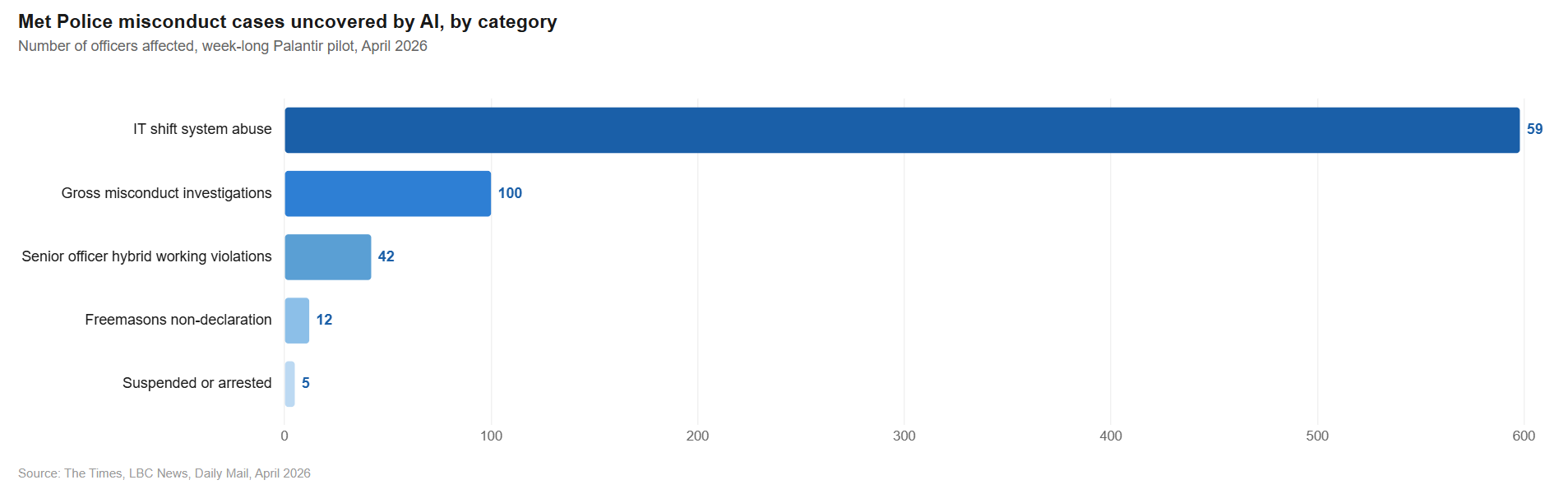
In what is being described as an unprecedented exercise in workplace surveillance, Britain's largest police force deployed software supplied by the American data analytics company Palantir to cross-reference years of employee records - sickness logs, overtime claims, expense filings, building access data and public complaints - without telling the 46,000 officers and staff being monitored. The results, which emerged publicly this week, were striking: 100 officers are now under investigation for gross misconduct, 615 have received warning notices, and 598 cases involve abuse of the IT shift system for personal or financial gain.
Approximately 42 senior officers, from chief inspector to chief superintendent, face losing their jobs after falsely claiming to be in the office while working from home, in breach of Metropolitan Police guidelines requiring at least 80 percent office attendance. Twelve officers face gross misconduct proceedings for failing to declare their membership of the Freemasons, while a further 30 remain under suspicion.
The types of misconduct identified were not exotic. They were the mundane frauds of the modern workplace: false overtime, manipulated shift data, fabricated home-working compliance. What was new was the method used to find them.
How the technology works
The tool works by pulling together existing internal data and using algorithms to spot patterns, anomalies and red flags, helping to identify misconduct earlier than traditional supervision methods would allow. It does not require investigators to know in advance what they are looking for. It simply looks for what doesn't fit.
The system brings together data from multiple internal databases to identify behavioral patterns among staff that may indicate failings in standards, culture and behavior. In the Metropolitan Police pilot, a week-long run of the software was sufficient to surface years of alleged wrongdoing that had gone undetected through conventional oversight.
Read next: Worker sues American Airlines after FMLA leave branded 'timecard fraud'
For employers outside policing, the implications are hard to ignore. The frauds uncovered at Scotland Yard - false expense claims, manipulated attendance records, time theft - are precisely the categories of misconduct that affect organizations across every sector.
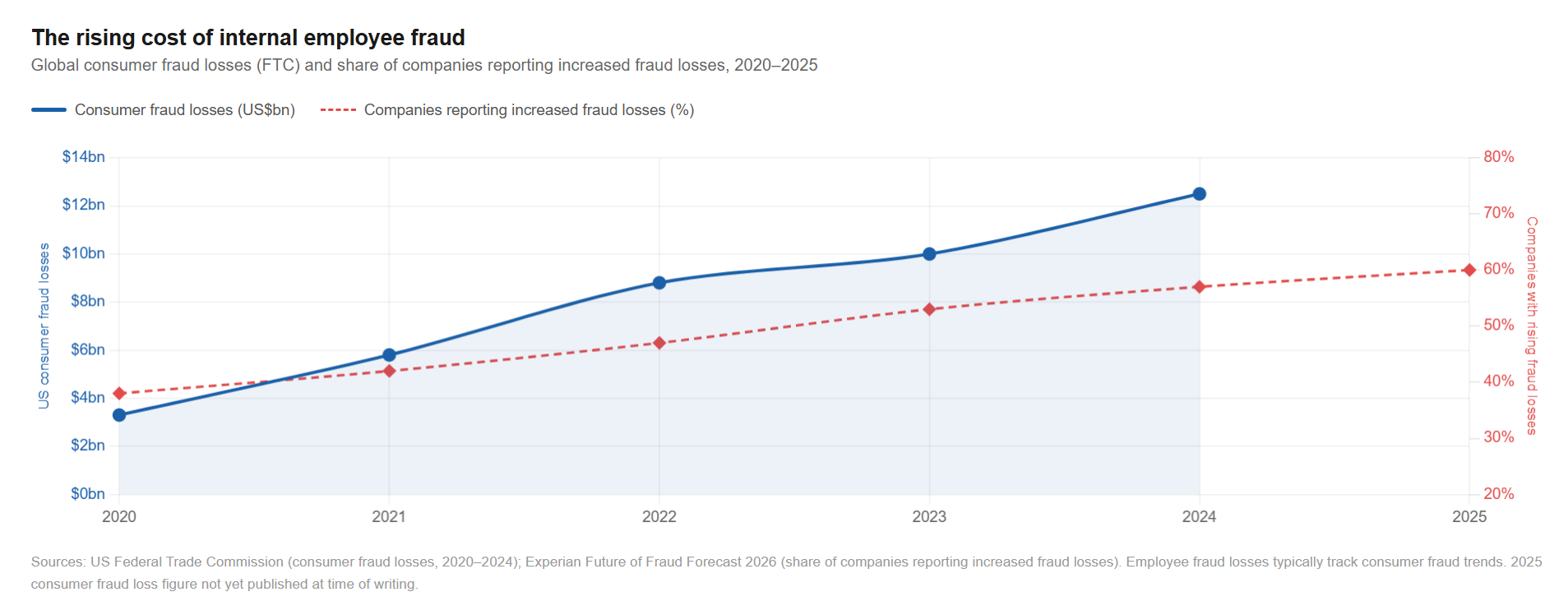
The scale of the problem is significant. Multiple studies, including PwC's Global Economic Crime and Fraud Survey and reports from the Association of Certified Fraud Examiners, confirm that remote work correlates with higher risks of internal fraud, data theft and policy circumvention. Meanwhile, generative AI tools are now being used to create fraudulent expense reimbursements - complete with fabricated itemizations, realistic layouts and signatures - with one report noting that 14 percent of flagged fraudulent submissions in a single month were AI-generated.
A turning point for workplace oversight
The Metropolitan Police pilot has accelerated a debate that was already under way in boardrooms and HR departments. Commissioner Sir Mark Rowley, who commissioned the program after a series of high-profile misconduct scandals including the Charing Cross affair, has spoken of his belief that wrongdoing had remained undetected despite years of conventional reform efforts. Scotland Yard is now considering expanding its use of AI beyond internal discipline, including to analyze crime data and identify high-risk offenders.
The replicability of the approach is not lost on private sector employers. Palantir holds a £330 million NHS contract for a federated data platform and a £240 million Ministry of Defence deal, with its AI tools also available to several other police forces through regional investigations units. The infrastructure, in other words, already exists at scale.
Read next: Misuse of company funds, resources top misconduct reports
Labour's government has signaled that it intends to go further. The policing white paper, published earlier this year, committed more than £115 million over three years to support rapid AI rollout across all 43 forces in England and Wales.
The pushback
The Metropolitan Police's approach has not been universally welcomed. The Police Federation of England and Wales, which represents rank-and-file officers, criticized the initiative, describing it as “automated suspicion” and warning that such metrics could reflect workload pressures, stress or staffing shortages - not misconduct.
The concern is a legitimate one. Correlation between high sickness rates and misconduct is not the same as causation, and there are obvious risks in treating a data pattern as equivalent to evidence. UK GDPR and the Data Protection Act require necessity and proportionality tests, and watchdogs have questioned data retention periods and deletion policies. The Met has yet to publish algorithmic impact assessments for the program.
Liberal Democrat MP Martin Wrigley put the question directly: “Palantir seems to be watching over every aspect of government. Who is watching Palantir?”
Palantir itself is a source of separate controversy. The company also works with the Israeli military and the Trump administration's Immigration and Customs Enforcement operation. This week, MPs called for a government review of contracts involving the firm.
What employers should consider
For organizations contemplating similar tools, the Metropolitan Police experience offers both a proof of concept and a caution. The technology demonstrably works. A week-long automated analysis surfaced misconduct that years of human supervision had missed. The commercial case, in an era of hybrid working and dispersed teams, is straightforward.
The governance case requires more care. Covert deployment - which is what Scotland Yard chose - creates legal and reputational risk even when the results are valid. Employees retain rights under data protection law, and the absence of transparency about how monitoring data is used can undermine the trust that organizations are typically trying to protect.
Read next: Two in three employees admit to workplace 'theft': survey
The lesson from Scotland Yard may ultimately be this: the same data that employers already hold - attendance records, expense systems, building access logs - contains signals that are invisible to human reviewers and legible to machines. The question for every organization is not whether that capability exists, but how, and under what rules, they choose to use it.