His own cardiologists never blamed the job - and that decided the case
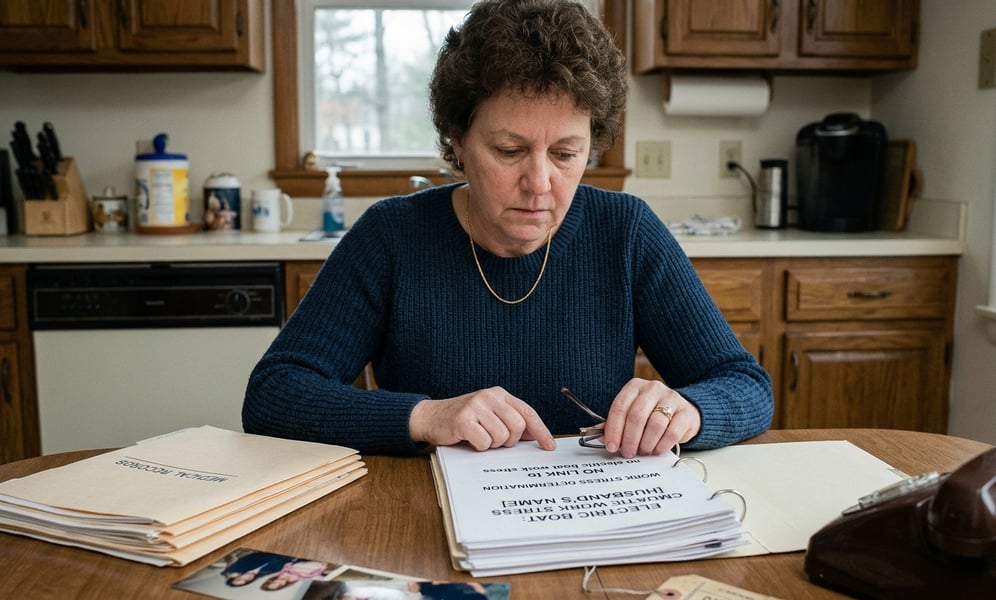
A worker's long hours and heavy travel couldn't link his fatal cardiac event to the job, a Connecticut appeals court ruled.
On September 1, 2026, the Appellate Court of Connecticut upheld the denial of survivors' benefits to the widow of a longtime Electric Boat Corporation employee. He had died in his sleep of a cardiac event in February 2020, and the claim turned on whether his job had caused it.
He had worked for the company since 1980. In August 2019, he began traveling to Cape Canaveral, Florida, flying down for two weeks at a stretch and working six days a week while there. His widow argued that the cumulative strain of the hours and travel had contributed to his death.
The medical file pointed the other way. The employee had a documented history of hypertension, heart disease and an aortic condition, with cardiac care going back to at least 2013. A December 2019 note from his primary care doctor recorded weight gain tied to travel and lack of exercise. His treating cardiologists and that doctor never flagged work stress as a factor, and never recorded any history of stressors on the job. A company witness testified that the employee had been offered an extended assignment that would have let him stay in Florida, but turned it down and asked for normal business travel instead.
A cardiologist retained by the widow concluded that stress from the job caused the death. But the administrative law judge who heard the claim was not required to credit that view, and instead credited the employer's experts. A cardiologist for the company concluded the heart disease "was not caused by his work" and pointed to progressive aortic stenosis. A psychiatrist for the employer found "no evidence of work-related stress." The judge ruled the employee "did not have work induced stress that was a substantial contributing factor to his heart disease and death."
The widow appealed, arguing the judge had wrongly demanded proof of a "sudden or unusual work stressor" - a test she said fits accidental injuries, not the slow, cumulative kind of claim she was making. The Compensation Review Board disagreed, and so did the Appellate Court, which held the finding was supported by the record and would not be second-guessed on appeal.
For HR, the case shows how much weight contemporaneous medical records can carry when an employee's death is tied to workload. The treating doctors' silence on work stress, not the hours themselves, decided it.