Big Mac economics: who's really getting their money's worth?
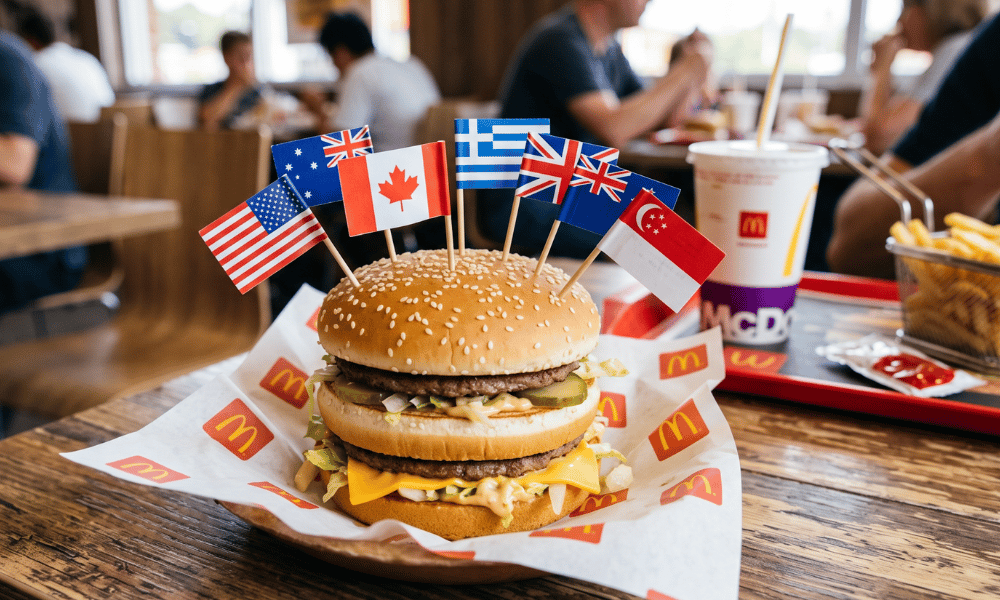
Forget GDP. Forget exchange rates. Forget whatever your economics professor tried to explain to you with a supply-and-demand graph that made you want to leave the building. The only metric that matters is this: how many Big Macs can your paycheck actually buy?
The Economist has been using the Big Mac as a serious economic tool since 1986, originally to figure out whether currencies were overvalued or undervalued — the famous "Big Mac index." But somewhere along the way, someone at The Economist looked at that idea and thought, "you know what this needs? Wages." Enter the McWages index, which takes the same greasy, double-decker logic and applies it to salaries instead of currencies (The Economist, "How many Big Macs does your salary buy?," Aug. 25, 2026).
The genius of the burger, apparently, is its consistency. A Big Mac in Tokyo is basically the same as a Big Mac in Toronto — same buns, same "special sauce" of mysterious origin, same slightly sad pickle placement. That makes it a surprisingly reliable ruler for comparing what people actually earn, once you strip out the noise of currency swings.
The recipe
Here's how The Economist cooks up the numbers:
- Start with average earnings data from the OECD (a club of mostly wealthy countries that enjoy having opinions about interest rates).
- Deduct taxes and social security, using the rates for a single person with no kids — memorably described as "McDonald's core customer base." (Sorry, families.)
- Divide what's left by the local price of a Big Mac (as of July 2025) to see how many burgers a year's salary buys.
- Also work it out per hour, because someone who works 60 hours a week shouldn't get bragging rights over someone working 35.
And the winner is...
By annual haul, America wins gold, silver, and basically the whole trophy case:
- United States — a jaw-dropping ~10,215 Big Macs a year
- Switzerland
- Australia
- New Zealand
- Israel
But hold your fries — because per hour worked, the podium reshuffles entirely:
- Switzerland — about 7 Big Macs an hour
- United States — about 6 Big Macs an hour
- Australia — about 5 Big Macs an hour
Translation: Americans earn more burgers overall, but only because they're clocking in far more hours to get there. The Swiss, meanwhile, are strolling out of the office at a reasonable hour with more burger-buying power per minute worked. Efficient AND well-fed - very on brand for a country that also gave us precision watches and unreasonably good chocolate.
READ MORE: Economic uncertainty drives shifts in pay strategies
Bringing up the rear on both lists: Mexico, trailed by Greece and Slovakia — the burger equivalent of finishing a marathon and being handed half a fry.
Plot twists
- Latvia is the index's Cinderella story — workers there can now afford one extra Big Mac for every two hours worked compared with two years ago. Someone throw them a parade, or at least a Happy Meal.
- Germany, on the other hand, is having a rough patch: wages have stalled while burger prices climbed, leaving German workers measurably poorer in Big Mac terms. It's gotten serious enough that the left-wing party Die Linke has floated capping the price of döner kebab — leading The Economist to muse that Big Macs might be next on the chopping block.
So there you have it: an entire international pay comparison, delivered via the medium of a burger that most nutritionists would rather you didn't think about too hard. Somewhere, an economist is very proud of this, and honestly, they should be.
Note: figures are drawn from The Economist's Aug. 25, 2026 "Graphic detail" piece, based on OECD earnings data and McDonald's pricing as of July 2025 — worth a check against the original for the full 32-country table if you want to see exactly where your own country lands.