When leaders stand beside polarizing figures, HR is left handling the internal backlash.
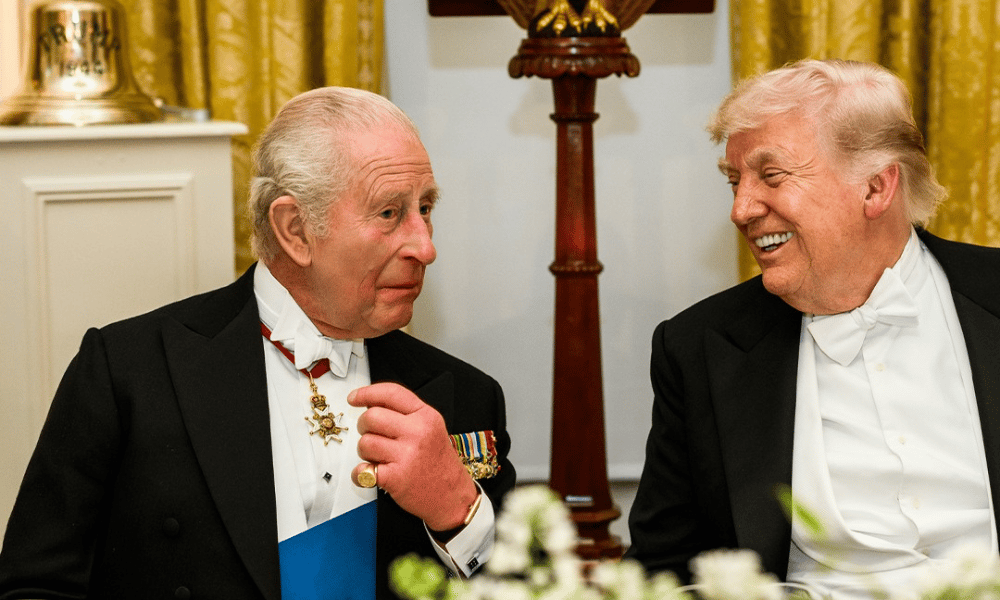
Photo: The White House, Public domain, via Wikimedia Commons
King Charles’ visit with President Donald Trump this week is drawing attention on both sides of the Atlantic. While the meeting is rooted in diplomacy, it comes at a tense moment in U.S.-UK relations, with friction over the Iran conflict, tariff threats and broader strains between Trump and European allies. The trip has also become increasingly unpopular back in Britain, where polling shows most Britons don't support it and some politicians have called for it to be canceled.
The reaction underscores a growing challenge inside organizations: leaders are often judged not only by what they say, but by who they are seen with.
That dynamic is playing out in workplaces where executive appearances, partnerships and affiliations can quickly become internal flashpoints. In a polarized environment, symbolism carries weight. A public handshake, a shared stage, or a party photo-op may be interpreted as alignment or even approval, regardless of the leader’s actual intent.
“We are in an extremely polarizing time right now, and that line between showing up and endorsing has effectively disappeared,” said Joseph Varner, a U.S.-based CHRO for public, private and private equity-backed companies. “When a senior leader shows up or is with a polarizing figure, employees look at that as that is your vote of whatever that situation is. There’s no getting around that anymore.”
Varner said the same principle can apply far beyond politics. Employees may read meaning into a CEO’s public associations, sponsorship choices or social presence, even when executives see those moves as routine business decisions.
‘They’ll connect the dots wrong’
While leaders often defend controversial appearances as strategic, ceremonial or necessary, employees may not have that context, especially if they encounter the moment first through headlines or social media.
“If an employee is flipping through a magazine and they see their boss with a polarizing figure and they don’t know anything about it, of course they’re going to jump to their own assumptions,” Varner said.
Read more: Employees aren't getting the leaders they want
That gap between intent and perception can create problems quickly. Trust may erode even when no workplace policy has changed. Employees can begin to question whether stated values still apply, or whether leadership is disconnected from workforce concerns.
Maurice Schweitzer, Professor of Management at the Wharton School at the University of Pennsylvania, said symbolism matters because it shapes how employees understand leadership itself.
“Effective leaders motivate their employees. Great leaders inspire their employees. Stories and narratives can play a key role. This is why symbolic acts matter. They shape the narrative,” he said.
The lesson for employers is straightforward: silence leaves room for interpretation.
“If you allow them to connect the dots, they’re going to connect it wrong,” he said.
Varner said leaders who communicate clearly about why they are engaging with a controversial person or organization are in a far stronger position than those who say nothing and hope the issue fades.
“I think communication is incredibly strong,” he said. “If you are transparent and you are vocal about what you’re doing to your employees, that’s definitely going to help.”
HR in the middle
Few HR leaders decide who the CEO meets with; many, however, are tasked with handling the employee reaction afterward.
Varner described the role as three-pronged. Sometimes HR is reactive, cleaning up the fallout after a leadership decision. Sometimes it is preventative, helping prepare communications before employees see a controversial image or announcement. And sometimes it’s strategic, ensuring leadership actions, company culture and business goals remain aligned.
“We are babysitters in addition to culture thinkers and organizational designers and shareholder revenue builders,” he said.
That balancing act has become more complex as politics and social issues spill into the workplace.
“There was always that saying, never talk about politics or religion. All of that’s out the window now,” Varner said. “Our job is incredibly hard.”
Read more: CEOs downplay staff discontent, leaving HR to manage the fallout
He added that employee complaints today are more nuanced and emotionally charged than they were a decade ago, driven in part by constant connectivity and online discourse.
“I can tell you the nuance or the level of complaints that I’m receiving today versus what I received 10 years ago,” Varner said. “People are more emotional and the membrane is incredibly thin now, so the littlest thing could send someone spiraling.”
That doesn’t mean employers must avoid every controversial decision. Business realities still matter. Deals must be made, relationships managed and institutions represented. But leaders who ignore how those moves land internally do so at their own risk.
Varner said the better approach is to explain the purpose of the engagement plainly and allow room for disagreement.
“I wouldn’t sugarcoat it anymore. I think truth dies in ambiguity,” he said. “We need to be really transparent with what we’re doing, what we’re trying to do, what the message is.”
King Charles’ White House visit may be global news, but the workplace lesson is closer to home. Employees notice who leaders stand beside and they often draw conclusions long before leadership offers an explanation. In a culture shaped by speed, symbolism and scrutiny, that silence can be costly.