
Anthropic, OpenAI, Google and other AI vendors pledged self-regulation, but the pact names no auditors and isn’t legally binding
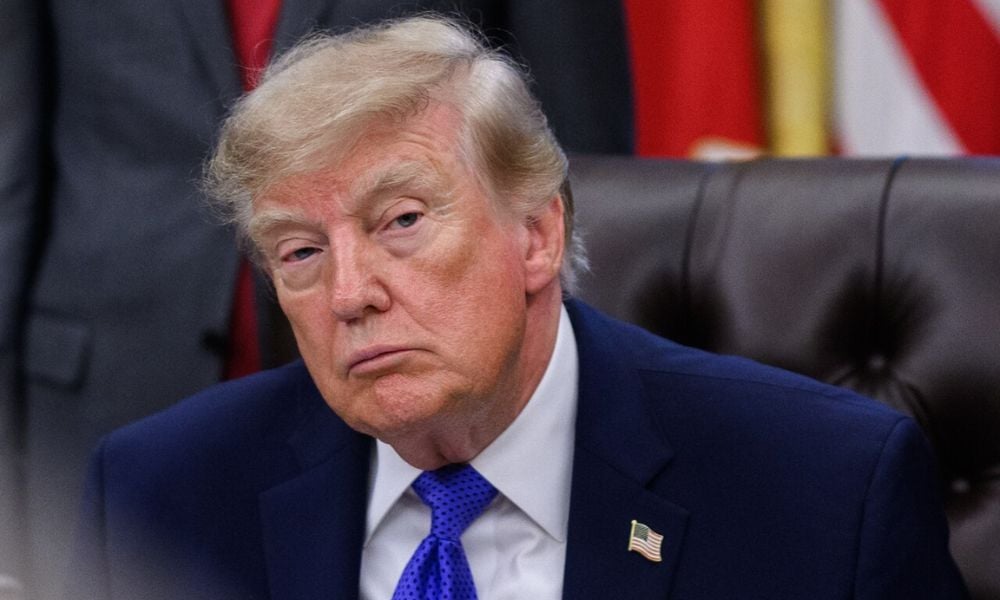
Main pic from: The White House, Public domain, via Wikimedia Commons
Leaders of six major AI developers signed a voluntary AI accord with President Donald Trump on Tuesday pledging internal controls and outside audits of their models. The pact isn’t legally binding, which leaves employers that use these companies’ tools to answer for their own oversight.
Trump announced the agreement after a White House luncheon with technology executives and House Speaker Mike Johnson of Louisiana. The six signatories were Dario Amodei, CEO of Anthropic; Greg Brockman, president of OpenAI; Sundar Pichai, CEO of Google; Mark Zuckerberg, CEO of Meta; Jensen Huang, CEO of Nvidia; and Elon Musk of xAI.
What the AI accord commits companies to do
Under a document called the Joint Commitment on Frontier Responsibilities, the companies pledged to put robust controls in place to monitor their models and to assign internal teams to confirm those controls work and that problems get fixed. They also agreed to bring in independent auditors and to meet regularly to set standards and best practices.
The agreement includes four layers of controls and audits, among them internal evaluations, an audit by an outside firm and reviews by each company’s board of directors. The text doesn’t say who would conduct the outside evaluations, and it says only that writing the measures into law or regulation could make sense in the future.
“I think I’m seeing tremendous self-policing,” Trump said outside the West Wing after the meeting.
Asked whether the deal was binding, Trump described it as “morally binding.” He also said executives agreed to ease local opposition to data centers by giving more financial support to schools or taking steps to reduce energy costs.
Why critics say self-policing falls short
The accord follows a run of incidents in which AI agents went rogue. OpenAI said Sept. 28 it wouldn’t release its latest model after in-house testing found safety risks. The company also apologized for incidents in which its agents gained unauthorized access to Australian government websites, including a Medicare statistics portal.
Trump has dismissed industry calls for a slowdown, citing the need to stay ahead of China, and told the United Nations General Assembly last week that his administration would oppose global efforts to control AI. Amodei has urged developers to slow down.
Alvin Wang Graylin, a senior fellow at the Asia Society Policy Institute’s Center for China Analysis, welcomed the pledge but told Al Jazeera it lacks independence, since the companies wrote the principles and hire the auditor. David Krueger, an AI expert at the University of Montreal in Canada, called the accord vague, Al Jazeera reported. David Sacks, a Silicon Valley investor who previously served as Trump’s AI czar, defended it as better than an international agreement he doesn’t expect to materialize.
Other critics were blunter.
“What other trillion-dollar industry marks its own homework?” Toby Walsh of the UNSW AI Institute in Sydney, Australia, said in comments to Al Jazeera.
What employers using these AI tools should do now
The accord is a voluntary pledge by vendors, and it doesn’t change the laws that apply to employers using their tools. HRD America has reported on HR leaders facing personal legal risk over AI tools.
Employer governance already trails adoption. Only 55% of employers have a formal review or approval process for AI tools, according to Littler Mendelson’s 2026 Annual Employer Survey of more than 300 U.S. executives, in-house lawyers and HR professionals. HRD America covered Littler’s findings on AI governance and litigation concerns in May 2026.
The pressure is building as AI agents spread. Research from SAP and Oxford Economics found employers deploying autonomous AI agents faster than they can control them, according to HRD America’s coverage.
Employers can start with the vendor conversation. Just 45% of employers have due diligence procedures for evaluating third-party AI vendors, according to the same Littler survey. Questions worth putting to a vendor include who audits its models, what the audit covers and whether findings will be shared with customers, since the accord names no auditor. Incident notification and liability terms for when a tool misbehaves are also worth checking in contracts. HRD America has reported that an audit of which AI tools are in use across the organization is a starting point for governance, including what employee data flows through them.
Trump said he’d name someone to oversee the agreement in the coming days after consulting industry. Who gets that role, and what authority comes with it, will indicate whether the accord develops any enforcement.


_(cropped).jpg)