Workers are outsourcing their thinking to AI. Researchers warn the cognitive atrophy is real and most employers aren't prepared
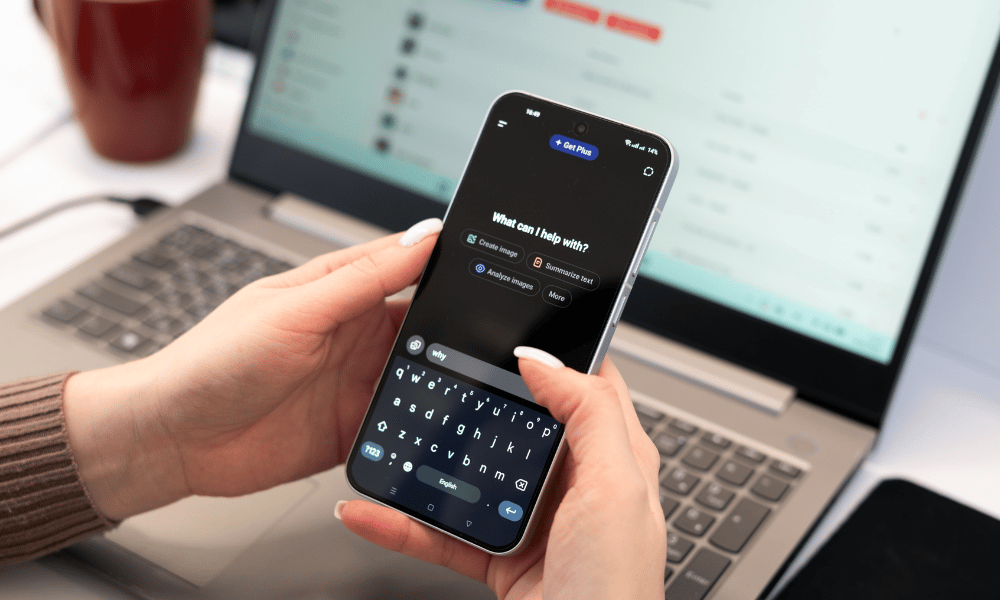
Skill decay is emerging as a serious risk inside organizations that have embraced AI adoption without a plan to protect what employees know how to do on their own. Two researchers who have studied the cognitive effects of AI say employers need to take it seriously.
Mohammad Hossein Jarrahi, a professor in the Information Science department at the University of North Carolina at Chapel Hill, calls this accumulation “cognitive debt”: a term for the capability that erodes every time an employee lets AI handle a decision that would have otherwise required human judgment.
“You are gaining something in the short term that might result in losses in the long term,” Jarrahi said.
Jarrahi argues that most organizations treat AI the same way they’ve treated every efficiency drive before it. The focus is on what can be automated, not on what capability disappears when it is.
Skill decay starts with the friction AI removes
Jarrahi draws a distinction that most AI deployment strategies overlook. There are two types of workplace friction, he argues, and only one of them should go.
The first kind is toil: paperwork, redundant processes, tasks with no learning value that AI handles well. The second is harder to see, the friction of difficult decisions, competing options, and moments that require genuine judgment.
“These are decision-making moments. These are difficult work moments. You need to examine different options. You need to go closely and decide what the outcomes and consequences are,” Jarrahi said.
When AI absorbs that second category of friction, employees stop doing the reps. And like physical muscles, cognitive muscles weaken without use, he argues.
“Cognitive muscles decay as a result of this process because you don’t make enough hard decisions,” he said.
Adam Green, a professor of neuroscience and director of the Laboratory for Relational Cognition at Georgetown University in Washington, D.C., has studied what happens in the brain when skills go unpracticed. Disuse causes real, measurable deterioration.
“If you stop thinking in certain ways, your brain will continue to change, and those changes will make it less capable of those sorts of things that you’re not practicing,” Green said. “Brains have a lot of what we call plasticity. They change based on the experiences of the person.”
He points to GPS as a proven precedent. Two decades of navigation offloading has measurably changed how spatial cognition functions in the brain. AI is now doing the same thing, but across a much wider range of cognitive skills.
The concern is gaining traction beyond academic circles. The 2026 International AI Safety Report, compiled by researchers across 30 countries, found emerging evidence that routine delegation of cognitive tasks to AI may negatively affect critical thinking and memory. It cited one study in which clinicians’ ability to detect tumors without AI assistance dropped by 6% within three months of AI support being introduced.
The problem with letting AI handle routine work
Jarrahi points to a structural problem in how most organizations are deploying AI.
The standard model works like this: AI handles routine cases, humans handle exceptions. In practice, that means the most cognitively demanding work gets handed to employees whose judgment has had fewer opportunities to develop, because AI has been handling the decisions that used to build it.
“You are giving the most difficult cases to someone who hasn’t even solved the simpler cases,” Jarrahi said. “You are giving a very heavy load to someone who hasn’t really developed the mastery.”
Workers who once built judgment through thousands of routine decisions, learning patterns, developing intuition, catching what’s wrong, are now skipping that foundation entirely. When a situation arises that AI can’t handle, one where precedent breaks down and real human reasoning is required, there’s no depth to draw on.
And once those skills are gone, they may not come back. “In many cases, the skill is gone. I don’t think you can redevelop it,” Jarrahi said.
That’s not a hypothetical. As HRD America has reported, companies deploying AI agents at scale across enterprise workflows are already wrestling with the governance and oversight challenges that come with handing autonomous systems the routine work. Less examined is whether the humans left in oversight roles can actually catch what the AI misses.
The creativity problem
Green’s research adds another dimension to the concern. His lab has been tracking what happens to original thought when workers lean on AI for idea generation.
“AI is breaking the link between words and ideas,” he said. “It’s making words more diverse. And at the same time, the ideas that those words are conveying are becoming more similar to each other.”
In other words, the words look more diverse but the ideas behind them are converging. That’s a direct problem for any organization that depends on genuine innovation or differentiated strategy.
He also referenced research by Sandra Matz, a professor of business at Columbia Business School in New York, showing that AI is homogenizing not just the outputs people produce but the options they consider in the first place, meaning fewer alternatives get evaluated and fewer solutions get explored.
If critical thinking atrophies widely across a workforce, Green argues, AI stops being a tool and becomes a dependency. That’s a qualitatively different situation with long-term consequences for talent strategy.
“If you lose that ability, and especially for younger people who have never had the opportunity to develop those thinking skills before AI, it can really become a true dependency where you’re not capable of functioning without it,” Green said.
The question of who organizations are hiring, and what those people are genuinely capable of doing independently, is already pressing. As PwC’s model of pairing AI training with human skills development has demonstrated, some leading employers are treating independent thinking as a distinct competency, one that must be taught and preserved deliberately, not assumed.
How to prevent skill decay
Neither researcher views AI as the problem. The way most organizations are adopting it is the problem, chasing output with no thought for what’s being lost in the process.
Green’s recommendation is to start with your own ideas and let AI help develop and sharpen them, rather than letting AI generate the ideas in the first place. Use AI for the work that doesn’t require original thinking, he says, so there’s more bandwidth left for the work that does.
“What we need to do is measure and quantify and reward thinking for yourself with AI. Because that will be the value add of humans. Everybody’s got access to the same AI systems. What will make a person valuable is not their ability to use those systems, but their ability to add value when they use those systems.”
Green’s lab is working with companies and college admissions offices on ways to identify and quantify what he calls “idea value,” the distinct intellectual contribution a person makes beyond what any AI system generates. The argument is that if employers start assessing and rewarding it, people will think for themselves even when AI offers an easier path.
“It really takes that level of rubber meets the road, high-stakes assessment to make people actually do the thing that’s less easy,” he said.
Jarrahi pushes the solution into workflow design itself. He recommends building parallel processes that require employees to make independent decisions and challenge AI-driven outputs, rather than simply reviewing and approving them. He also introduces a framework for the skills HR should be actively protecting.
Jarrahi draws a distinction between two types of skills HR should be thinking about. Cooperative skills are those needed to work effectively alongside AI, including the critical literacy to evaluate and challenge what it produces. Competitive skills are the uniquely human capabilities, judgment, contextual reasoning, relational intelligence, that employees need to actively preserve.
“You design a parallel process where you demand your employees to make decisions and challenge the decision-making of the AI system,” he said. “Sometimes you need to go against the precedent if you are in unprecedented times.”
Some skill loss, Jarrahi acknowledges, is inevitable and even acceptable. He uses GPS as an example of a skill people have largely handed over to technology without much consequence. But the skills that underpin judgment, consequence-sensing, and contextual reasoning are in a different category entirely. Those are what organizations will need most precisely when AI falls short.
Jarrahi believes the fundamental building block of organizational performance is changing.
“The unit of competition is not humans anymore. It’s human-AI hybrids. Within that equation, you have to think carefully about what needs to go away, what needs to be further advanced, and what needs to be further augmented.”
The shift from efficiency-focused AI adoption toward long-term workforce resilience is a transition more forward-looking HR functions are already making. For most organizations, the cognitive cost of AI adoption hasn’t entered the conversation yet.