As AI takes on more workplace tasks, HR may have to rethink how it handles complaints, training and accountability
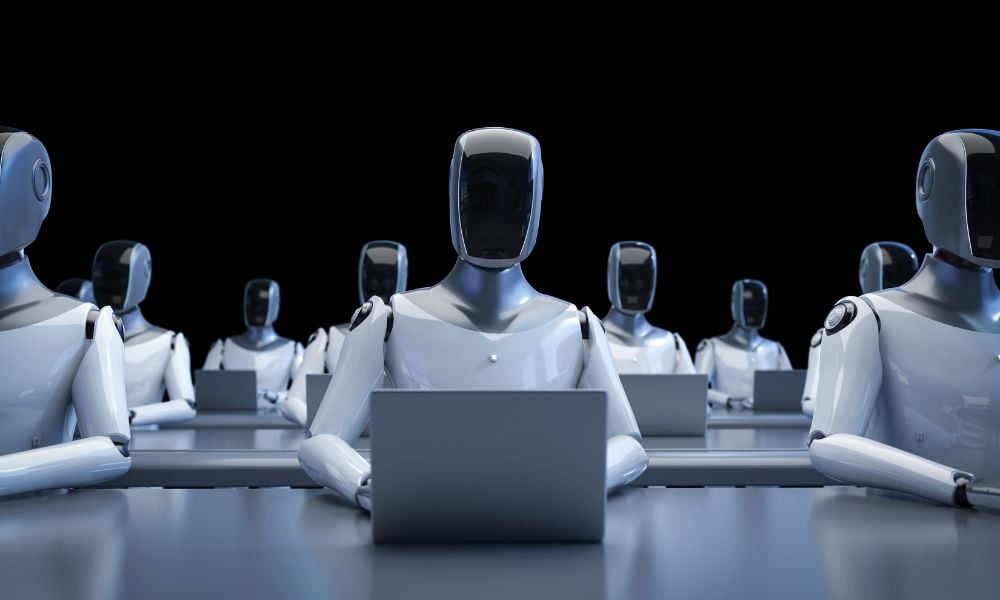
What happens when your AI coworker becomes the problem?
If a human colleague is making your life difficult, you know where to go: HR. But what if the thing causing the headache is an AI agent that made a decision you don't understand, took an action you didn't expect or simply isn't doing what you were told it would?
"HR is no longer about people complaining about other individuals," Darrell West, a senior fellow in Governance Studies at the Brookings Institution's Center for Technology Innovation in Washington, D.C., told HRD America. "But employees having problems with AI agents and digital tools."
That's the problem West wants companies to start thinking about now. In a recent commentary for the Brookings Institution, he argued that companies may need a new function he calls "robot relations," where employees can get help navigating problems with AI agents and digital tools. He expects the need for it to grow as companies hand more work to AI and employees encounter new kinds of friction along the way.
The shift is already making some workers uneasy. A Pew Research Center survey found more U.S. workers are worried than hopeful about the future of AI in the workplace.
What would 'robot relations' actually do?
West's proposal goes beyond giving employees another place to complain. He sees robot relations as a way for companies to deal with the practical problems that come with putting increasingly sophisticated AI into people's jobs.
Training would be one of the first pieces.
"A lot of organizations seem to be dumping AI into the organization and telling employees, start using this," West said. "And that puts employees in a very difficult position. They don't know how to use AI."
That can leave employees trying to figure out complicated AI tools while still being expected to get their jobs done. Only 30% of HR professionals have received comprehensive, job-specific AI training, and 26% have received none at all, according to a General Assembly survey of nearly 300 HR professionals in the U.S. and U.K.
But West thinks the role would go further than training employees on how to use a new tool.
AI agents can act on instructions and make decisions or take actions that an employee may not fully understand. If something goes wrong, workers need somewhere to turn. That could mean an employee struggling with an automated system, trying to understand why an AI agent behaved a certain way or raising concerns about how a digital tool is affecting their work.
"You may get upset with your supervisor," West said. "You may have similar types of issues with digital tools."
That makes robot relations part employee support function, part technology function. West said the people doing this work would need enough technical knowledge to understand AI systems and train employees, but also the traditional relationship skills HR already uses when someone is frustrated or upset.
That combination is already starting to show up in the profession. Job postings for HR roles requiring AI skills have surged over the past year, according to labor market analytics firm Lightcast, suggesting HR professionals are increasingly being asked to understand the technology shaping their workplaces.
And employees are already developing preferences around where AI belongs. A global Workday survey found that most employees are comfortable working alongside AI agents but don't want them managing people.
Taken together, it points to a broader shift in what employee relations could look like as AI becomes a more active part of work.
Could HR absorb the robot-relations role?
West doesn't necessarily think robot relations needs to become a standalone department. He said it could sit inside HR or operate separately, without committing to either.
Brian Bloom, Senior Vice President, Global Benefits & Mobility Operations at Korn Ferry in Los Angeles, sees another possibility. Rather than creating a new function, he believes HR itself can evolve to take on more responsibility for AI.
Bloom expects AI to become a first point of contact for routine HR questions, such as benefits or payday information, with more complicated issues moving to human HR professionals.
That would also change what HR professionals spend their time doing. Instead of answering the same basic questions repeatedly, they could focus more on complex employee issues while taking responsibility for training and auditing the AI systems handling those routine interactions.
The goal, Bloom said, is for HR to remain the people side of the organization even as more of the basic work becomes automated.
"If you really want to be at the forefront of innovation and technology and lead with humanity, you still need really smart humans to do that," he said.
That could mean fewer people handling routine HR work, but more demanding roles for those who remain. Bloom said HR professionals will need broader business knowledge and stronger technology skills as AI takes over more of the basic work.
In that sense, robot relations could simply become another part of a more technologically capable HR function rather than a new box on the org chart.
When AI goes wrong, who's responsible?
The trickier problem arrives when an AI agent doesn't just frustrate an employee but actually does something with consequences.
West said AI agents can act on directions without employees necessarily understanding every step they take. That creates a new question around accountability.
"Sometimes these AI agents may end up doing something you don't like, and the question is, who's going to be liable for that?" he said.
The answer could be complicated. Is the organization responsible for deploying the system? Is the programmer responsible for how it behaves? Or does some responsibility fall on an employee who was told to use a tool they may not have the technical expertise to understand?
"We're in uncharted territory in terms of who is responsible when AI goes rogue," West said.
Bloom isn't convinced AI changes much in practice. In his view, the basic process for handling an issue hasn't fundamentally changed. Someone still needs to identify what went wrong, figure out how to resolve it and bring in the right stakeholders.
The difference, Bloom said, is that AI could eventually handle each part of that process itself, once it's capable enough, creating a need for HR professionals who understand both the technology and the people affected by it.
West's argument is that companies shouldn't wait until those questions become urgent to figure out who owns the problem. Organizations that have already deployed AI, he said, "better move fast" because they're likely already hearing complaints.
Whether that eventually means a "robot relations" department of its own or simply a more tech-savvy HR function remains an open question. Either way, West believes HR will have to adapt as employees spend more of their working lives alongside AI agents, digital assistants and other automated systems.
The robot-relations department may be hypothetical for now; but the problems it's meant to solve are already showing up at work.