His belongings stayed on the desk. His system access didn't
A 17-year Aon employee has sued the company, alleging it weaponized one office argument to force him out.
The complaint, filed October 5, 2026, in the US District Court for the Northern District of Illinois, alleges disability discrimination, failure to accommodate, and retaliation under the Americans with Disabilities Act (ADA) and the Family and Medical Leave Act (FMLA).
The worker and the system named after him
The worker joined Aon as a temp in August 2007 and became a permanent employee in February 2008, according to the complaint. By July 2024, he held the title of Operations Manager II in Aon's Integramark (AIM) division, earning a base salary of approximately $106,113 and total annual compensation of approximately $148,000 including benefits.
He independently built and maintained the databases, reporting connections, and automated processes behind the AIM reporting platform, the complaint states. The production environment was permanently named "TOMDEV" after him.
He consistently received satisfactory or above performance ratings and earned multiple cash bonuses and stock awards throughout his tenure, according to the filing.
What changed after medical leave
The worker has diagnosed mental health conditions, according to the complaint. In June 2020, he experienced a nerve condition that impaired his ability to type, and his manager approved a voice-to-text software accommodation, the filing states.
He took approved FMLA leave in October 2020 and again in January 2021. The second period included an inpatient hospitalization, according to the complaint.
What came next, the complaint alleges, was hostility.
His 2020 performance review referenced his medical condition and rated him "below expectations," the filing claims. When he returned from leave in early 2021, his managerial responsibilities were stripped away. His team was transferred to another employee. When he asked why, the complaint says he was told his team had never technically reported to him in the company's HR software - even though other managers in similar roles had kept their direct reports.
He was shut out of management meetings. His request for an updated org chart got a dismissive response.
The complaint alleges no similarly situated manager who had not taken FMLA leave lost their team.
An accommodation request that went unanswered
After neuropsychological testing in early 2024, the worker sought reasonable accommodations for his conditions. On July 17, 2024, the complaint says, he emailed his manager and human resources requesting a meeting to discuss those accommodations.
In the same email, the filing states, the worker described what he had experienced since returning from FMLA leave: a shift from what had been a supportive, collegial work environment to one marked by pressure, hostility, and degrading communication that left him feeling isolated and set up to fail.
He also wrote that he wanted to continue working at Aon for years to come, according to the complaint.
More than two weeks later, as of July 30, 2024, that request had gone unanswered, the filing alleges.
The argument that became a "resignation"
This is where the two sides' accounts diverge.
On July 30, 2024, the worker was at Aon's Alpharetta, Georgia office. According to the complaint, he noticed his manager's laptop had been left unlocked and unattended in the main conference room - a breach of corporate security policy, the filing notes. He tried to lock it.
His manager returned and accused him of improper activity at her laptop, the complaint alleges. The worker asked about his still-unanswered accommodation request. The discussion escalated.
The complaint says the worker said he was "done" with the conversation and walked out of the room. He placed his laptop on the front reception desk and went to his office to retrieve emergency anxiety medication.
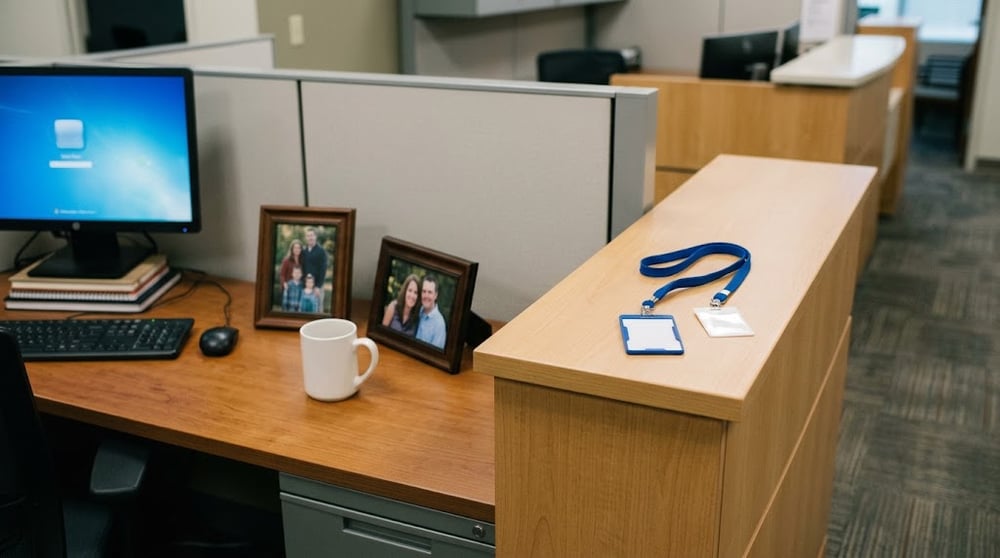
His manager shouted from the conference room for him to leave his lanyard and access badge, according to the filing. In a distressed state, the complaint says, he removed his lanyard and left it with his laptop at the reception desk.
He did not resign. He did not say he was resigning. He left behind 17 years' worth of personal belongings - framed photos, sentimental items - and kept his corporate-issued cell phone, the complaint states. All of which, the filing argues, showed his intent to return.
The next morning, July 31, the worker texted his manager saying he would be out that day, that he was ensuring his doctors submitted paperwork, and that he planned to work with his doctor to formalize an accommodation request and begin short-term leave, according to the complaint.
It did not matter. Aon treated his conduct on July 30 as a voluntary resignation, reported the incident to human resources, and began offboarding - deactivating his system access, the complaint alleges. The worker discovered he had been terminated when he tried to log into the company portal on July 31, according to the filing.
That same day, the complaint states, his manager sent an email that the filing describes as a misrepresentation of his actions - stating that he had told her he was done, slid the laptop towards her, threw his lanyard on the ground, and left the building. The worker disputes that account.
On August 1 and 2, 2024, the complaint says, he called Aon's short-term disability line to start medical leave and was told his employment had been terminated.
The fallout
The complaint alleges the termination cost the worker his income and health insurance, abruptly ended his wife's ongoing medical treatment, forced him to liquidate retirement savings, and worsened the mental health conditions he had sought accommodation for.
The worker brings four claims: disability discrimination under the ADA, failure to accommodate under the ADA, retaliation under the ADA, and interference and retaliation under the FMLA. The complaint seeks compensatory and punitive damages, lost wages and benefits, and other relief. A jury trial has been demanded.
The worker filed a charge with the US Equal Employment Opportunity Commission (EEOC) on or about February 26, 2025. The EEOC issued a determination and notice of rights on or about July 8, 2026.
For HR leaders, the case is a pointed reminder of what the timeline looks like when an accommodation request goes unanswered for weeks and the next event on the record is a termination - especially one the employee disputes.
None of the allegations in this complaint have been tested, and no court has made any findings or rulings on the merits.