He stayed on the job but says the note-taking tools he needed to do it never came
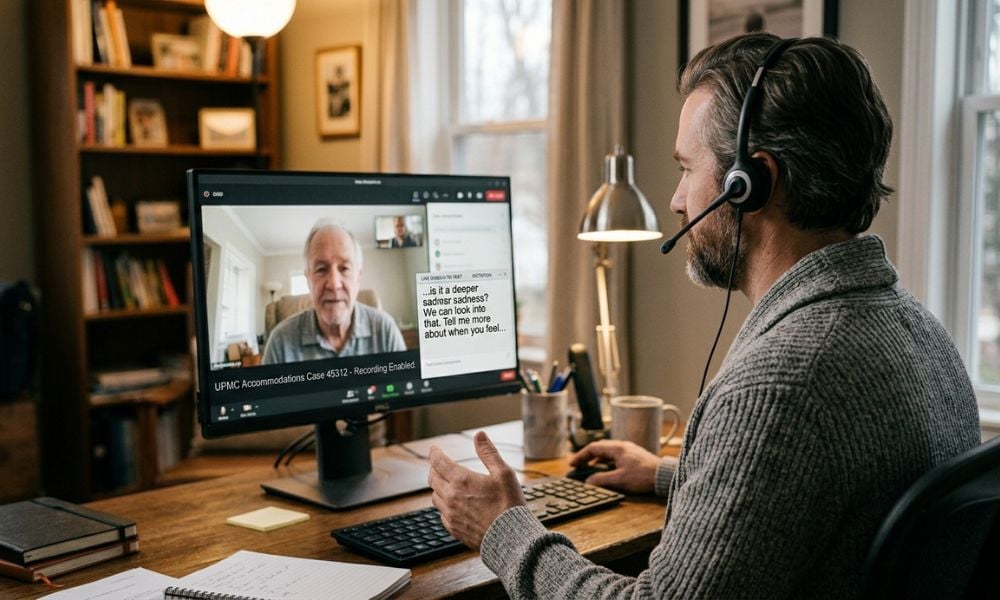
A UPMC therapist says the health system agreed he needed help to do his job, then spent about a year failing to deliver it.
That is the account laid out in a complaint filed August 20, 2026, in federal court in Pittsburgh against the University of Pittsburgh Medical Center. The plaintiff, a behavioral health therapist who works fully remote seeing psychotherapy patients over telehealth, brings claims for disability discrimination, retaliation, mishandling of his medical leave, and a hostile work environment. He remains employed at UPMC.
The therapist has several cognitive conditions, according to the filing, including ADHD and a severe working-memory impairment that testing in May 2025 placed at roughly the first percentile. His treating provider certified the condition as chronic and lifelong. For a stretch, the complaint says, the arrangement worked: UPMC approved reduced patient loads and hours across 2024 and early 2025.
The dispute was over technology. In June 2025, the filing says, he asked for speech-to-text tools to help him transcribe sessions and write up clinical notes - the documentation side of the job that his memory impairment made difficult - and his provider backed the request. According to the complaint, UPMC approved a narrower version limited to a single pilot tool that his provider and the health system's own IT staff regarded as a poor fit for psychotherapy notes.
From there, the complaint alleges, the process stalled and reversed. At an August 2025 meeting, his requests to record the session and receive an agenda in advance were both turned down, the filing says. He alleges a benefits representative told him, in the complaint's account, “We cannot provide something to essentially do your job for you.” Weeks later, the filing says, an internal newsletter praised the same category of AI note-taking software as “game changing” for physician well-being.
In September 2025, according to the complaint, UPMC removed the assistive technology entirely, telling him the decision had been “vetted by our legal team.” When his own line manager pushed back - writing to the benefits unit, in the complaint's account, that she was “not comfortable holding him accountable” because the setup “isn't giving him a fair chance” - the reply, the filing says, was “An accommodation does not equate to success.”
The part likely to catch an HR reader's eye comes next. The complaint alleges UPMC closed his accommodation case on December 31, 2025 while he was on approved family and medical leave, without telling him. He says the accumulated delays let a 26-week leave limit run out, which cut off his employer-sponsored health insurance effective May 31, 2026. He learned of it, the filing says, when a medical provider contacted him about an out-of-pocket bill.
Before going to court, the therapist filed two charges with the Equal Employment Opportunity Commission and received a right-to-sue letter on one, dated May 22, 2026.
For HR readers, the complaint is a checklist of the ways an accommodation request can go wrong: signing off on a tool the employee's own doctor said would not work, deciding it in meetings the employee and his doctor were shut out of, closing an open case while he was on protected leave, and letting a benefits deadline pass before the issue was ever resolved.
The allegations have not been tested in court. UPMC has not yet filed a response, and no court has ruled.