She got fired, got reinstated, won in court - then the legal test changed
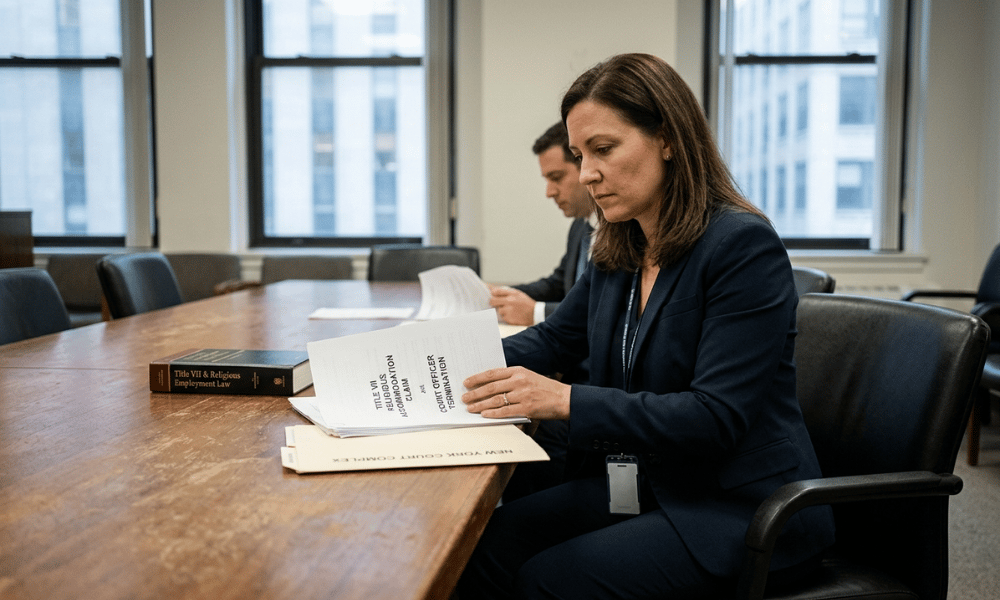
A court officer who refused a COVID-19 vaccine on religious grounds got fired, won at trial - then had that victory snatched away on appeal.
The Second Circuit on July 15 vacated the ruling in her favor, holding the district court used an outdated legal test for religious accommodation claims under Title VII. The amended decision, issued September 15, retires the old framework.
The worker started with the New York State Unified Court System (UCS) in 2016. When UCS rolled out its vaccine mandate in September 2021, employees had until October 18 to get vaccinated or secure an exemption. An 11-member committee reviewed 1,200 requests, using a supplemental form to probe beliefs about fetal stem cells or bodily integrity.
The worker filed her exemption with a personal statement, scripture references, and a pastor's letter. UCS sent back the supplemental form. She returned it mostly blank, writing that she had "lived [her] entire life devoted to Jesus Christ" and that her family "strive to keep [their] individual medical information private."
The committee denied her exemption on December 29, 2021. When she submitted a completed form before the deadline, the response was blunt: its "decisions are final." She went on leave and was terminated on April 7, 2022. UCS dropped the mandate in February 2023 and reinstated her that June.
She sued under Title VII - not over the policy itself, but the refusal to exempt her.
The district court sided with her, leaning on statements UCS made during discovery. A senior administrator called her "initial submission" "perfectly adequate" and said it "explained a religious belief" - though he said the committee "wanted to explore it some more."
The appeals court pulled that apart. The old test asked whether a worker held a sincere belief, told the employer, and got disciplined. After the Supreme Court's 2015 decision, the question changed: did the worker need an accommodation, and did the employer's desire to avoid providing it drive the adverse decision?
That reframing matters. Employer knowledge of a religious belief is now evidence - not the whole case.
The court found UCS's discovery statements too ambiguous to count as judicial admissions, since UCS consistently said it needed more information to gauge sincerity.
For HR professionals designing exemption processes, the practical signal is clear: document why you denied the accommodation, not just that you knew about the belief.