How three agents handled luggage couldn't decide it for everyone doing the job
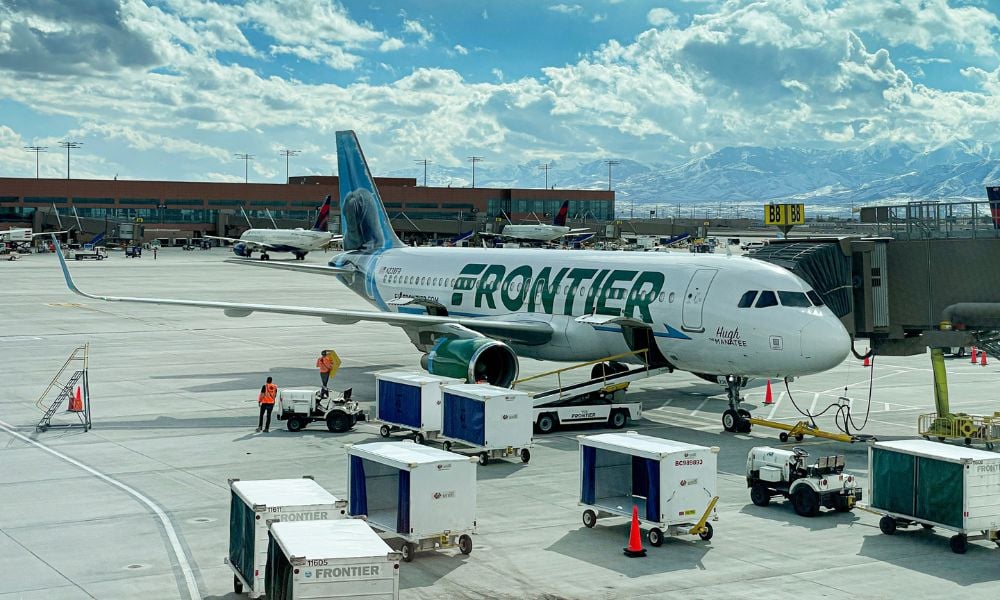
A federal appeals court reversed a decision that kept Frontier Airlines wage claims out of arbitration, ordering the lower court to try again.
For HR, the interesting part isn't the wage dispute - it's what turned the appeal. Whether an arbitration clause holds up can hinge less on its wording than on how a court draws the line around a group of employees.
Three customer service agents began working for Menzies Aviation at Denver International Airport in 2022 - two at Frontier's ticket counters, one at its boarding gates. They sued over Colorado wage claims. According to the underlying complaint, the companies deducted time for lunch breaks the workers never received, made them work through rest breaks, skipped overtime for hours past 40 a week, and withheld earned commissions. Those allegations have not been decided.
Menzies and Frontier moved to push the claims into arbitration, pointing to clauses in the workers' contracts. The workers had a specific counter: they were transportation workers, and federal law exempts transportation workers "engaged in foreign or interstate commerce" from forced arbitration under the Federal Arbitration Act.
The trial court agreed with the workers and denied arbitration, leaning on how these three personally handled luggage. One agent testified she was expected to identify at least three carry-on items per flight for checking. On September 1, 2026, the Tenth Circuit said the trial judge had used the wrong test.
Under the Supreme Court's Saxon decision, a court must define the relevant "class of workers" by looking at "the actual work that the members of the class, as a whole, typically carry out" - not by zeroing in on what a few named employees did with the bags. The trial judge had brushed aside evidence about how the wider group of agents worked. That, the appeals court held, skipped the required first step. Without a properly defined class, it could not reach the next question - whether that class moves goods in interstate commerce.
The court reversed and sent the case back. It declined to decide whether the agents qualify for the exemption, or whether a worker must physically handle cargo to count.
The practical signal for employers: a handful of workers who do the job unusually can't by themselves pull an entire class out of arbitration. Courts weigh the typical duties of the whole group. Aviation, logistics, and ground-handling employers - anywhere staff brush up against the movement of goods or passengers - carry the sharpest exposure.