She spent months fighting to get her course approved. Dartmouth fired her the day after
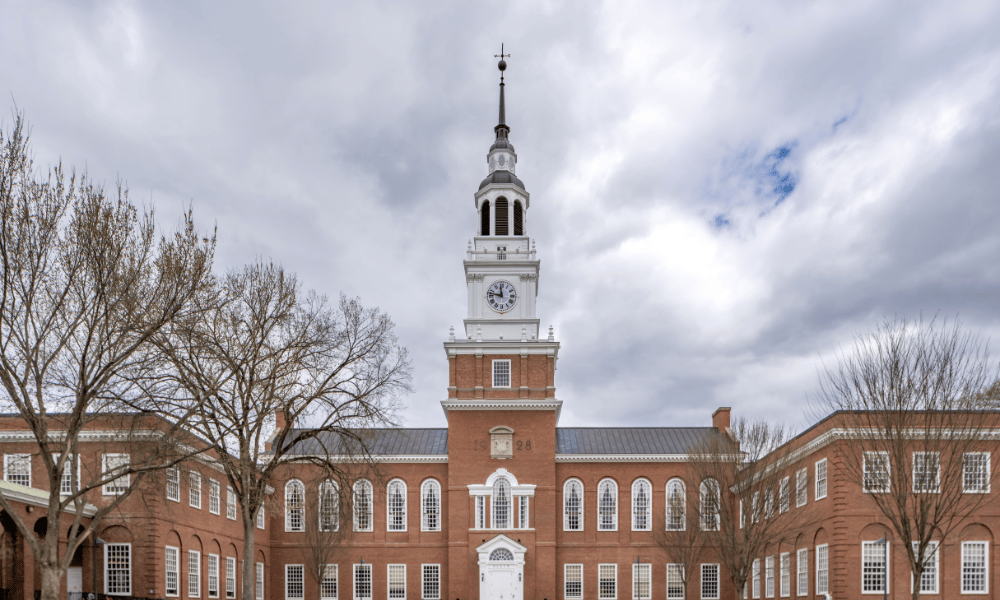
An African American professor says Dartmouth pushed her out over two years - then fired her one day after approving her course.
That is the picture painted in a complaint filed April 29, 2026 in the US District Court for the District of Columbia by Dr. Charnan Williams, an African American postdoctoral fellow in Dartmouth College's history department. She is suing the college and four senior administrators for race and sex discrimination, hostile work environment, retaliation, and a coordinated effort to destroy her academic career.
For HR leaders in higher education and beyond, the case is a tour of the workplace processes that most often surface in discrimination suits: performance reviews, grievance procedures, scheduling decisions, internal complaints, and post-termination reporting to state agencies.
According to the filing, Williams was hired in July 2023 on a two-year postdoctoral fellowship that was set to convert into a tenure-track assistant professor role. The complaint says that conversion never happened. On May 29, 2025 - one day after Dartmouth finally approved a course she had spent months trying to put on the schedule - the Dean of Faculty terminated her appointment, effective June 30, 2025.
Named as individual defendants are history department chair Darrin McMahon, Associate Dean of Interdisciplinary Studies Matthew Delmont, Associate Dean of Social Sciences Benjamin Valentino, and Dean of Faculty Elizabeth Smith.
The complaint alleges the conduct started early. Williams says McMahon told her in an October 11, 2023 meeting that he saw her as a "daughter" and himself as a "father figure" - language the filing describes as setting up an unequal, gendered dynamic. According to the complaint, McMahon also made sexually inappropriate comments at a department dinner the following week, including a story about an exchange student.
The course-scheduling dispute is the operational core of the case. Williams says she confirmed her Spring 2025 teaching plans five times, through emails, the department's official scheduling form, and the curriculum committee. The complaint alleges that when McMahon returned from leave, he ignored nearly a year of approvals and ran the course through a bureaucratic process designed to keep it off the spring schedule. The filing says Delmont and Valentino joined in, repeatedly pressing Williams on questions she had already answered. Williams says she changed her personal cell phone number on January 23, 2025 because of the volume of contact.
The annual review is the second pillar. The complaint alleges McMahon's May 6, 2025 review called her work "inadequate" and said it failed to "meet minimum expectations." The filing says the review left out a book review accepted in the American Historical Review, a Huntington Library fellowship, an essay commissioned through a California National Park grant, and four articles completed and submitted in the publication pipeline. The complaint says McMahon never requested a meeting with Williams about the review, despite a Faculty Handbook requirement to do so. Williams alleges Dartmouth then denied her the grievance procedures available to tenure-track faculty and unilaterally treated her appointment as probationary, a characterization she says is not in her contract.
The retaliation theory has an unusual edge. Williams's husband, Dr. Marvin Chochotte, is an assistant professor in the African and African American Studies department, which Delmont chairs. The complaint alleges Chochotte complained to Dartmouth's Board of Trustees and the Dean of Faculty on May 21, 2025 about Delmont's conduct. Eight days later, Williams was fired. The filing frames this as unlawful third-party retaliation under the US Supreme Court's 2011 ruling in Thompson v. North American Stainless, LP, which protects employees from retaliation tied to a relative's protected activity.
The complaint also alleges Dartmouth reported to the New Hampshire Unemployment Security Office that Williams was fired for performance issues. According to the filing, the state office ruled in her favor and found no misconduct on her part.
Williams's claims include Title VII, Title IX, civil rights conspiracy under 42 U.S.C. § 1985(3), civil conspiracy, breach of the implied covenant of good faith and fair dealing, breach of university policies, and intentional infliction of emotional distress. She is seeking back pay, front pay or reinstatement, compensatory damages, attorney fees, and an injunction requiring Dartmouth to implement policies and training to prevent future discrimination and retaliation.
For HR teams, the through-line is documentation. The complaint argues that Williams had paper trails for her teaching confirmations, her scholarly output, and her grievance rights - and that those paper trails are now the spine of her case.
The allegations have not been tested in court. Dartmouth has not yet filed a response, and no court has ruled on the claims.