The chief's door was open, the phone was on speaker, and the officer hit record
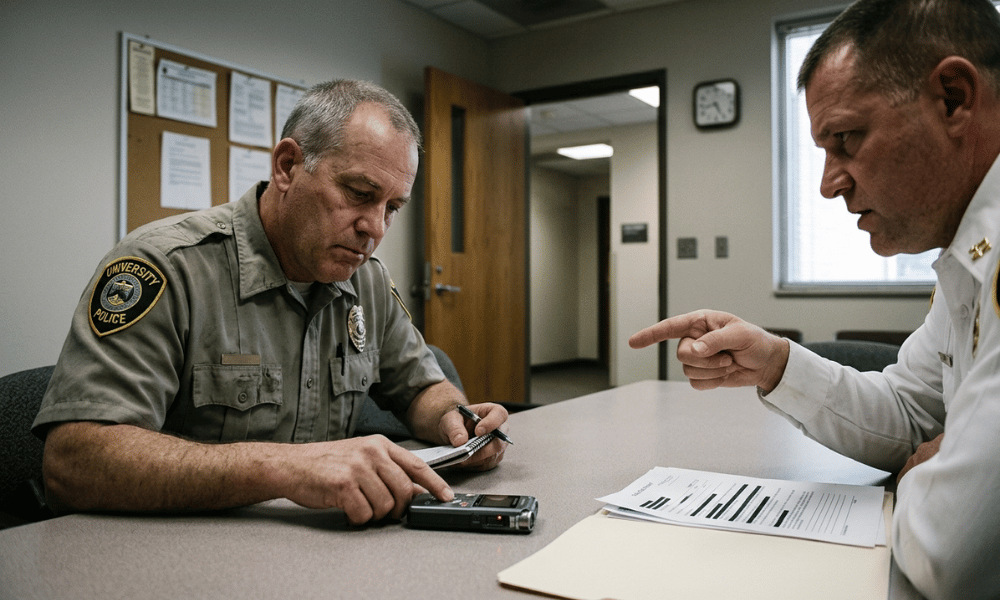
A police chief who talked about "stacking bodies" after a sexual misconduct investigation has handed a university officer a path back to court.
The officer worked for the West Texas A&M University police department. In 2021, a fellow officer confided that a sergeant had engaged in sexual misconduct. He encouraged her to report it, she filed a Title IX complaint, and several female officers followed. He corroborated the allegations but never filed a separate report.
The department chief was not pleased. He told officers he "was ready to start stacking bodies," clarifying he meant "firing people that need to be fired." If complaints continued, he warned, "careers and bodies would be left in the wake."
Things moved fast. The officer was accused of violating quarantine procedures. Supervisors overhauled his routine at the chief's direction. A lieutenant told him he "had no chance of making sergeant" because he was "lumped in with the others" from the investigation.
Then came the recording. Sitting at his desk, the officer overheard the chief on a speakerphone call - door open - discussing his failure to report. He walked closer and hit record.
The chief suspended him. An independent panel recommended termination and a dishonorable discharge from his peace officer's license. He resigned first but got the discharge anyway. A Texas administrative law judge later ruled it should have been honorable.
He brought a Title VII retaliation claim. The district court sided with the university. The Fifth Circuit reversed on September 18, finding the lower court applied an outdated test for adverse employment actions. Under the correct standard, an action qualifies if it would put a reasonable worker off supporting a discrimination charge.
The chief's recorded words did the heavy lifting. Those statements, paired with the officer's "exceeds expectations" review before the trouble started, gave a jury enough to question whether the stated reason for his suspension was the real one.
One claim fell short. Panel members testified under oath they had no idea the officer participated in the Title IX investigation. Their genuinely independent process broke the link between the chief's motive and the discharge.
For HR teams: when a supervisor's frustrations with an internal investigation end up on tape, those recordings can become the centrepiece of a retaliation case - and an independent panel convened after the fact will not clean it up.