The university allegedly launched a sham investigation and tried to sabotage new job offers
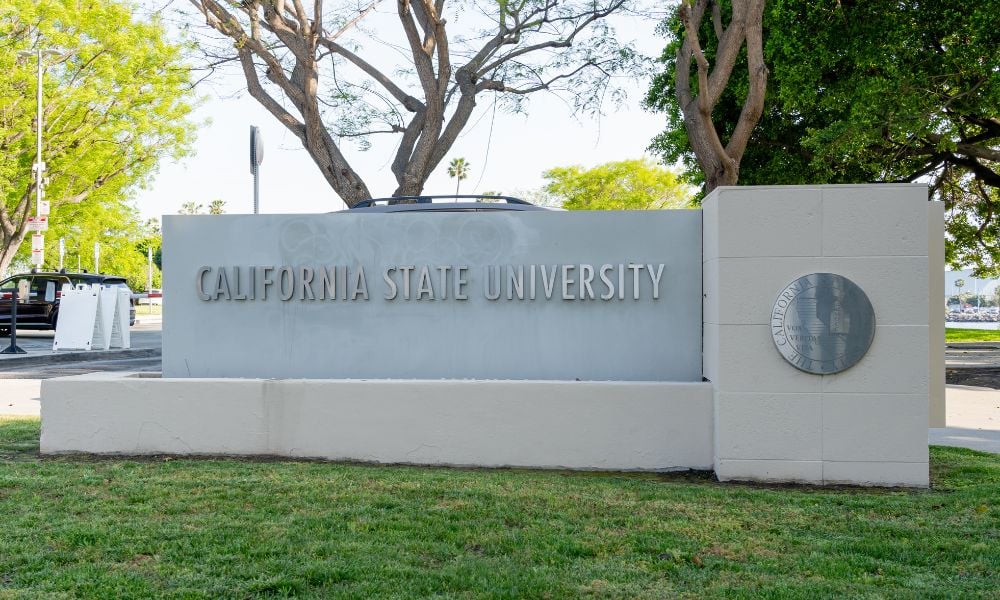
A California appeals court has cleared the way for two professors to pursue retaliation claims against their university employer after reporting workplace harassment.
In a decision filed on March 24, 2026, the Third Appellate District of the California Court of Appeal affirmed the denial of a motion by the Trustees of the California State University seeking to strike retaliation claims brought by Hyewon Pechkis and Joseph Pechkis, a married couple who were tenured physics professors at California State University, Chico.
The couple filed their complaint in December 2024, raising six causes of action including discrimination, retaliation under the California Fair Employment and Housing Act, failure to engage in the interactive process, hostile working environment, failure to prevent discrimination and harassment, and whistleblower retaliation.
The complaint alleged that Hyewon Pechkis was harassed by the department chair on the basis of the chair's perceived bias against women and Hyewon's Korean ancestry and national origin. The chair allegedly confronted her aggressively enough for her to fear for her physical safety. Both professors reportedly raised concerns about discrimination, harassment, and stalking to the dean of the College of Natural Sciences, but the university allegedly took no action to address the chair's behavior. Hyewon was later diagnosed with chronic post-traumatic stress disorder, major depressive disorder, and generalized anxiety disorder, which the complaint attributed to the hostile working environment at Chico State. Her doctor reportedly said she could not remain in the same work environment as the chair.
The university allegedly failed to act, and the couple said they were left with no choice but to resign from their tenured positions. They accepted offers at California Polytechnic State University for the fall 2024 semester.
What happened next forms the crux of the retaliation claims. According to the complaint, Chico State Vice Provost Mahalley Allen emailed Hyewon raising concerns about a potential violation of the Family Educational Rights and Privacy Act. The complaint characterized the investigation as a sham, alleging it was based on old blog posts written in Korean and relied on inaccurate translations.
Hyewon then received a letter from Cal Poly stating that Chico State's determination of the Privacy Act violations could affect its offer of employment to her. The complaint further alleged that Allen contacted Cal Poly directly about the alleged violations in what the plaintiffs described as an attempt to derail their move. On top of that, a Chico State dean allegedly delayed the transfer of the couple's lab equipment, which the plaintiffs viewed as yet another effort to interfere with their new positions.
Cal Poly ultimately stood by its offer to both professors.
The Trustees sought to have the two retaliation causes of action thrown out under California's anti-SLAPP statute, which is designed to protect against lawsuits that target the exercise of free speech or petition rights. They argued that the claims rested, at least in part, on communications between Chico State employees and employees at another campus relating to the investigation, and that those communications were protected activity.
The appellate court was not persuaded. Writing for a unanimous panel, Acting Presiding Justice Robie held that the Trustees had not met their burden. Under California law, a party seeking to strike claims under the anti-SLAPP statute must show that each specific claim arises from protected activity. The Trustees instead took a broad approach, arguing that the mere presence of protected speech somewhere in the causes of action was enough. The court found that reasoning insufficient, noting that the retaliation claims also rested on conduct such as the alleged constructive discharge, which courts have recognized as potentially unprotected activity. The Trustees did not explain why each individual claim within the challenged causes of action involved protected conduct, and the court declined to do that work for them.
The court also pushed back on the idea that launching an internal investigation automatically shields everything connected to it. Adopting that view, the court noted, could effectively gut harassment, discrimination, and retaliation claims against public employers by allowing any employer to invoke investigation-related protections regardless of motive.
The decision means the case will return to the Superior Court of Butte County, where the underlying claims remain unresolved.
For HR professionals, the case underscores a familiar but critical point. How an organization responds once an employee reports harassment matters as much as the initial complaint itself. Allegations of retaliatory investigations, interference with future employment, and constructive discharge are the kinds of claims that, if proven, can carry serious consequences. The court's willingness to let these claims proceed is a reminder that procedural maneuvers will not substitute for substantive responses to workplace misconduct.