She asked to be moved away from the coworker she says assaulted her. Amazon allegedly said no
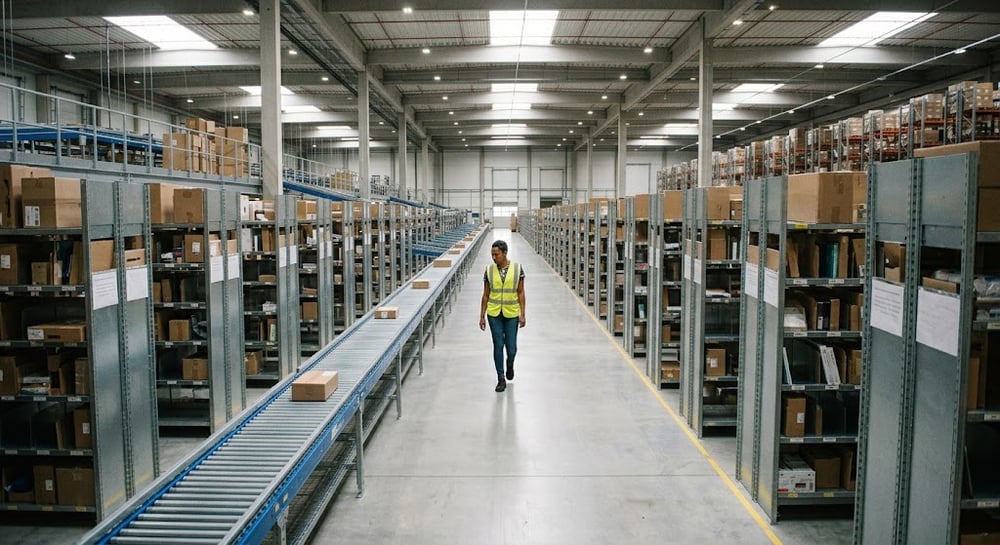
An Amazon warehouse worker alleges the company forced her to keep working alongside the coworker she says sexually assaulted her on a business trip.
The worker, a health and safety manager at Amazon's MDT1 fulfillment center in Carlisle, Pennsylvania, filed a federal lawsuit on October 7, 2026, alleging a sexual assault during a company trip, a failed internal investigation, and a chain of employer responses that she says left her with no option but to quit.
According to the complaint filed in the US District Court for the Middle District of Pennsylvania, the worker was hired in November 2024. Two months in, she traveled to Nashville, Tennessee with colleagues for a business trip in January 2025.
The group went to dinner, then hit several bars, the filing states. The worker alleges she has no memory of the final bar or of getting back to her hotel. The next morning, according to the complaint, she woke up in pain to find a coworker naked in the bed beside her. Her room was in complete disarray, belongings strewn everywhere.
She asked the coworker what happened. According to the complaint, he said he "didn't know" and rushed out.
The worker alleges she had not drunk enough to black out and concluded she had been drugged and sexually assaulted. She was visibly unwell the following day and was eventually taken to hospital by another colleague, the complaint states.
Then came the reporting - and, the worker alleges, the runaround.
She reported the incident to HR on January 24, 2025, according to the filing. About two weeks later, Amazon's loss prevention team contacted her, asked her to repeat her account, and told her she needed to file a police report. She did, on February 5, 2025.
After that, the filing alleges, loss prevention told the worker that Amazon "couldn't do anything" and she would have to "let the police handle it."
The problem was proximity. The accused coworker worked in the same region, and the worker alleges she was forced to see and interact with him regularly. Her mental health deteriorated. Her therapist recommended time off.
But the leave options were untenable, the complaint says. "Victim of a crime" leave was unpaid. Medical leave paid only 60% of her salary - a cut she says she could not afford.
On February 27, 2025, she applied for a hardship transfer to a different site, according to the complaint. Amazon refused. She asked to work from home. Also refused - the company said her role had to be on-site, the filing states.
She kept pushing
On March 6, 2025, the worker escalated, reaching out to Amazon's ethics department, an HR director, a director of operations, and the director of NACFWHS, the complaint alleges. This second complaint prompted Amazon to place the accused coworker on paid suspension while it investigated.
That investigation wrapped up on April 25, 2025. The result, according to the filing: "unsubstantiated." Amazon stated there "wasn't enough evidence," the complaint alleges, and took no further action. The accused coworker went back to work.
The worker kept trying to get a transfer. None came, the complaint says. She was again sharing a workplace with the person she alleges assaulted her. Her health continued to decline and she took medical leave.
By around November 2025, the complaint alleges, she was constructively terminated - her working conditions had become so intolerable that she effectively had no choice but to leave.
The lawsuit brings five counts: hostile work environment and retaliation under Title VII of the Civil Rights Act, sex-based employment discrimination under Title VII, disability discrimination under the Americans with Disabilities Act (alleging Amazon refused to meaningfully explore any accommodation), and violations of the Pennsylvania Human Relations Act.
The worker is seeking more than $150,000 in compensatory damages, plus punitive damages, attorneys' fees, and costs.
For HR teams, the complaint maps directly onto the questions every workplace investigation protocol should answer: what protection does the complainant get while the investigation runs, what happens when the accused and the complainant share a workspace, and what is the employer's obligation when its own process comes back inconclusive.
The allegations in the complaint have not been tested, and no court has made any findings or rulings in the matter.