Even leadership is divided over office-return policies, report finds

As more companies implement return-to-office (RTO) policies, a new report has found that HR leaders are struggling to enforce these orders amid resistance from the workforce.
Findings from BambooHR's latest survey polled over 1,500 adults, including more than 500 HR leaders, to uncover the true sentiments on RTO policies, from both leaders and employees alike.
It found that 62% of HR VP/C-suite leaders are struggling to enforce RTO mandates, despite the growing popularity of such policies as of late.
Companies including Amazon and Starbucks have ordered employees to be back onsite more often after the pandemic shuttered physical offices and made way for remote and hybrid work arrangements.
But according to the poll, only 55% of the respondents are on board with their companies' RTO mandate, with approval varying per position:
- Individual contributors (39% agree)
- Managers or directors (57% agree)
- VPs or C-suite (63% agree)
And even with the high level of approval among top leadership, the report found that 53% of HR VPs do not agree with the company's RTO policy. In fact, 18% of VP or C-suite respondents said they are looking for a new job because of the mandate.
Office return resistance
According to BambooHR, employees who are financially secure are more likely to be completely on board with their company's RTO policies (63%) compared with those who are struggling to make ends meet (50%).
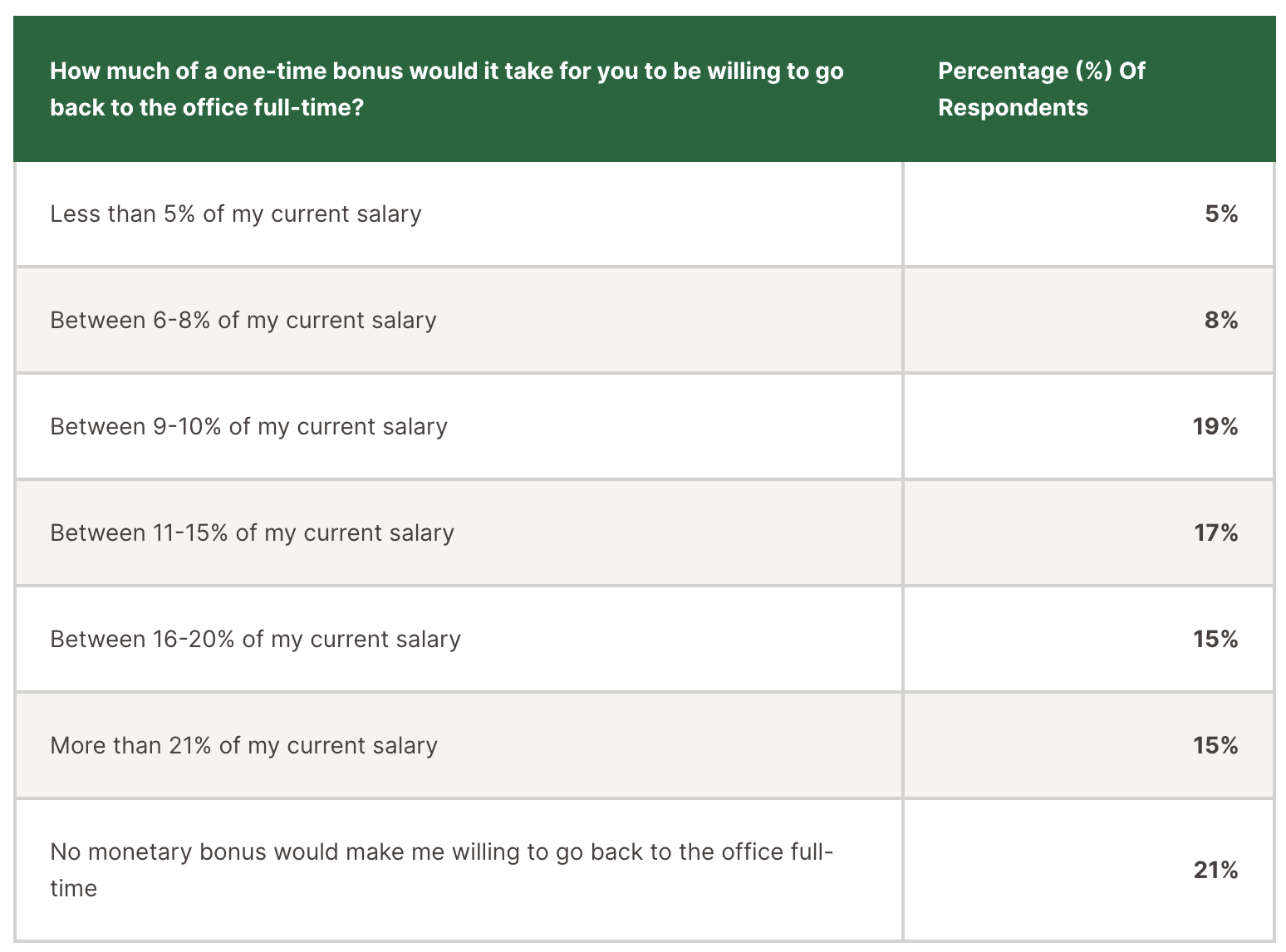
The report cited that the cost of commuting, childcare, and schedule inflexibility may be key barriers to this resistance. But even with a one-time bonus on the line, 21% of the respondents said it would not be enough to make them come back onsite.
The challenge for HR leaders
Wende Smith, Sr. Director of People Operations at BambooHR, warned that when leaders aren't aligned over RTO mandates, it creates a disconnect throughout the organisation.
"Executives aren't immune to the discomfort of policy tension — they're often feeling it while trying to lead through it," Smith said in a statement. "HR can play a key role in helping companies define what success looks like in this new era of work."
According to BambooHR, some of the steps that HR leaders can take include:
- Help leaders adapt to new policies
- Improve the office environment
- Shift the focus from where work is done to how effectively it is completed
- Ensure RTO policies are equitable and inclusive
It also called for a focus on flexibility by offering hybrid work models to allow employees to choose the work environment that best suits their needs.
"A one-size-fits-all approach will always leave some individuals with unmet needs, which is why it's more effective for work mode policies to be determined by individual departments," Smith said.
"Because RTO is such a hot-button issue, it's important that your policy, and how it's communicated and implemented, are well thought out and clearly defined."