Health reimbursement arrangements offer a way to cap pharmacy spend without cutting employees off
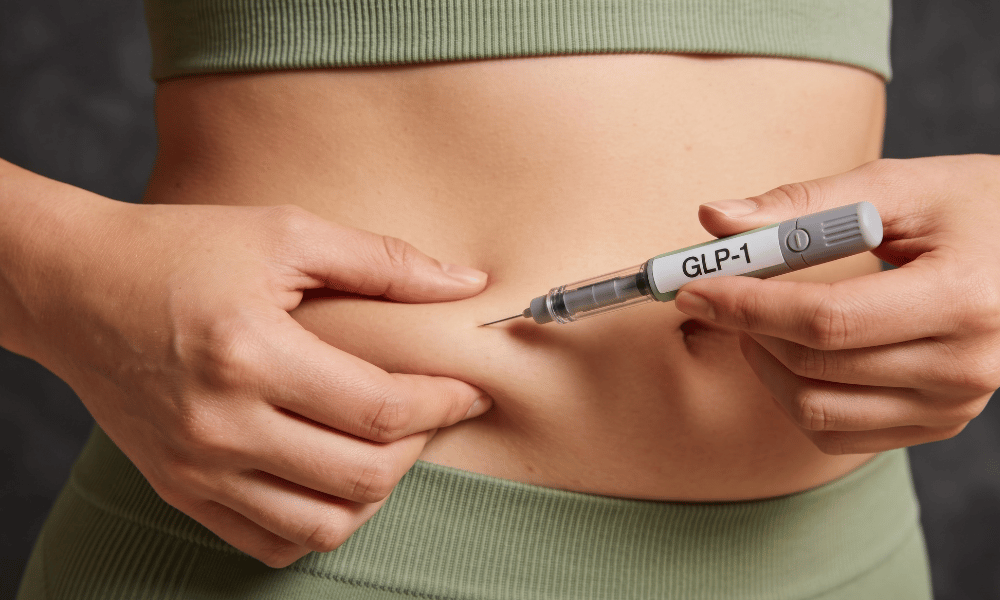
GLP-1 weight-loss drugs have become one of the most disruptive line items in employer health plans, and the pressure is not easing. Employees expect the coverage. The budgets cannot sustain it.
Chris Byrd, a benefits industry executive at WEX, headquartered in Portland, Maine, believes the pricing math has shifted enough to give employers a real way out — and that the window to act is open now.
"The PBM price is often now the highest price in the market," Byrd said. "You have so many other places where a consumer can go and purchase branded GLP-1s, from Lilly Direct and other manufacturer support programs, from places like GoodRx; at a price that is less than what the PBM is charging the employer if they're included in the employer's drug plan. For that reason alone, you should carve it out."
The case for an HRA carve-out
A health reimbursement arrangement (HRA) carve-out removes GLP-1 medications from the main employer drug plan and funds them through a dedicated, fixed monthly allowance instead. The appeal is a predictable ceiling on pharmacy spend with no open-ended exposure to whatever a pharmacy benefit manager (PBM) charges next year.
Byrd's argument goes further than budget control. Consumer-market pricing for branded GLP-1s — through manufacturer direct programs and third-party discount channels — has in many cases dropped below what PBMs charge employer plans, meaning a well-structured HRA can extend an employee's purchasing power, not just cap the employer's liability. The share of employers using a point-solution vendor to manage GLP-1 access rose from 11 percent in 2024 to 28 percent in 2026, according to a National Alliance survey — a sign that structured approaches are gaining ground fast.
"If you're going to provide your employee with $200 a month or whatever the number is, you want to get the most bang for that benefit buck," Byrd said. "And the way that you do that is you say, here's a bunch of places you can go shop."
The benefit structure — duration, monthly dollar amount, and qualifying clinical conditions — is entirely at the employer's discretion.
Where clinical guardrails are heading
The pullback in GLP-1 coverage is focused on lifestyle use. Employers are moving toward clinical prior-authorization requirements: type 2 diabetes diagnosis, a body mass index (BMI) of 35 or above — the threshold used by Medicare — or a BMI of 27 to 30 combined with comorbid conditions such as hypertension or cardiovascular markers.
Starbucks announced it will discontinue GLP-1 coverage for weight-loss use this fall, and it is not alone — 14 percent of employers have already dropped or plan to drop GLP-1 weight management coverage by 2027, up from 10 percent earlier in the year, according to Business Group on Health. Byrd described the trend as a wider rethink, not a series of isolated corporate decisions.
"Early on, you had a number of employers come out and say, 'I'm going to cover this and I'm not going to put any conditions on it at all,'" Byrd said. "Most of those employers, I think, regret that decision now in hindsight because their budgets exploded."
Almost one in five adult Americans has tried a GLP-1, according to a Kaiser Family Foundation (KFF) poll. An Employee Benefit Research Institute (EBRI) consumer survey released in summer 2026 found that two-thirds of employees believe their employer should cover the drugs. That kind of employee sentiment does not go away because a CFO needs it to.
Conditioning coverage on behavior change
Adherence to GLP-1 therapy is a persistent problem. One-third of people who started the drugs have since stopped, with cost cited as the most common reason, according to data published by the Cleveland Clinic. A fixed monthly HRA that lowers an employee's net cost creates a natural attachment point for coaching or wellness programs — and employers are increasingly making that link explicit.
"Many employers, and I think most will end up doing this, are conditioning coverage on ongoing participation in a health coaching program, a behavior modification program," Byrd said. "And if you aren't continuing to participate in that program, you're going to lose the benefit."
That conditionality has compliance implications. DOL rules on wellness program incentives under the Employee Retirement Income Security Act (ERISA) and the Affordable Care Act (ACA) set parameters on conditioning benefits on health outcomes or participation.
A different way to think about plan design
Rick Kelly, National Pharmacy Lead and Senior Vice President, Employee Health and Benefits at Marsh McLennan Agency in Raleigh, North Carolina, sees the GLP-1 HRA debate as part of a longer shift — away from uniform benefit packages toward a model of foundational coverage paired with flexible, employee-directed spending.
"The average employee needs catastrophic protection on medical, catastrophic protection on disability, and some sort of life insurance protection," Kelly said. "And then when you get into what else do they want and need, whether that's GLP-1, whether that means infertility, whether that means out-of-network behavioral health counseling — I do see things moving in the direction where there's foundational coverage of real risk and then giving employees either options or an HRA."
Byrd also flagged growing interest in individual coverage health reimbursement arrangements (ICHRAs) — a model that allows employers to set a fixed monthly contribution and direct employees to purchase their own coverage through public or private exchanges, rather than administering a group plan. The share of employers covering GLP-1s for obesity has already fallen from 72 percent in 2025 to 60 percent in 2026, with many tightening utilization management rather than eliminating coverage outright — a pattern that makes the flexible, capped structure of an ICHRA or HRA increasingly attractive. Adoption of ICHRAs has grown steadily since the rules were finalized by the DOL, Department of the Treasury, and the Department of Health and Human Services (HHS) in 2019.