Employers urged to 'think hard' on where to invest in skills

More than half of the workforce feel they are shut out of learning and development opportunities at work, according to a new report, which urged employers to "think hard" on where they invest in skills.
Findings from PwC's 2026 Global Workforce Hopes and Fears Survey revealed that 56% of workers feel they have limited access to learning, innovation, and meaningful AI use, even though they are "key to organisational delivery."
This group of workers has been labelled as the "Engine Room workers," whose skills are not scarce and who are not far along the AI learning curve. This is one of the four segments identified in the report, with the others called:
- Front-runners (14%) with scarce skills and strong AI capabilities
- AI insurgents (18%) with less scarce skills but who are using AI to deliver more
- Indispensables (11%) who have highly valued scarce skills but are not far along the AI learning curve
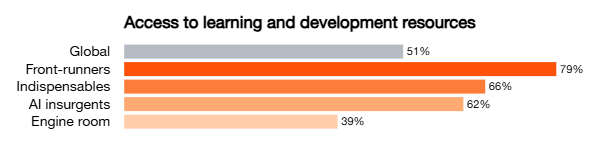
According to the report, the "optimistic minority group" of front-runners are seeing strong benefits from their position and are most likely to say they have access to learning and development resources (79%).
On the other hand, "Engine Room" workers are less likely to be rewarded for using AI, learning new skills or challenging existing ways of working. They are also least likely to have access to learning and development resources (39%).
New 'challenge' for leadership
Pete Brown, Global Workforce Leader, PwC, said the findings introduce a new challenge for leaders.
"Workers are under growing pressure from rising workloads, rapid change and external uncertainty. But those using AI every day are more confident, more ambitious and more positive about their careers and prospects," Brown said in a statement.
"The challenge for leaders is to keep developing those people – but not at the expense of the rest of the workforce."
Employers need to "think hard" about where they invest in skills as the global workforce start moving at different speeds," according to Brown.
"More than half of workers are not yet benefiting from AI and skills in the same way, while those with scarce skills and strong AI capabilities are becoming more confident and more mobile," he said.
"Leaders need to think hard about where they invest in skills, how they give people the opportunity to adapt, and how they hold on to the capabilities they most need."