Ruling says just keeping expired protective gear on site can trigger penalties
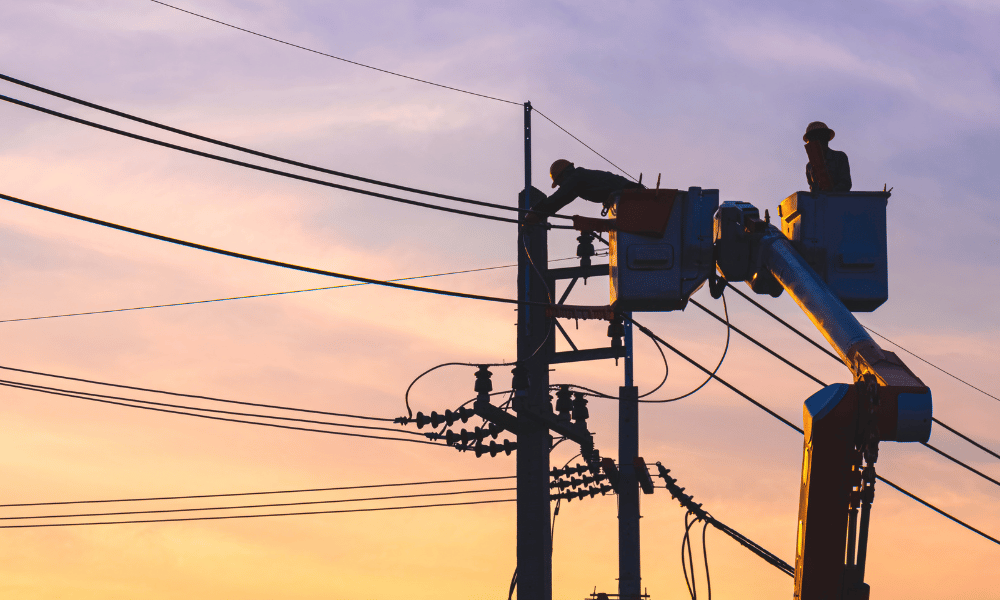
A Washington appeals court ruled that employers can be penalized for keeping expired safety equipment at a worksite, even if no worker actually used it.
The Court of Appeals of Washington, Division III, issued its decision on April 21, 2026, in a case that could reshape how employers think about safety equipment compliance. The ruling makes clear that simply having non-compliant protective gear available to workers is enough to trigger a violation under state law.
The case dates back to September 2, 2021, when a state safety officer spotted Cache Valley Electric Company employees working on overhead power lines. One worker was running a gas-powered chainsaw that came within 12 inches of an exposed line carrying 7,200 volts – far closer than the legally required 27-inch minimum approach distance. The employees admitted they knew they were violating the rule.
That alone would have been enough to draw a citation. But the inspection turned up a second problem. When the safety officer asked the crew to pull out all the protective gear stored on the company's boom truck, five rubber insulating blankets were produced. These blankets are required to be tested every six months. The last test date was October 12, 2020 – 11 months earlier. Some of the blankets showed visible wear.
The state issued two citations. The first, for the chainsaw violation, carried a $7,000 penalty. The second, for the expired blankets, carried a $6,000 penalty. Cache Valley challenged both.
At the administrative level, the Board of Industrial Insurance Appeals unanimously upheld the chainsaw penalty. But the expired blankets proved more contentious. In a split decision, the Board threw out the second penalty, reasoning that the blankets were stored in the truck and never placed on a power line, so they were not technically in "use."
The dissent warned that this interpretation set a dangerous precedent. The logic of Washington's workplace safety law, known as WISHA, is to catch hazards before they cause harm – not to wait until a worker grabs a faulty piece of equipment and gets hurt.
The appeals court agreed with the dissent. Writing for a unanimous three-judge panel, Judge Lawrence-Berrey found that reading "used" so narrowly would put workers in an impossible position: either skip the safety equipment entirely or grab a blanket that might not protect them.
Neither option is safe. The court held that making expired protective equipment available at a worksite counts as "use" under the regulation, and reinstated the $6,000 penalty.
On the chainsaw violation, Cache Valley argued the penalty should be reduced because the saw was only within the danger zone for about 30 seconds – not the 15 minutes the safety officer estimated. The court was unmoved. Operating a gas chainsaw a foot away from an unprotected high-voltage line, several feet off the ground in a mechanical bucket, carries a relatively high risk of serious injury even over a short duration.
For HR and safety professionals, the takeaway is straightforward. It is not enough to ensure that workers are using compliant equipment in the moment. Employers must also ensure that every piece of protective gear available at a worksite – whether actively deployed or sitting in a truck – meets current testing and inspection requirements. The court's reasoning makes clear that accessibility equals accountability.
The case is Cache Valley Electric Company v. Washington State Department of Labor and Industries, No. 40842-6-III (Wash. Ct. App. Div. III, April 21, 2026).