A fired union supporter, security guards at polls, and fabricated testimony sealed the outcome
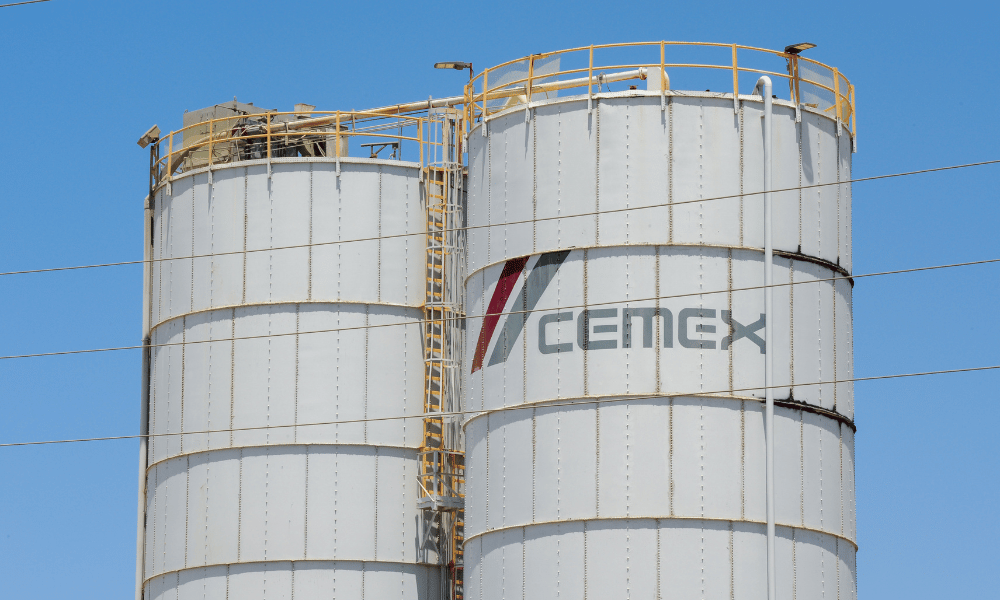
A federal appeals court has upheld an order forcing Cemex to bargain with the Teamsters – even though its employees voted against unionization.
On April 21, 2026, the United States Court of Appeals for the Ninth Circuit denied Cemex Construction Materials Pacific's challenge to a National Labor Relations Board decision and granted the Board's request to enforce its order. The ruling caps a years-long legal battle over how the company handled a union organizing drive among roughly 366 ready-mix drivers and driver trainers at approximately 24 facilities across Southern California and Las Vegas.
The backstory matters. In late 2018, the International Brotherhood of Teamsters collected authorization cards from at least 207 drivers – about 57 percent of the bargaining unit. The union petitioned for a Board-supervised election, which took place on March 7, 2019. Employees voted 179 to 166 against union representation. Under normal circumstances, that would have been the end of it. But what Cemex did in the months surrounding that vote changed everything.
The NLRB found that the company ran a coordinated anti-union campaign that crossed well beyond the boundaries of lawful employer conduct. A foreman made coercive statements to drivers. Managers surveilled employees at one plant and created an atmosphere of being watched. A vice president told workers during a meeting that annual cost-of-living raises were frozen because of the election, that bargaining could drag on for years, and that the company did not have to agree to anything. He also suggested that plants could be converted to "satellites," which drivers understood as a threat of closure and layoffs. He linked his personal experience during a past strike to what employees could expect if they walked off the job, implying that less senior workers who struck would wait indefinitely before getting back to work.
The company also deployed security guards across its facilities for two weeks before the election and stationed them at the entrance to every polling location on election day. The Board found the security presence was extensive, unprecedented, and unjustified. The testimony offered by the vice president to explain why the guards were hired was found to lack credibility.
One driver, Ornelas, became a particular focus. She was a prominent union supporter. The company issued her a verbal warning for talking to union organizers during downtime under a rule prohibiting such contact on "company time" – a rule the company itself conceded was unlawful. That warning became part of her progressive discipline record. She was suspended in July 2019 and terminated in September 2019. The Board found both actions were motivated by her union activity, and also found that the discipline chain was itself tainted because it rested on the earlier unlawful warning. The court noted that the company's own human resources manager testified there was no difference between a verbal coaching and a documented verbal warning under the company's discipline policy.
The Board concluded that the misconduct was not the work of a few rogue supervisors. It stemmed from a deliberate corporate strategy. The administrative law judge assigned to the case went further, finding that at least three senior Cemex officials fabricated testimony during the proceedings to conceal what had happened.
All of this led the Board to issue what is known as a Gissel bargaining order – a remedy named after a 1969 Supreme Court decision that allows the Board to require an employer to recognize and bargain with a union without a new election when unfair labor practices have been so severe that a fair vote is no longer realistic. The Board identified threats of plant closure, threats of job loss, and the discipline and discharge of a prominent union supporter as "hallmark" violations – the kind of conduct recognized as having such a lasting coercive effect on workers that traditional remedies like posting a notice or ordering reinstatement would not be enough to undo the damage.
The Ninth Circuit agreed. It found the Board provided extensive reasoning, acted within its broad discretion, and that its findings were supported by substantial evidence. The court pointed out that it has enforced bargaining orders in cases involving less serious violations than those present here.
Judge Clifton dissented on the bargaining order. He agreed the company committed numerous unfair labor practices and that the election results should be set aside, but he argued the Board improperly claimed to agree with a finding the administrative law judge never actually made – that the possibility of a fair rerun election was "slight." The ALJ had in fact declined to recommend a bargaining order, concluding that the unfair labor practices did not affect a substantial enough percentage of the overall unit. Judge Clifton also flagged the Board's decision to announce a new, broader framework for bargaining orders in this very case and apply it retroactively, which he read as a sign the Board recognized the weakness of its position under existing law. He cited a recent Sixth Circuit decision, Brown-Forman Corp. v. NLRB, that rejected the new framework.
The majority chose not to address the new framework, finding it unnecessary to resolve the case.
For HR professionals, the case reads like a cautionary manual. Nearly every misstep traced back to coordinated management decisions – what was said in meetings, how discipline was administered, what rules were imposed, and how security was deployed. The court's willingness to uphold a bargaining order overriding an actual employee vote underscores a simple reality: employer conduct during an organizing campaign matters as much as, and sometimes more than, the election itself. When a company's anti-union strategy strays into coercion, the consequences can be sweeping – and in this case, they were.