When 'shifts on hold' meets a heartbreak emoji, who decides if it's a dismissal
A casual worker said an emoji-laden group chat fired her. Her boss said it was just a paused shift. The Fair Work Commission had to decide.
On 4 May 2026, the Fair Work Commission handed down its decision in Emma Day v Minoba Pty Ltd, a case that turned on a confusing WhatsApp message, the challenges of translation, and a casual employee who believed she had been let go.
Emma Day had worked as a casual Body Sculpting Therapist at Minoba since 17 June 2024. Things came to a head on 16 December 2025, when owner Luisa Rueda sat her down to discuss repeated lateness. Rueda told the Commission that the most recent incident involved Day arriving more than an hour late for her shift, resulting in there being no one to open the clinic. At the meeting, Rueda advised Day that she was putting her shifts on hold because she could not rely on her to open the clinic while she was away on leave.
Day left that meeting believing she had been dismissed. Part of the reason, she told the Commission, was that she had asked Rueda when she should return her uniform, to which Rueda told her to hold onto it, as she may need it next year when she comes back. The Commissioner later observed that, if anything, this exchange suggested Day had not been dismissed. Day says that after the conversation, she was upset and called her father who then collected her from work, and she told him she had been dismissed.
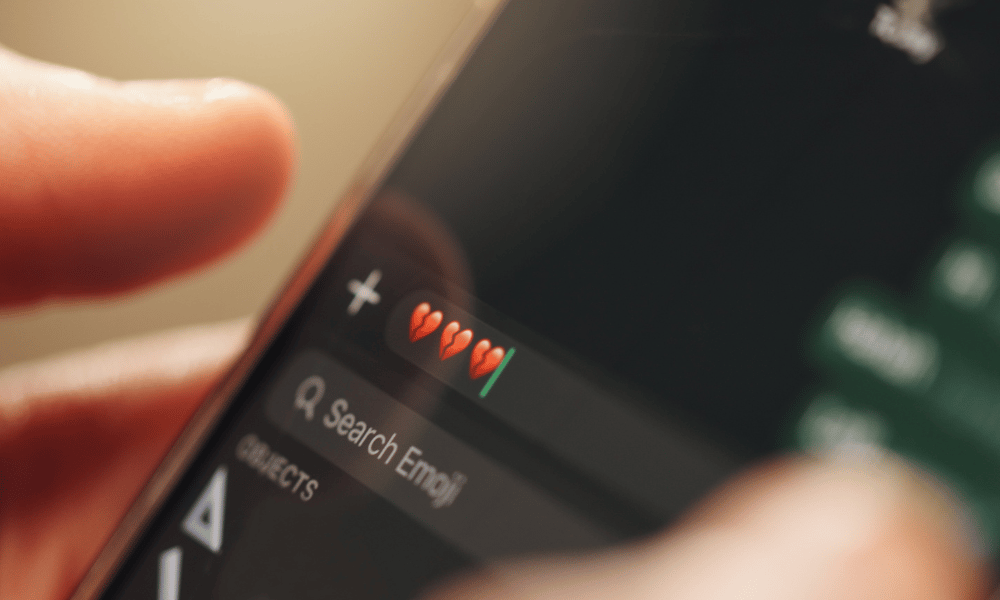
The next day, on 17 December 2025, a co-worker, Ioanna Ikonomopoulos, messaged Day to say she was sorry to hear what had happened. She then sent a screenshot of a message Rueda had posted in the BSA Team WhatsApp group that morning. It read: "Good morning girls, two things to let you know. First, Emma will no longer be working with us due to repeated punctuality issues." The message was followed by a heartbreak emoji, and went on to share a new key password for the clinic and to ask staff how they wanted their bonuses paid.
For Day, that message confirmed she was out. In her submissions she said it communicated "the employer's intention to never have me come back to work, contrary to what I had been informed with a 'temporary pause in shifts'." She was not given a termination letter, and she did not contact Rueda after seeing the screenshot.
Rueda told the Commission a different story. She acknowledged that the message may have been interpreted as Day no longer working at the clinic, but said that was not her intention and it did not reflect the conversation she had with Day on 16 December 2025. Rueda said the purpose of the message was to provide employees with the new access code for the clinic, but to not have them share the code with Day as she was not currently working. She explained that there had been a robbery a few weeks before and so as a security measure, she was frequently changing the access code.
Rueda also told the Commission that she writes her messages in Spanish and then her phone translates them to English, and that she only meant to advise her staff that Day was not working at the moment. Co-workers Roccisano and Ikonomopoulos gave evidence that Rueda often sent text messages that could be a bit confusing because of the language barrier. Both also gave evidence that Rueda expressly told them on 17 December 2025 and 18 December 2025 (respectively) that she had not dismissed Day, but rather that she had suspended her shifts, and that Day would be returning around February when she had her university timetable.
Day also pointed to her removal from the group chat on 13 January 2026 as proof she had been let go. Rueda's evidence was that she removed Day from the chat on 13 January 2026 when she received a letter from the Commission advising her that Day had made an unfair dismissal application, and so presumed Day was no longer intending to return to work. The Commissioner accepted that explanation.
It is worth noting that Minoba raised two jurisdictional objections: that Day was not dismissed, and that her application, filed on 14 January 2026, was eight days out of time. Day said she was dismissed on 17 December 2025, which means her application was eight days out of time. The Commissioner only needed to determine the first objection to dispose of the matter.
Commissioner Fox found both Ikonomopoulos and Roccisano to be credible and honest in giving their evidence, and broadly consistent with Rueda's evidence, whom the Commissioner also found credible and consistent. Their evidence was preferred to that of Day. The Commissioner found that the discussion on 16 December 2025 was only in relation to Day's shifts being put on hold, and that Day did not contest this and acknowledged she was informed there was a "temporary pause in shifts".
As for the 17 December 2025 text message, the Commissioner noted that it was not communicated by Rueda to Day, but rather sent by a co-worker, and while acknowledging the text was confusing and open to interpretation, accepted the evidence about the translation challenges and the intended purpose of the text, finding it was not evidence of an intention by Minoba to bring the employment relationship to an end. The jurisdictional objection was upheld, and Day's application was dismissed.
The case is a reminder that sensitive employment messages do not belong in a group chat next to Wi-Fi codes and bonus admin. It also shows the risk of relying on auto-translation for staff communications, and the value of confirming a "pause" in casual shifts in writing, directly to the employee, so there is no room for a heartbreak emoji to do the talking.