The consent decree lays out a compliance playbook every HR professional should know
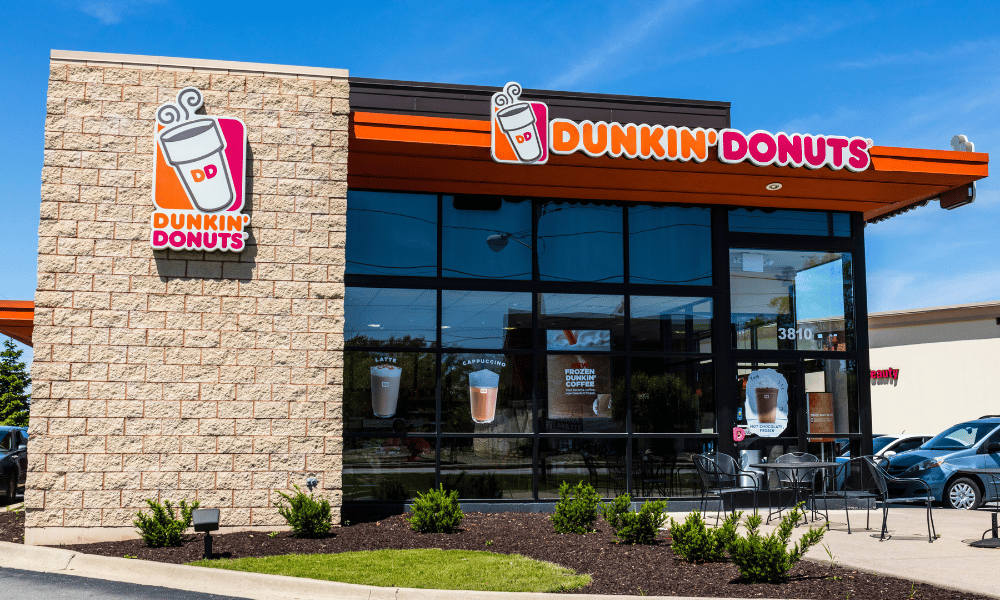
A chain of Dunkin' franchise operators must pay $250,000 and overhaul their HR practices after the EEOC alleged widespread disability discrimination.
The consent decree, filed on April 9, 2026, in the U.S. District Court for the District of Massachusetts, resolves claims brought by the U.S. Equal Employment Opportunity Commission against The Daly/Kenney Group, LLC and 15 affiliated entities that operate Dunkin' Donuts franchise restaurants. At the center of the case is a workplace practice that many employers still rely on, often without realizing it runs afoul of federal law.
The EEOC alleged that the franchise operators enforced what it called a "100% Healed Policy" – a blanket rule that prevented employees from working if they had any physical or mental restrictions. According to the agency, workers were required to show, through a doctor's note or other documentation, that they were completely free of medical limitations before they could start, return to, or continue their jobs. The EEOC alleged that employees with disabilities were placed on involuntary unpaid leave, denied accommodations, or fired outright under this policy, all in violation of the Americans with Disabilities Act. The agency also alleged that two of the franchise entities failed to keep employee medical records separate from personnel files, another ADA requirement.
The case was brought on behalf of a class of employees with disabilities who worked at the defendants' restaurants and were allegedly harmed by these practices.
Under the settlement, the franchise operators are required to rescind the policy and stop requiring workers to prove they are restriction-free in order to hold their jobs. They must also begin providing reasonable accommodations, absent undue hardship, and engage with employees through the interactive process that the ADA requires.
The agreement goes well beyond the financial penalty. Within 30 days of the effective date, the defendants must rewrite their employee handbook to include a clear statement that the company does not require employees to be 100% healed to work, along with definitions of disability and reasonable accommodation, a step-by-step process for requesting accommodations, and instructions for reporting discrimination or retaliation. The handbook must name a specific contact person – with title, email, and phone number – for accommodation requests. It must also state that medical information will be stored separately from personnel files and treated as confidential.
Within 60 days, the revised handbook must be distributed electronically to all employees and maintained in hardcopy at every location, accessible at all times without a manager's permission. New hires and newly promoted employees must receive it within five days.
The training requirements are equally detailed. A third-party trainer must deliver live, interactive ADA training annually to all employees in supervisory or HR roles, covering topics such as how to handle accommodation requests, how to investigate discrimination complaints, and the duty to document and report potential violations. A separate annual session is required for all other employees, focused on how to request accommodations and report concerns. Both sessions must be recorded so that new hires and anyone who misses the live training can view it within 14 days.
Every six months, the defendants must report to the EEOC on every accommodation request and every discrimination complaint received, including the employee's name, contact details, the nature of the request, the company's response, and the outcome. The EEOC also retains the right to inspect the restaurants, interview employees, and review documents with just five days' notice.
The decree will remain in effect for four years. It was signed by both parties and is assigned to Judge Angel Kelley, who has yet to enter a final order.
For HR professionals, the case is a sharp reminder that "100% healed" policies – still common in food service, retail, and other frontline industries – remain a top enforcement target for the EEOC. The detailed remedial obligations written into this consent decree read less like a penalty and more like a compliance roadmap, one that any employer would do well to measure its own practices against.
The case is Equal Employment Opportunity Commission v. The Daly/Kenney Group, LLC, et al., Case No. 1:26-cv-11526, in the United States District Court for the District of Massachusetts.