He texted 'this job is dangerous af' after the first fall, then refused to clip in himself
Twelve days after watching a coworker fall through a factory ceiling, a foreman died the same way after refusing to follow safety protocols.
The case ended January 27 when a Georgia appeals court sided with the employers, saying the worker knew the risks and chose to ignore them anyway.
Cameron Bell was an electrical foreman at an SK Battery America plant under construction in Commerce, Georgia. The company was building an electric vehicle battery facility, and Bell's crew was running electrical work above the ceiling in one section of the plant.
The ceiling had 25 holes cut out for future ventilation ducts. The company had covered them with louvers that couldn't hold any weight. Step on one and you'd fall straight through.
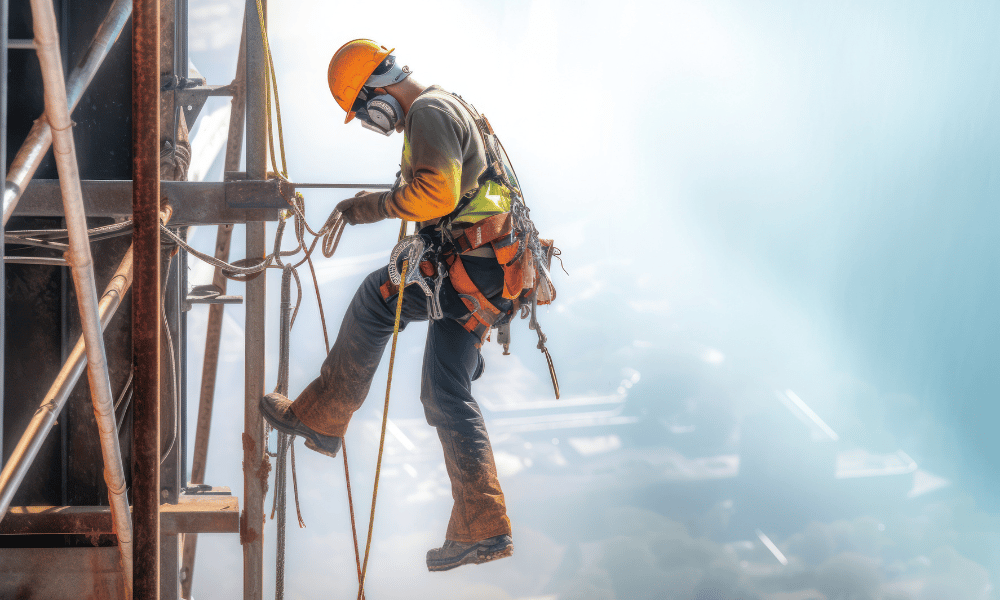
Everyone knew the rules. Stay clipped to a safety line whenever you're more than six feet off the ground. No exceptions. Bell had been through the training multiple times and signed off on it in writing.
Then on October 23, 2020, Bell watched it happen. Another worker stepped on a louver, and it gave way beneath him. The man fell but his safety line caught him. He survived. Bell texted a video of the incident to his girlfriend with a message: "this job is dangerous af."
Work stopped for two weeks. The company held more safety meetings. Bell's employer pushed to reinforce the louvers or cover them with something stronger, but Industrial Project Innovation, which oversaw safety for the project, rejected the plan. Instead, SK Battery America placed large red X's made of tape over each louver and wrote "Danger" on the tape.
When work resumed on November 4, Bell's crew got assigned to the same area. That morning, he filled out a safety worksheet where he wrote down "falls" as a hazard and "100% tie off" as the solution. In his own handwriting.
Bell headed up to the ceiling first. A coworker stopped him at the logbook, saying nobody had clearance to go up yet. Bell reassured her that he'd already cleared it with management. He climbed up without clipping in.
Other workers followed, each one hooking their safety lines properly. They saw Bell moving around up there with nothing holding him. They called out to him. Told him to clip in. Multiple times.
Bell brushed them off. "Hey, man, I'm good," he said.
Then they watched him step onto one of those red-taped louvers. He fell more than 50 feet. Two weeks later, he died from his injuries.
His girlfriend, Daniella Mejia, sued SK Battery America, BrandSafway Solutions, Industrial Project Innovation, and Eastern Corporation for wrongful death. The companies argued Bell knew exactly what could happen and chose to take the risk anyway. The trial court agreed and threw out the case.
Mejia appealed, arguing that things had changed since that first fall. The company had promised to fix the problem, she said, and Bell couldn't have known the danger was still there.
The appeals court wasn't buying it. Judge Davis pointed out that nobody ever told workers the louvers were safe. In fact, the company did the opposite. More safety meetings. Written warnings. Red danger tape everywhere.
The court said Bell had witnessed the exact same hazard just 12 days earlier. He'd seen what happened when someone stepped on those louvers. He'd also seen what saved that worker: the safety line.
On the morning he died, Bell had personally written down that falls were a risk and tie-offs were required. Then he went up without one. When coworkers warned him, he refused.
The court called it a deliberate choice to do something obviously dangerous. The judgment for the employers stood.
For HR professionals, the case offers a stark lesson. Even the best safety programs have limits. You can train workers repeatedly. Document everything. Make them sign acknowledgments. Put up warning signs. But if someone decides to ignore it all, the courts may well say they assumed the risk.
The key is documentation. Bell's employers had written proof of training, signed safety forms, witness statements about warnings, and evidence that Bell personally identified the hazard hours before his death. That paper trail made the difference.