Why HR leaders must build beyond the medical plan as healthcare costs keep climbing
When Starbucks withdrew coverage of glucagon-like peptide-1 (GLP-1) drugs for weight loss earlier this year, it forced a conversation that HR leaders across the country are now having in earnest: not just whether to cover GLP-1s, but what a sustainable, comprehensive employee benefits package should look like going forward.
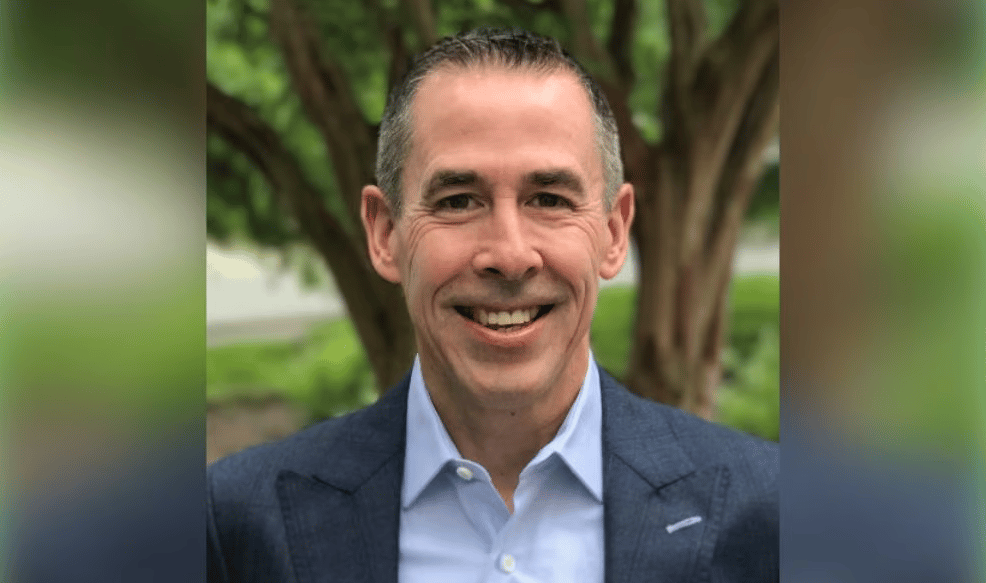
John Feeney, Vice President of Group Sales and Market Development at Renaissance Benefits in Washington D.C., has a clear answer. "The conversation shifts from, can we cover everything, to how do we provide the right mix of coverage and financial protection," he told HRD America. "This reinforces the need for employers to think beyond the medical plan alone and to build a more complete benefit package surrounding it."
The GLP-1 decision is harder than it looks
The numbers behind the Starbucks decision reflect a broader employer trend. The share of US companies covering GLP-1 drugs for weight loss dropped from 72 percent in 2025 to 60 percent in 2026, according to Business Group on Health survey data. For HR directors facing the same pressure, Feeney cautions against treating any single high-profile employer's decision as a template.
"I don't think it's a one-size-fits-all," he said. "Some employers are going to look hard at data — look at what the employees are asking for, what they're demanding, probably the whole workforce demographics — and then make decisions, and they're not easy ones."
The scientific picture complicates matters further. The long-term clinical and financial implications of GLP-1 drugs remain genuinely unclear — both the downstream benefits of sustained weight reduction and the unknown risks of long-term use. For HR leaders, that uncertainty argues for a data-driven, workforce-specific approach rather than a blanket policy, and for working closely with benefits advisors who can bring utilization data from across their entire book of business — intelligence that no single employer can generate alone.
The Kaiser Family Foundation's ongoing health cost research tracks the same structural pressure: as high-cost therapies multiply, the question is not whether employer health plans will face repeated disruption, but how benefits strategy adapts each time.
59 percent of your employees cannot absorb a $1,000 medical bill
Here is the figure that should anchor every benefits strategy conversation in 2026. According to Bankrate's 2026 survey, 59 percent of Americans do not have $1,000 available to cover an unexpected medical expense.
That statistic reframes the employer's responsibility in stark terms. A medical plan that covers major procedures and hospitalizations may still leave the majority of a workforce financially exposed the moment something goes wrong. The gap is not in the medical coverage itself — it is in what surrounds it.
"You need to surround the medical plan with these other types of products, which are not expensive, nowhere near the spend of the medical plan," Feeney said. "But it complements it in a very large way, and just kind of surrounds and provides a nice wrapper around the medical program."
For HR directors, the practical implication is concrete: supplemental health coverage, disability insurance, and life insurance are not optional extras for employees who want them. For a significant portion of most workforces, they are the difference between a manageable health event and a financial crisis.
Benefits communication cannot be once a year
The most actionable finding from Feeney's analysis may have nothing to do with which products sit in a benefits package. It is about how consistently employers communicate what those products do.
"There should be more than just once a year," Feeney said, pointing to preventive dental's ability to detect emerging serious health conditions and disability coverage's role in protecting employee income. Year-round communication on these benefits, he argues, drives employee retention, supports recruiting, and creates a genuine sense that the employer has workers' best interests at heart.
The Society for Human Resource Management (SHRM) consistently identifies poor benefits literacy as a root cause of low utilization rates — employees who do not understand their coverage do not use it, regardless of how comprehensive the plan is. For HR teams that have invested significantly in building a strong benefits package, that finding points to a straightforward failure mode: the package is only as effective as employees' understanding of it.
The communication standard Feeney describes is year-round, specific, and tied to moments of relevance — not a single open enrollment presentation and a benefits guide that goes unread.
Make it simple enough to actually use
Beyond communication, Feeney's broader argument is about friction. Benefits programs that are difficult to enroll in, confusing to navigate, or burdensome to claim against fail employees at the moment they need them most.
"Employees shouldn't have to navigate a maze," he said. "The enrollment has to be simple. Claims adjudication has to be simple."
Renaissance's supplemental product, RenSecure Health, illustrates what low-friction design looks like in practice. The plan pays on more than 13,000 diagnoses mapped to International Classification of Diseases, Tenth Revision (ICD-10) medical codes. Its automatic payment feature removes the claims burden entirely: when a paid medical claim matches a covered diagnosis, the benefit is deposited directly to the member's bank account, Venmo, or PayPal — without the employee filing anything.
The design principle is worth HR leaders applying as a broader standard when evaluating any benefits product: if employees have to work to access a benefit, a significant proportion simply will not.
Preparing for the next high-cost breakthrough
GLP-1 drugs will not be the last pharmaceutical innovation to force a rapid employer decision. The pipeline is full of emerging therapies — including orexin sleep drugs, which are beginning to attract attention from benefits professionals — and each new breakthrough will repeat the same cycle of clinical promise, uncertain long-term data, and significant cost.
"The insurance carriers have a tough job because they have to evaluate these things," Feeney said. "The cost of that prescription, but ultimately, what is the benefit? Will it limit additional surgeries, testings, and other types of treatments? When it all comes together, that's when the carriers have to decide."
For HR directors, the strategic response is to build the infrastructure now — comprehensive coverage, year-round communication, and frictionless enrollment and claims — so that the next coverage decision, whatever it involves, is made from a position of strength rather than reactive cost pressure.
The employers best positioned to handle the next pharmaceutical breakthrough will not be those who made the right call on GLP-1s. They will be those who built a benefits program their workforce understands, trusts, and can actually use.